
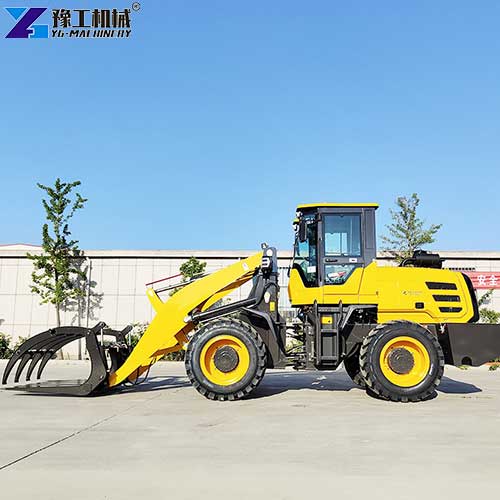
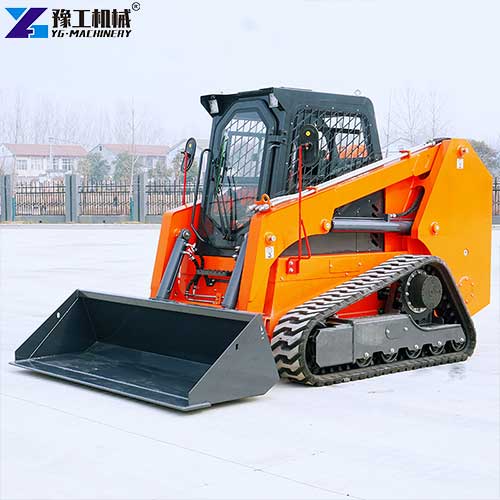
In construction, municipal maintenance, farm renovation, and earthwork projects, loaders are the most widely used core handling and earthmoving equipment. Most buyers struggle to distinguish between traditional loaders and compact skid steer loaders, often purchasing mismatched equipment that leads to low construction efficiency, idle machinery, high fuel consumption, and unnecessary investment waste. Although construction wheel loaders and skid steer loaders both complete loading, shoveling, and material handling work, their internal structures, steering principles, operating modes, and applicable working conditions are completely different.
This article sorts out the systematic differences between traditional loaders and mini skid steer loaders in simple terms, helping you quickly select the right machine according to project needs, control operating costs, and avoid blind equipment investment while referring to transparent skid steer tracks price and traditional loader configuration costs. If you are interested, please contact YG for a discount.
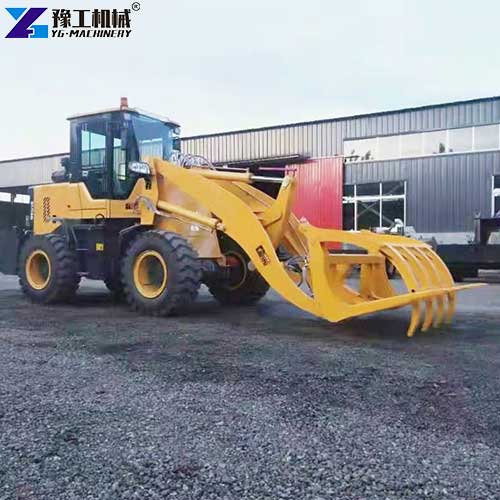
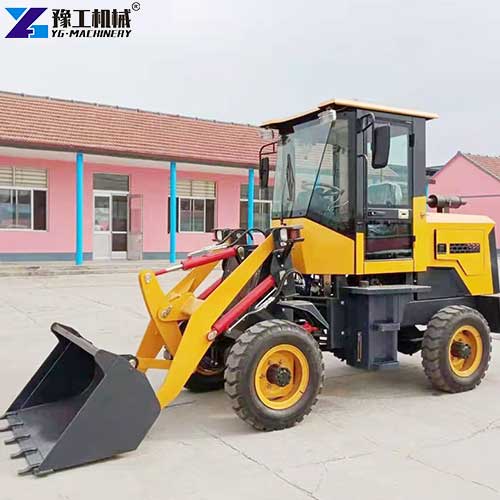
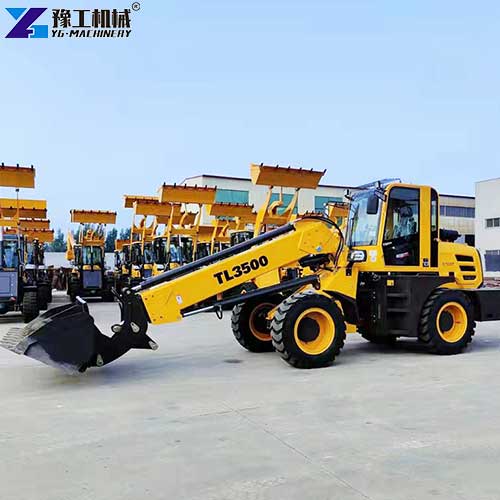
Construction Wheel Loader Parameter
| Item | YG-920 | YG-926 | YG-928 | YG-930 | YG-940 | YG-946 | YG-949 |
| Drive Mode | Manual Transmission | Continuously Variable Transmission | Continuously Variable Transmission | Continuously Variable Transmission | Continuously Variable Transmission | Continuously Variable Transmission | Continuously Variable Transmission |
| Discharge Height | 3.2 | 3.2 | 3.2 | 3.2 | 3.5 | 3.5 | 3.5 |
| Standard Bucket | 1.8 m | 1.8 m | 1.8 m | 1.8 m | 2 m | 2 m | 2 m / 2.2 m |
| Gearbox | High-Low Speed | 265 Single High-Low Speed | 265 Dual High-Low Speed | 265 Dual High-Low Speed | 265 Dual High-Low Speed | 280 Dual High-Low Speed | 300 Split-Type Dual High-Low Speed |
| Drive Axle | Isuzu Axle | Isuzu Axle | Small Hub Reduction Axle | Small Hub Reduction Axle | Large Hub Reduction Axle | Large Hub Reduction Axle | Large Hub Reduction Axle |
| Engine | Weifang 490 | Weifang 490 | Weifang 490 | Weifang 4102 Turbocharged | Weifang 4102 Turbocharged | Weifang 4102 Turbocharged | Weifang 4108 Turbocharged |
| Tire Size | 20.5-16 | 20.5-16 | 20.5-16 | 20.5-16 | 1670-20 | 1670-20 | 1670-24 |
| Control Lever | Single Lever Control | Single Lever Control | Single Lever Control | Single Lever Control | Single Lever Control | Single Lever Control | Single Lever Control |
| Braking System | Hydraulic Brake | Hydraulic Brake | Air Brake | Air Brake | Air Brake | Air Brake | Air Brake |
| Articulation Angle | 25° | 25° | 25° | 25° | 30° | 45° | 45° |
Track Skid Steer Loader Parameter
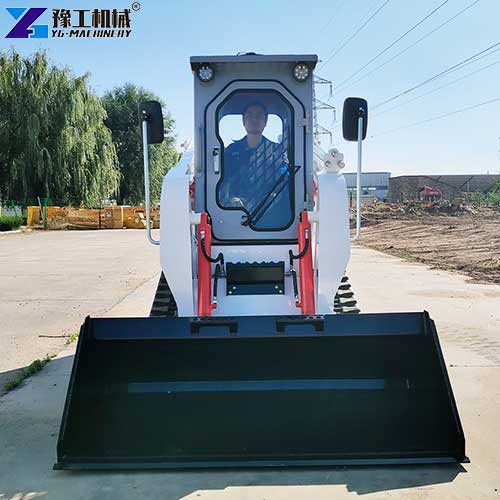
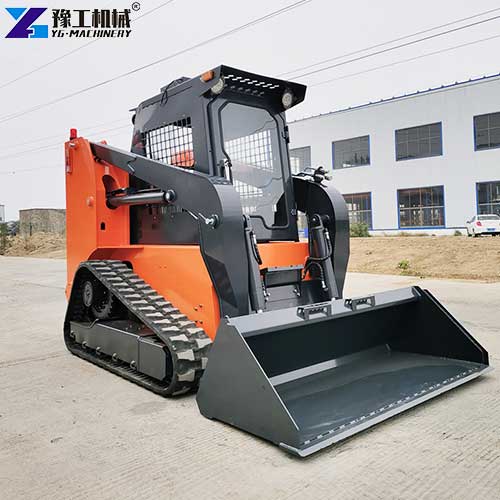
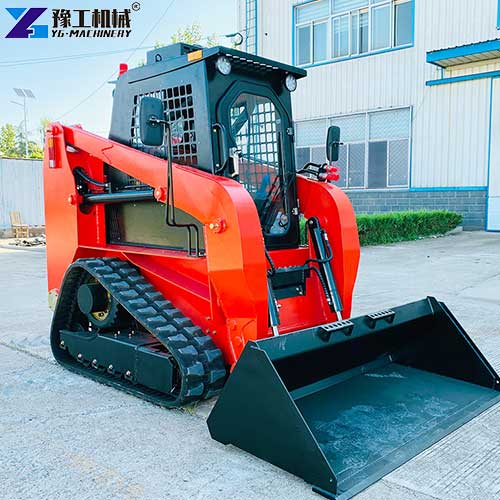
| Model | W45(Wheel-type) | W65(Wheel-type) | T50(Crawler-type) | T65(Crawler-type) |
| Operating load (kg) | 700 | 1050 | 700 | 1000 |
| Max Speed(km/h) | 10 | 10 | 10 | 12 |
| Rated flux (L/min) | 80 | 89 | 80 | 89 |
| Rated power (Kw) | 36.7KW | 55KW | 45KW | 55KW |
| Fuel tank capacity (L) | 70 | 75 | 50 | 90 |
| self weight bucket (kg) | 3766 | 4498 | 4074 | 5024 |
| Bucket capacity (m³) | 0.4 | 0.5 | 0.4 | 0.5 |
| Overall operating height (mm) | 3560 | 3850 | 3660 | 3900 |
| Height to bucket hinge pin (mm) | 2765 | 3020 | 2730 | 2970 |
| Hheight to top of cab (mm) | 2230 | 2295 | 2349 | 2409 |
| Height to bottom of level bucket(mm) | 2909 | 2862 | 2500 | 2790 |
| Without bucket length(mm) | 2325 | 2527 | 2170 | 2450 |
| Overall length with bucket(mm) | 3276 | 3428 | 3150 | 3400 |
| Dumping angle at maximum height(° ) | 37.5 | 32 | 40 | 40 |
| Dumping height(mm) | 2342 | 2410 | 1990 | 2270 |
| Dumping reach(mm) | 550 | 850 | 1040 | 1120 |
| Rollback o bucket on ground(° ) | 20.5 | 23 | 30 | 30 |
| Rollback of bucket at full height(° ) | 96.5 | 95 | 100 | 100 |
| Wheelbase(mm) | 991 | 1074 | 1230 | 1500 |
| Ground clearance(mm) | 185 | 205 | 230 | 200 |
| Angle of departure(° ) | 20 | 20 | 18.5 | 18.5 |
| Front turning radius without bucket(mm) | 1188 | 1320.5 | 1064 | 1230 |
| Front tuning radius(mm) | 2030 | 2095 | 1825 | 2010 |
| Rear tuning radius(mm) | 1630 | 1680 | 1264 | 1720 |
| Rear axle to bumper (mm) | 929 | 1057 | 590 | 730 |
| Tread width (mm) | 1462.5 | 1498 | 1022 | 1482 |
| Width (mm) | 1726.5 | 1805 | 1422 | 1782 |
| Bucket width (mm) | 1727 | 1828 | 1727 | 1828 |
I: Core Structural & Steering Differences
The biggest difference between the two types of equipment lies in the steering structure and driving principle, which directly determines their flexibility, operability, and site adaptability.
1. Construction Wheel Loader
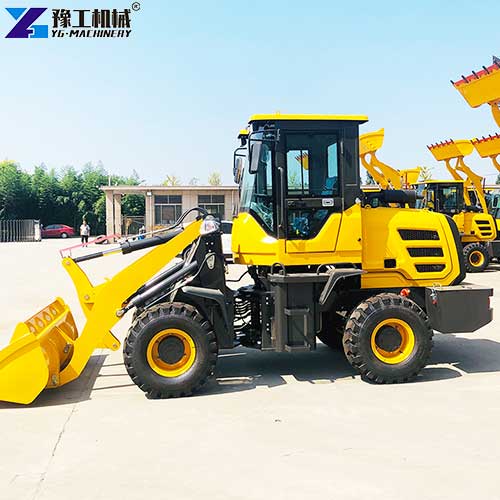
The whole body is divided into the front working section and the rear power section, connected by a middle hinge shaft. The steering is realized by bending and twisting the fuselage. This mature structure brings strong stability and heavy-load resistance, but has obvious limitations in flexibility. Conventional loaders have a large turning radius and cannot achieve in-situ U-turns, requiring reserved turning space during operation.
In terms of operation, all traditional loaders adopt standard steering wheel control, matched with hydraulic gear shift and lifting handle operation. The operating logic is consistent with traditional engineering machinery, which is easy for veteran drivers to get started with, and is more suitable for long-term, high-intensity, continuous heavy-load operation.
2. Skid Steer Loader
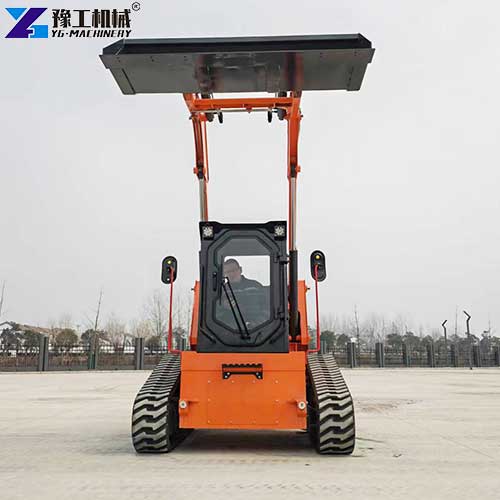
The machine relies on the speed difference between the left and right wheels or tracks to generate sliding friction to complete steering, realizing 360° zero-radius in-situ rotation without any reserved turning space. It can turn freely in ultra-narrow spaces where traditional loaders cannot move.
In terms of operation, skid steers adopt dual joystick integrated control. The two joysticks independently control walking, steering, bucket lifting, and dumping actions. The operation is sensitive and precise, with a short learning cycle. In addition, users can control later maintenance costs by checking the latest skid steer tracks price, making the overall operation cost of skid steers far lower than that of large traditional loaders.
II: Applicable Working Scenarios & Selection Standards
Structural differences lead to completely applicable working conditions. Traditional loaders focus on heavy-load and large-scale open-site operation, while skid steer loaders focus on fine construction, multi-functional conversion, and narrow-space auxiliary operation.
1. Applications for Construction Wheel Loader
Construction wheel loaders are designed for heavy-duty earthwork and large-batch material turnover. They feature large load capacity, high lifting height, and strong continuous working stability, making them the preferred equipment for large-scale engineering projects.
Main applicable scenarios: sand and gravel yard loading and unloading, mining bulk material transportation, large infrastructure earthwork construction, sand field continuous shoveling and loading, open-air yard material transfer, and high-carriage truck loading relying on its super lifting height. The heavy-duty crawler loader for sale is more suitable for harsh working conditions, such as muddy open-air yards and rugged mountain roads, maintaining stable heavy-load operation.
For projects with a large workload, open construction space, and long-term continuous operation, traditional loaders can maximize construction efficiency and output value.
2. Scenarios for Skid Steer Loaders
Track loader skid steer is positioned as multi-functional fine construction auxiliary equipment, making up for all construction blind areas of traditional large loaders. Its application scenarios are divided into three core categories:
First, ultra-narrow confined space operation. It can freely enter indoor factory renovation sites, closed basement construction spaces, old community narrow road reconstruction, urban municipal small alleys, farm breeding farms, and agricultural greenhouses for residue cleaning and material handling, where traditional loaders cannot access at all.
Second, frequent multi-type working condition switching. Equipped with replaceable hydraulic accessories, one machine realizes multiple functions. It can complete municipal road crushing, pavement garbage cleaning, urban winter snow removal, garden trenching and seedling planting, construction waste transportation and waste crushing work, meeting diversified temporary construction needs.
Third, large engineering auxiliary finishing work. Traditional large loaders are only suitable for main large-scale earthwork, while skid steers are responsible for later site finishing, edge dead-angle cleaning and scattered material handling, greatly improving the overall construction refinement.
III: Comprehensive Performance & Cost Comparison
1. Working Performance
Conventional loaders have absolute advantages in load weight, lifting height, and continuous working capacity, suitable for high-intensity single-repeated work. Skid steer loaders have limited single load capacity, but have outstanding flexibility and multi-functional expansion ability, realizing fine construction and multi-scene switching.
2. Operating & Maintenance Cost
Traditional large loaders have high fuel consumption and expensive later maintenance costs. In contrast, skid steer loaders have low energy consumption. The skid steer tracks make track replacement and daily maintenance more cost-effective, with a lower overall investment threshold and operating cost, making it very suitable for small and medium contractors and individual entrepreneurs.
3. Flexibility & Adaptability
Wheeled mini skid steer is suitable for flat urban ground, adapt to muddy, rugged, and complex terrain. Zero-radius rotation enables flexible operation in all narrow scenarios, which cannot be matched by traditional articulated loaders.
IV: Final Quick Selection Guide
- Choose a construction wheel loader if you need heavy-load shoveling, large-batch earthwork turnover, high-height truck loading and long-term open-site continuous operation.
- Choose a small track skid steer if your projects are concentrated in narrow spaces, require frequent working condition switching, multi-functional operation, and site fine finishing, and you want to control comprehensive costs with a favorable skid steer tracks price.
In conclusion, construction wheel loader focus on “heavy load and high efficiency for large projects”, while skid steer loaders focus on “flexibility and multi-function for fine and narrow-space projects”. Reasonable matching of equipment according to project characteristics can effectively improve construction efficiency and avoid unnecessary cost waste. If you are interested, please contact YG for a discount.