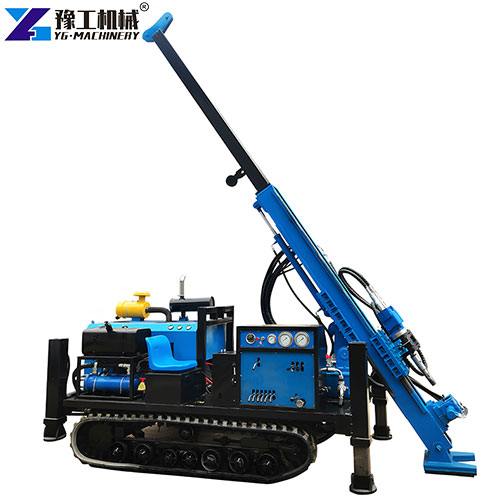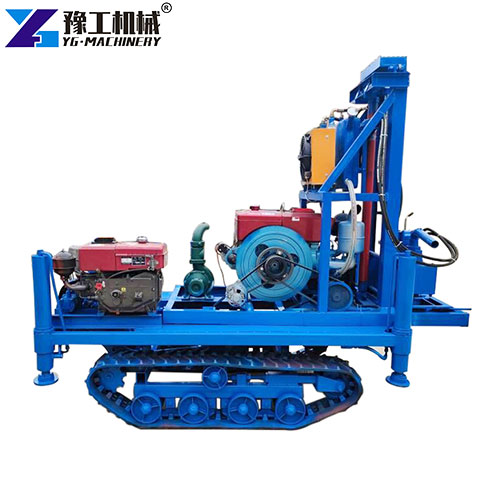
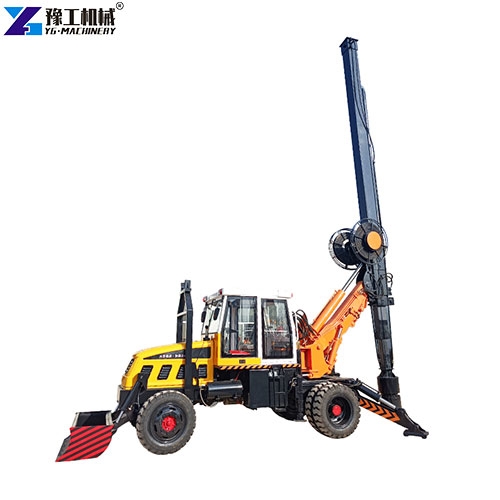
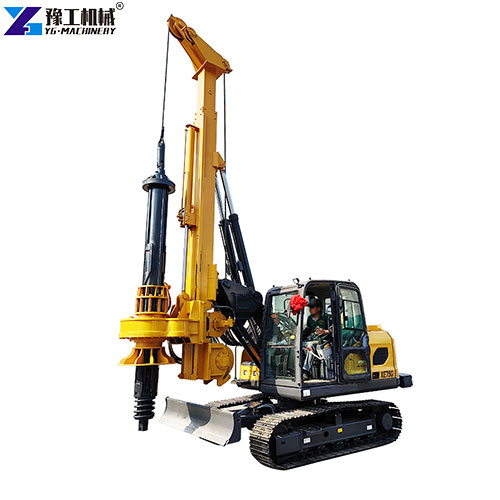
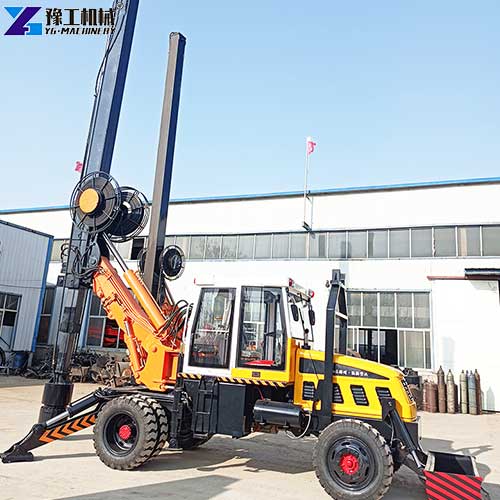
A hydraulic rotary drilling rig is a highly efficient construction machine designed for pile foundation drilling in modern engineering projects. It is widely used in sand, clay, silt, gravel, and other soil conditions, making it suitable for cast-in-place piles, diaphragm walls, and foundation reinforcement projects. The hydraulic rotary drilling rig uses a hydraulic power system as its core and drives the drill rod and drilling tools through a rotary power head to cut soil and rock layers. The excavated material is collected into the drilling bucket, lifted out of the hole, and discharged repeatedly until the required drilling depth is reached. Compared with traditional piling equipment, a rotary drilling rig machine offers higher efficiency, better drilling accuracy, lower noise, and improved adaptability to different geological conditions. It is widely used in construction, bridges, highways, railways, municipal engineering, and energy projects. YG provides small, medium, and large models of hydraulic rotary drilling rig equipment to meet different project requirements. Whether you are working on urban construction or large infrastructure projects, YG can provide the right solution for your foundation drilling needs. Please contact us today.
Want To Know More Details? Contact YG Machinery!
YG Hydraulic Rotary Drilling Rig Parameters
| Dimensions (mm) | 7900*2260*3100 |
| Vehicle mass (kg) | 8000 |
| Wheelbase (mm) | 3150 |
| Wheelbase (mm) | Front 1400 After 1060 |
| Drilling depth (m) | 13 |
| Drilling diameter (mm) | 600-1600 |
| Rotation angle | 180 degree |
| Walking speed (km/h) | 50 |
| Gear pump model | CBJT2080 |
| Hydraulic system working pressure (Mpa) | 20-25 |
| Hydraulic system displacement (ml/r) | 80 |
| engine model | 4108 |
| Engine power (kW) | 88 |
Want To Know More Details? Contact YG Machinery!


14 Steps Working Process of YG Hydraulic Rotary Drilling Rig
- Determine the Pile Position: Before construction begins, the pile position is measured and marked according to engineering drawings to ensure accurate drilling.
- Rig Positioning: The rotary rig machine is moved into the designated position and adjusted to ensure the drill rod is aligned vertically with the pile center.
- Initial Drilling (2–3 Meters): A shallow test drilling is performed to check geological conditions, machine performance, and drilling accuracy.
- Install the Casing: A protective casing is pressed into the hole entrance to prevent collapse and isolate surface water or debris.
- Casing Processing: The casing is cut, welded, or adjusted according to construction requirements and soil conditions.
- Drilling Operation: The hydraulic rotary drilling rig continuously cuts soil layers, lifts the drilling bucket, and removes excavated material until the target depth is reached.
- Slag Removal: Drilling debris is cleaned regularly to maintain hole cleanliness and ensure drilling quality.
- Depth Inspection: The drilling depth, hole diameter, and verticality are checked to confirm whether design requirements are met.
- Hole Quality Inspection: The hole is inspected for sediment thickness, wall stability, and overall quality before the next construction step.
- Install Reinforcement Cage and Tremie Pipe: The prefabricated reinforcement cage and concrete tremie pipe are lowered into the drilled hole.
- Reinforcement Cage Fabrication: Steel bars are cut, welded, and assembled into reinforcement cages according to project specifications.
- Concrete Pouring: Concrete is poured continuously through the tremie pipe to form a stable and solid pile structure.
- Concrete Production: Concrete is mixed and supplied according to engineering standards to ensure strength and consistency.
- Remove the Casing: After concrete pouring is completed, the casing is gradually extracted to finish the pile foundation process.
Want To Know More Details? Contact YG Machinery!


6 Features of Hydraulic Rotary Drilling Rig
- High Drilling Efficiency: The hydraulic rotary drilling rig uses a powerful rotary drive system, significantly improving pile foundation drilling speed compared to traditional methods.
- High Construction Accuracy: Equipped with leveling and verticality control systems, the machine ensures accurate hole positioning and drilling precision.
- Suitable for Various Soil Conditions: The rotary drilling rig machine can work in clay, sand, gravel, and some rock formations by changing drilling tools.
- High Automation Level: Advanced hydraulic systems make operation easier, reduce manual labor, and improve construction stability.
- Environmentally Friendly: Compared with impact drilling methods, the rotary rig machine produces lower noise, less vibration, and less dust pollution.
- Strong Stability and Safety: The machine chassis is highly stable and suitable for complex working environments and large construction projects.
5 Applications of Hydraulic Rotary Drilling Rig
- Building and Industrial Foundation Construction: The hydraulic rotary drilling rig is widely used in high-rise buildings, commercial complexes, factories, and logistics centers requiring deep pile foundations.
- Transportation Infrastructure Projects: A rotary drilling rig machine is commonly used for highways, railways, bridges, subways, and elevated road foundation construction.
- Municipal and Underground Engineering: The machine is suitable for urban roads, underground pipelines, parking structures, and diaphragm wall projects due to its low-noise operation.
- Port, Water Conservancy, and Energy Projects: The hydraulic rotary drilling rig is used in ports, dams, hydropower stations, wind farms, and solar power projects.
- Complex Geological Construction: The rotary rig machine can adapt to various geological conditions, including clay, gravel, and partial rock formations.
Want To Know More Details? Contact YG Machinery!
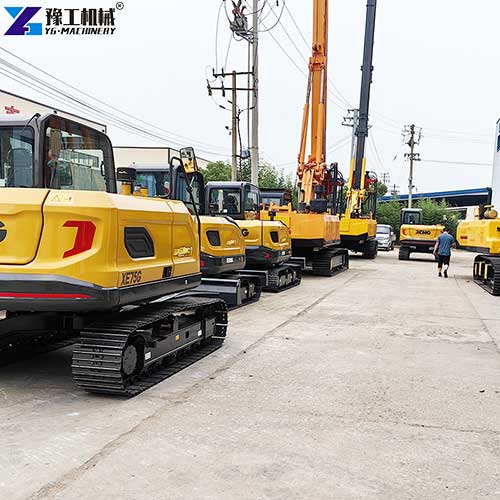
Customer Reviews: How YG Hydraulic Rotary Drilling Rig Improves
Customer Feedback 1: USA Foundation Project — Faster Drilling and Higher Efficiency
Project: Commercial Building Foundation Construction
“We used the hydraulic rotary drilling rig for our commercial foundation project in the United States. Before purchasing this machine, our team faced slow drilling speed and high labor costs when working with traditional equipment. After using the rotary drilling equipment, the drilling efficiency increased significantly, and the project schedule was shortened by nearly 20 days. The machine performed well in hard soil conditions, operated smoothly, and helped us complete the foundation work faster than expected.”
Customer Feedback 2: Philippines Infrastructure Project — Stable Performance in Complex Conditions
Project: Highway Bridge Pile Foundation Construction
“Our company used the rotary piling rig for a highway bridge construction project in the Philippines. The construction site had complicated geological conditions, but the machine showed excellent stability and drilling performance. Compared with our previous equipment, this hydraulic rotary drilling rig reduced preparation time and improved daily drilling output by about 40%. The operation was simple, maintenance was convenient, and the technical support provided by the supplier was very helpful.”
Customer Feedback 3: Brazil Mining and Construction Project — Reliable Equipment for Long-Term Operation
Project: Mining Area Drilling and Construction Support
“We purchased a rotary drilling rig machine for our mining-related construction projects in Brazil. The equipment has been working reliably under continuous operation conditions. It provides strong drilling power, accurate positioning, and good fuel efficiency. After using this machine, our overall project cost was reduced by around 30%, and the working efficiency improved greatly. We are satisfied with the machine quality and plan to recommend it to other local contractors.”
Want To Know More Details? Contact YG Machinery!
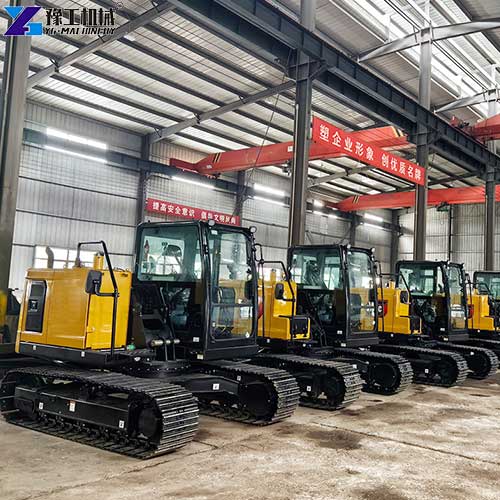
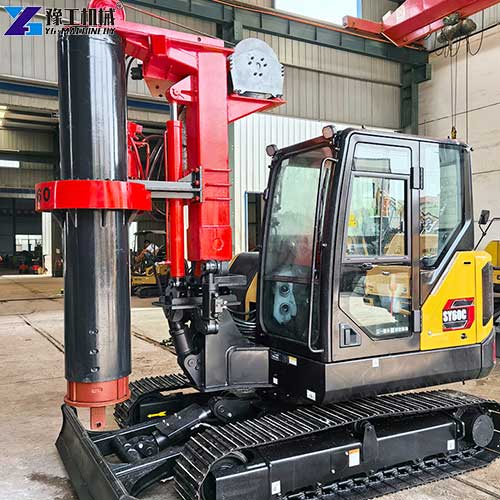
6 FAQs about YG Hydraulic Rotary Drilling Rigs
Chassis, crawler, luffing mechanism, mast, power head, kelly bar, drilling bucket, hydraulic system, engine, cab, hoisting system.
Two types: wheeled chassis and crawler chassis
A: There are three main types: auger drill bit, bucket drill bit, and core drill bit.
Clay, silt, sand, cobble, weathered rock, highly weathered rock, medium weathered rock (some models); not suitable for hard bedrock, dense large boulder layers.
Site leveling and compaction; check fuel, hydraulic oil, coolant, grease; inspect wear of kelly bar and bucket; equipment leveling and positioning; set up mud circulation system (wet drilling).
Check oil, water, and electricity; clean equipment; inspect teeth, wire rope, crawler tension; lubricate key points; record working hours.
Hydraulic Rotary Drilling Rig Factory Direct Sales-Choose YG
When you need reliable equipment for foundation construction, the Hydraulic Rotary Drilling Rig stands out as a smart long-term investment. Built for stable performance in complex soil and rock conditions, it boosts drilling efficiency while cutting labor and rework costs. Whether for high-rise buildings, bridge piers, or highway foundation projects, this rig delivers consistent, precise results. If you are looking for durable, cost-effective drilling machinery for your upcoming jobs, feel free to contact YG. YG can offer professional technical guidance and suitable solutions tailored to your project demands.