
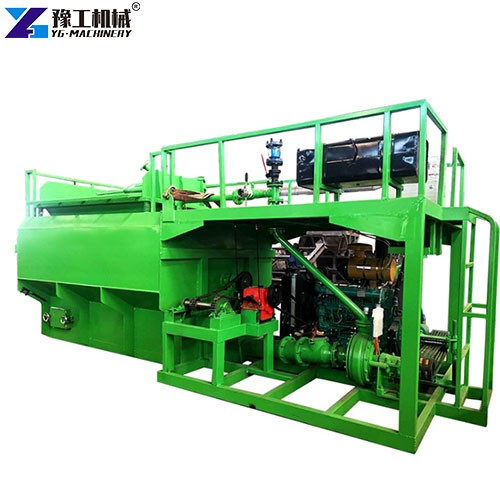
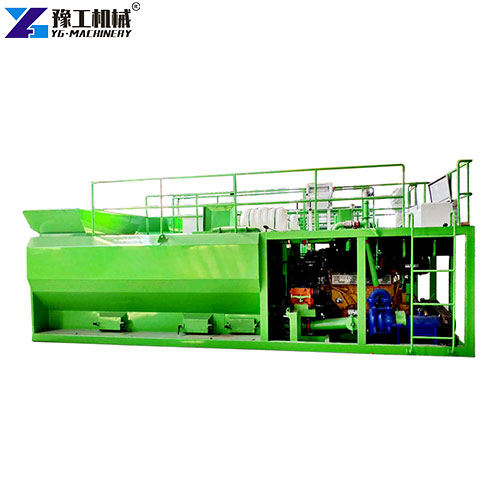
The seeding machine is a core piece of equipment for modern ecological restoration and efficient greening. It mixes seeds, growth substrates, nutrients, and water in one go, then evenly covers the target surface using a high-pressure spraying system. There are two main types: hydraulic seeding machine and soil seeding machine, and the fundamental difference lies in “seeding” vs. “soil creation.”The hydraulic seeding machine uses hydraulic power to evenly spray a mixture of seeds, fibers, and nutrients onto slopes, forming a growth-promoting cover layer. The soil seeding machine, on the other hand, combines mixing, transport, and spraying in one, allowing it to spray a mixture of soil, seeds, and adhesives at high pressure onto rock, concrete, or other non-soil surfaces, directly creating a stable and fertile “artificial soil layer.”Wondering how to choose between these two types? Contact YG, and we will provide you with precise and suitable solutions.
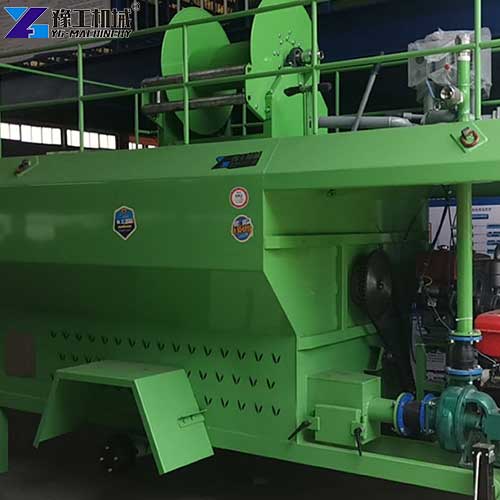
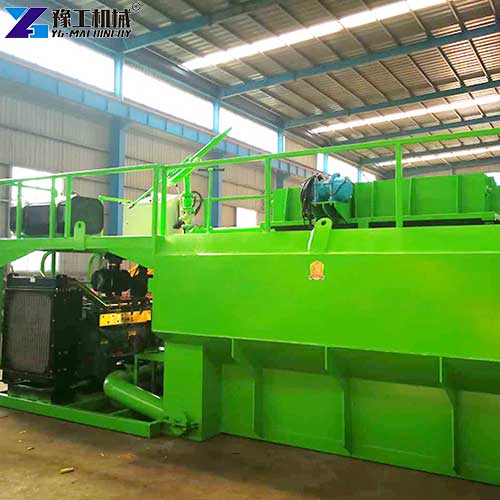
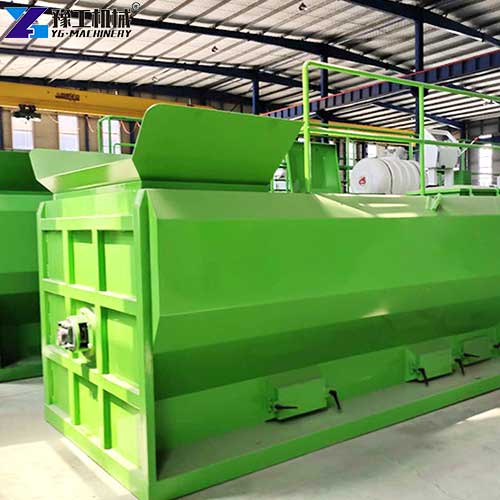
YG Hydroseeding Machine Parameter – Wheels Can Be Added
| Item | YG-2 | YG-4 | YG-6 | YG-8 |
| Tank Volume | 2m³ | 4m³ | 6m³ | 8m³ |
| Spraying Area | 200-500m² | 500-1500m² | 700-2000m² | 1000-2500m² |
| Spraying Distance | H 20-30m | H 20-35m | H 20-35m | H 24-40m |
| V 10-20m | V 10-25m | V 10-25m | V 15-30 | |
| Pipe Head | H 20-50m | H 20-60m | H 20-70m | H 30-80m |
| V 20-30m | V 30-40m | V 30-40m | V 30-50m | |
| Weight | 1000KG | 1300KG | 1600KG | 1900KG |
| Dimension | 2.5*1.5*1.4m | 3.3*1.5*2.4m | 3.6*1.8*2.4m | 4.2*1.8*2.4m |
Core Positioning of Hydraulic Seeding Machine and Soil Seeding Machine
The key to understanding the difference between the two machines is “seeding” vs. “soil creation.”
Hydraulic Seeding Machine: The essence of this machine is “efficient and precise seeding.” It uses hydraulic power to spray seeds, nutrients, and carriers evenly across the surface, aiming to create the best initial environment for seed germination. The focus is on quickly establishing a vegetative cover, primarily of herbaceous plants, controlling soil erosion, and achieving initial greening.
Soil Seeding Machine: The essence of this machine is “artificial soil construction.” It uses mechanical and wind power to spray a mixture of “soil” (imported planting soil), seeds, and adhesives onto rock or steep slopes that lack plant growth substrates, forming a stable, nutrient-rich “artificial soil layer.” Its core function is to create a sustainable growth foundation for plants in areas where direct growth is not possible, aiming to build a stable ecosystem combining trees, shrubs, and grasses.
In simple terms, hydraulic seeding is “precisely starting the ecosystem on existing or feasible soil,” while soil seeding is “creating growth conditions from scratch on bare rock.”
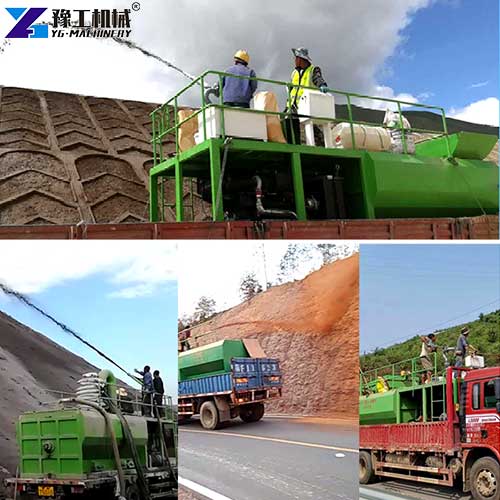
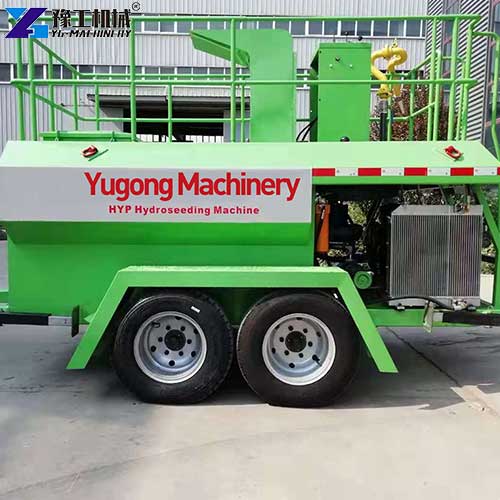
Working Principles of Hydraulic Seeding Machine and Soil Seeding Machine
Hydraulic Seeding Machine: Its working process is similar to a large, precise “hydraulic mixing and spraying machine.” The core component is a high-flow centrifugal pump. During operation, water, seeds, fibers, and other materials are rapidly mixed into a uniform slurry inside a tank, which is then pumped under high pressure. The slurry is sprayed onto the surface in a fan-shaped or linear mist pattern via spray guns or nozzles. The structure is relatively simple, with the key focus on the uniformity of mixing and the pump’s lift and flow.
Soil Seeding Machine: The working process resembles a mobile “concrete spraying machine” and “soil factory.” Its core components are a forced mixing system, a high-pressure slurry pump (either a screw or piston pump), and a large air compressor. First, the soil, fibers, and adhesives are mixed in the tank, forming a thick paste. The slurry is then pumped to the spray gun, where it is mixed with high-speed compressed air from the compressor, accelerating and atomizing the mixture, and is finally sprayed at high speed onto the slope. The structure is complex, and the key focuses are the continuous material transport and precise control of the spray mix ratio.
You can think of hydraulic seeding as “painting”—applying a thin, living layer of paint on an existing canvas (soil). On the other hand, soil seeding is like “sculpting”—using living “soil” to directly shape a growable relief on a rock wall.
Spraying Substrates of Hydraulic Seeding Machine and Soil Seeding Machine
Hydraulic Seeding Layer: Typically, the thickness is less than 1 cm, more like a thin “moisture-retaining film” or “carrier mat” filled with seeds and nutrients. Wood fibers or paper pulp play a key role, forming a mesh that covers the surface, preventing the loss of seeds and soil, and providing a temporary micro-environment for seed germination. Once the herbaceous plant roots establish, the carrier gradually decomposes.
Soil Seeding Layer: The thickness is usually over 3 cm and can reach up to 10-15 cm in extreme cases. This is no longer a “film,” but a real soil layer with a stable structure, nutrients, and water retention capabilities. The soil itself provides minerals and a microbial environment, while the adhesives (usually polymers or cement) bind the soil particles and fibers into a porous, stable mass, able to withstand rain and wind, and provide space for the long-term growth of woody plants’ roots.
The hydraulic seeding system creates a “seed startup chamber,” while the soil seeding system constructs a “permanent plant growth apartment.” The latter takes into account not only seed germination but also the long-term survival of plants (especially shrubs and trees) over several years or even decades.
Vegetation Targets and Effects
Hydraulic Seeding: It aims for quick results, usually forming a good herbaceous cover within 1-2 months after seeding, effectively controlling soil erosion within the same year. The vegetation community is relatively simple, primarily herbaceous, with weaker ecological stability. It may require reseeding or the introduction of shrubs in the future.
Soil Seeding: It aims to build a long-term, self-sustaining ecosystem. Initially, herbaceous plants grow quickly to cover the surface, while mixed shrub and tree seeds germinate and take root in the thick soil layer. Over time, a layered community combining trees, shrubs, and grasses gradually forms, with strong resistance to disturbance and high biodiversity. Ultimately, this leads to a near-natural state that requires no artificial maintenance.
The hydraulic seeding machine is an excellent “emergency doctor,” skilled at quickly controlling soil erosion, while the soil seeding machine is a brilliant “ecological architect,” responsible for rebuilding a living, functional “new organ” in the rocky slopes.
Applications of Hydraulic Seeding Machine and Soil Seeding Machine
1. Hydraulic Seeding Machine is good for:
- Soil slopes along roads, railways, and dams
- Land leveling and basic greening after construction
- Large grass areas like golf courses, parks, and sports fields
- Cover soil greening for mines and landfills
Key Point: There is already soil where plants can grow.
2. Soil Seeding Machine is needed for:
- Steep rock slopes (like granite or limestone)
- Concrete slopes or tunnel entrances
- Dry, rocky, or poor land with no soil
- Projects that need strong and long-lasting green results
Key Point: There is little or no soil for plants to grow.
3 Key Selection Guidelines of Hydraulic Seeding Machine and Soil Seeding Machine
1. Diagnose the Slope’s “Condition”:
First, assess the slope’s gradient, lithology (soil conditions), and long-term project goals. If there is soil or a mild slope, hydraulic seeding is the economical choice. If the slope is a barren rock wall and long-term ecological stability is required, soil seeding is the only answer.
2. Apply the “Decision Matrix.”
- Case A (Goal: Quick, low-cost cover): If the slope has soil or coverage, the gradient is <45°, and the primary goal is short-term soil erosion control and visual greening — Choose hydraulic seeding.
- Case B (Goal: Permanent, high-stability ecological restoration): If the slope is rocky/concrete, the gradient is >60°, or extremely barren, or the project is in a sensitive ecological area — Must use soil seeding.
- Case C (Complex projects): In large projects, a combination strategy is often used. For example, after stabilizing the slope, use hydraulic seeding on the upper mild slope and soil seeding on the lower steep rock face, achieving the optimal balance between cost and effectiveness.
3. Go Beyond the Cost-Benefit Analysis
Don’t just compare equipment rental or construction unit costs. Hydraulic seeding’s “low cost” relies on acceptable soil conditions, while the “high cost” of soil seeding addresses the fundamental challenge of “creating growth from nothing.” Its value should be considered in terms of avoiding project losses from slope collapse, saving long-term maintenance costs, and the irreplaceable landscape and ecological value.