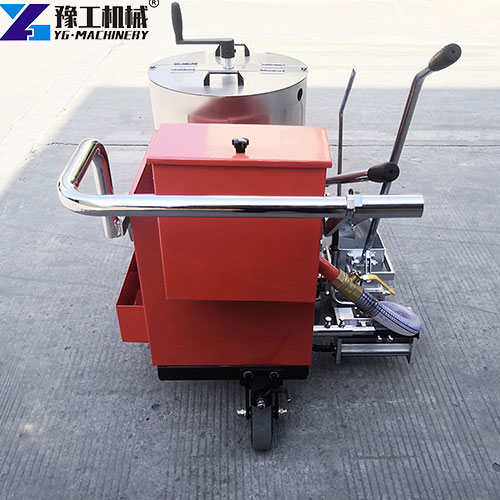
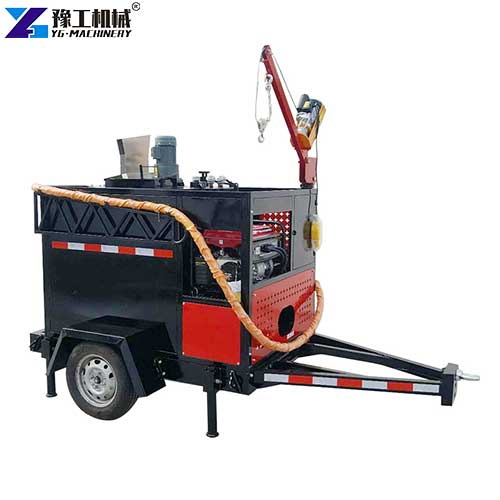
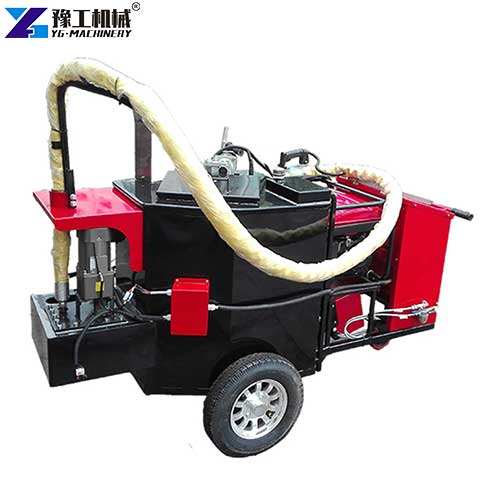
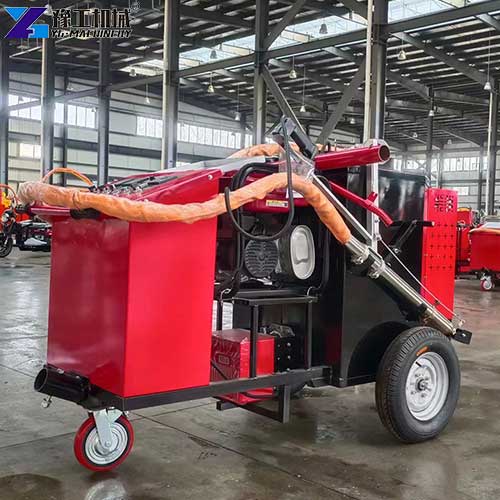
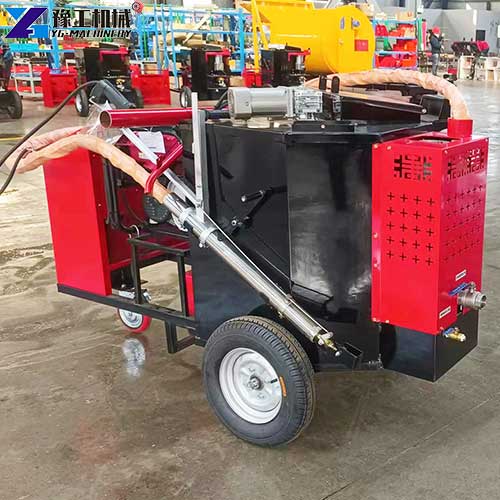
A crack filling machine is essential asphalt crack filling equipment for proactive pavement maintenance. It is designed to professionally seal cracks in asphalt and concrete surfaces. The machine melts solid sealant into a hot, flowable state within an insulated tank and precisely injects it into prepared cracks under controlled pressure, forming a waterproof and dustproof elastic seal. Its core function is to prevent moisture and debris from penetrating the roadbase through early-stage cracks, thereby drastically slowing pavement deterioration and converting costly reconstruction into economical routine upkeep. Featuring intelligent temperature control for consistent quality, anti-clogging design for reliability, and compatibility with routers and cleaners, this asphalt crack sealer machine is a vital asset for highway, municipal, and airport authorities aiming to extend infrastructure service life and optimize long-term maintenance budgets.
Parameter of Small Crack Sealing Machine
| Model | YG-50L | YG-60L | YG-80L |
| Hopper volume | 50L | 60L | 80L |
| Discharge method | Self flow | Asphalt pump feed | Asphalt pump feed |
| Heating method | Liquefied gas | Liquefied gas + heat transfer oil | Liquefied gas + heat transfer oil |
| Temperature control | Temperature sensor 180 ° (temperature control call) | ||
| Filling speed | 10m/min | 15m/min | 15m/min |
| Walking mode | Push-type + brake device | ||
| Mixing method | Manual mixing | ||
| Power configuration | Solar panels + batteries | Yamaha gasoline generator + battery | Solar panels + batteries |
| Dimensions | 1200X700X1200mm | 1200X700X1200mm | 1200X700X1200mm |
| Weight | 120kg | 120kg | 250kg |
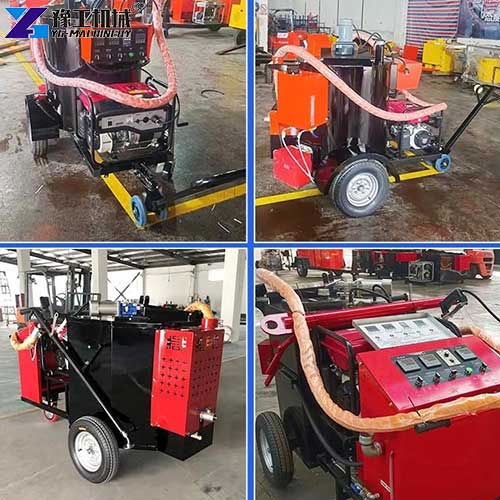
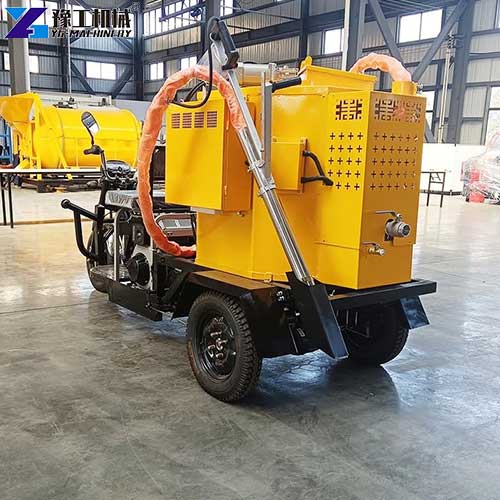
5 Core Features of the Crack Filling Machine
- Professional Sealant Repair: Specifically designed for the hot-applied sealing treatment of cracks in asphalt or concrete pavements. Its core purpose is to prevent water and debris from infiltrating the roadbed, thereby effectively extending pavement service life. It is a key piece of asphalt crack filling equipment for preventative maintenance.
- Intelligent Temperature Control System: Utilizes a precise temperature control system (e.g., an intelligent digital thermostat) paired with an efficient heating system (diesel/gas burner or electric heating). It heats and consistently maintains the sealant at the optimal working temperature for application viscosity (typically 180°C-200°C), ensuring construction quality. This is a hallmark of a professional asphalt crack sealer machine.
- High-Efficiency Anti-Clogging Design: Addresses common clogging points like the pump chamber, interfaces, and nozzle. The equipment incorporates a unique anti-clogging melt tank design and a thermal circulation system, ensuring continuous operation, smooth output, and reduced downtime—a critical feature for reliable crack filling machines.
- Flexible and Mobile Configuration: Offers various traction systems including walk-behind, self-propelled, trailer-mounted, and truck-mounted models. It can be used in conjunction with routers, joint cleaners, and blowers. This flexibility allows it to adapt to different job sites and scales, from city streets to highways, making it a versatile crack fill machine for sale.
- Stable and Reliable Output: Equipped with a powerful pumping system (gear pump, piston pump, etc.) and an agitation device. This ensures even heating of the sealant and allows for consistent pressure (e.g., 2 MPa) and flow rate (e.g., 8 L/min) during the pouring process, resulting in uniform and durable repair—a key performance indicator for any asphalt crack sealer machine.
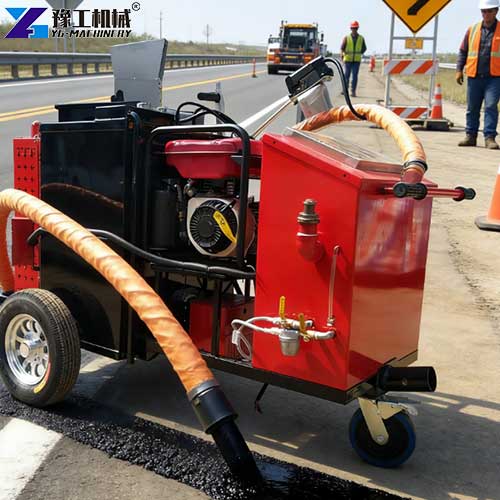
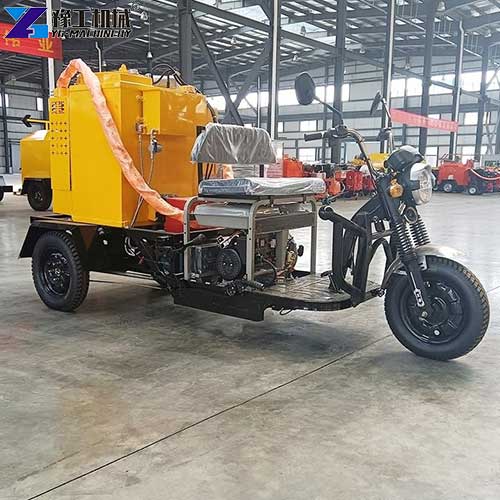
10 Main Structural Components of the Asphalt Crack Filling Equipment
- Hopper/Melt Tank/Kettle: The core component, used for loading and heating solid block sealant (some models can also accommodate liquid sealant). Typically constructed from heat-resistant, corrosion-resistant materials (e.g., stainless steel).
- Heating System: Usually employs a diesel burner, gas burner, or electric heating elements to provide precise, controllable heat for melting the sealant into a flowable state (operating temperature typically around 180°C – 200°C / 356°F – 392°F).
- Insulation Layer: Wraps around the exterior of the hopper to reduce heat loss, improve thermal efficiency, and maintain a stable sealant temperature.
- Agitation/Mixing System: The hopper is usually equipped with a mixing paddle to ensure even heat distribution throughout the sealant, preventing localized overheating/scorching or sedimentation at the bottom.
- Temperature Control System: A precise temperature control device (e.g., thermostat, thermocouple) monitors and regulates the sealant temperature inside the hopper in real-time, ensuring it remains at the optimal viscosity for application.
- Pumping System: Transports the molten sealant from the hopper to the dispensing gun/nozzle. Common pump types include gear pumps, piston pumps, or screw pumps.
- Dispensing System: Consists of the dispensing hose and the dispensing gun (or nozzle). The operator controls the gun’s on/off switch to precisely inject the sealant into the crack. Some advanced models feature an automated crack-tracking dispensing system.
- Power System: Provides the necessary power for the equipment’s operation, typically using a diesel engine or an electric motor.
- Mobility/Traction System:
- Walk-Behind/Push Type: Small-scale units manually pushed by an operator, suitable for small-area repairs or confined spaces.
- Self-Propelled: Equipped with its own powered traction system (wheeled or tracked types), offering convenient mobility and high efficiency, ideal for large-area projects.
- Trailer-Mounted/Towable: Designed to be towed by a traction vehicle (e.g., truck, tractor).
- Control Panel/Operating System: Centralized controls for heating temperature, pumping speed, traction (if self-propelled), etc.
6 Key Application Scenarios for Crack Sealing Machines
A professional asphalt crack sealer machine is a versatile tool critical for infrastructure preservation across multiple sectors:
- Highways & Expressways: This is the primary application. High-speed roads experience significant stress and weather exposure. Regular crack sealing with high-capacity machines is a mandatory preventive measure to delay costly overlays or reconstructions.
- Municipal Streets & Urban Roads: City and town public works departments use smaller to mid-sized units to maintain local road networks, ensuring safety, reducing liability from pavement defects, and maximizing limited maintenance budgets.
- Airport Runways & Taxiways: Pavements in airports face extreme loads and require the highest safety standards. Specialized, high-output crack filling machines are used with premium sealants to maintain smooth, FOD (Foreign Object Debris)-free surfaces critical for aircraft operations.
- Commercial & Industrial Parking Lots: Shopping centers, warehouses, and factory lots require maintenance to ensure customer safety, protect the asset value of the property, and prevent vehicle damage from potholes that start as unsealed cracks.
- Residential Developments & Condominiums: Property managers use compact, maneuverable machines to maintain private roads and parking areas within housing complexes, preserving curb appeal and preventing resident complaints.
- Sports Complexes & Recreational Facilities: Running tracks, tennis courts, and other paved recreational surfaces need regular crack sealing to maintain a uniform, safe playing surface and extend the lifespan of the expensive specialized pavement.
6 Core Reasons to Use an Asphalt Crack Repair Machine
- Implementing Cost-Effective Preventive Maintenance: This is the core purpose emphasized in the document. By sealing cracks on time, a crack filling machine effectively “prevents water and debris from seeping into the roadbed, avoiding further crack expansion and more severe pavement damage.” Controlling repair costs at the early crack stage is far more economical than large-scale excavation and repaving after potholes or structural failure occur. It is a key measure for “extending pavement service life” and can reduce the total lifecycle maintenance cost of the road.
- Maximizing Construction Efficiency & Minimizing Traffic Disruption: The document indicates that a skilled crew using an asphalt crack sealer machine can achieve a daily work output of 2,000-3,000 meters. The equipment integrates heating, conveying, and pouring functions. The sealant also cools rapidly (typically allowing traffic to reopen within minutes), enabling swift construction and shorter road closure times. This significantly reduces traffic congestion and social impact caused by maintenance work, making it particularly suitable for high-traffic roads.
- Fundamentally Protecting Pavement Structure & Halting Damage Spread: Water infiltration through cracks is the primary cause of structural damage like subgrade softening, frost heave, and spalling. The sealing treatment provided by asphalt crack filling equipment creates a waterproof barrier, directly “preventing water, dust, and debris from infiltrating.” This protects the stability and load-bearing capacity of the roadbed, preventing local cracks from developing into extensive alligator cracking, settlement, or potholes, thereby fundamentally safeguarding the road asset.
- Enhancing Construction Quality & Standardization: Compared to traditional manual repairs, a crack fill machine for sale ensures the sealant is at optimal application viscosity through its “precise temperature control device” and provides stable, continuous pouring via its pumping system. This guarantees consistent sealant temperature, complete filling, and excellent bonding. The result is more uniform, reliable, and durable repair quality, promoting the mechanization and standardization of maintenance operations.
- Improving Driving Safety & Comfort: The document mentions that sealed cracks can “provide a smoother driving surface.” Effective sealing eliminates issues like vehicle vibration, water splashing, or instability caused by broken crack edges, water pooling, or uneven surfaces. This enhances driving smoothness and handling, especially at high speeds, helping to reduce potential safety hazards and improve road safety and service levels.
- Meeting Diverse Maintenance Needs with Wide Application Scenarios: Crack filling machines offer flexible configurations (walk-behind, self-propelled, truck-mounted, etc.) and can handle different types of cracks in both asphalt and concrete pavements. They form a complete process chain when used with supporting equipment like routers, joint cleaners, and blowers. As shown in the document, they are suitable for various scenarios, including “highways, airport runways, parking lots,” and can meet maintenance demands ranging from daily municipal upkeep to high-standard locations like expressways and airports, ensuring a high utilization rate for the equipment investment.
5 FAQs about YG Crack Filling Machines
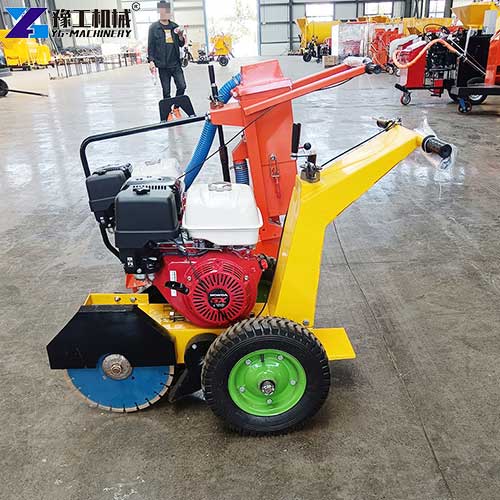
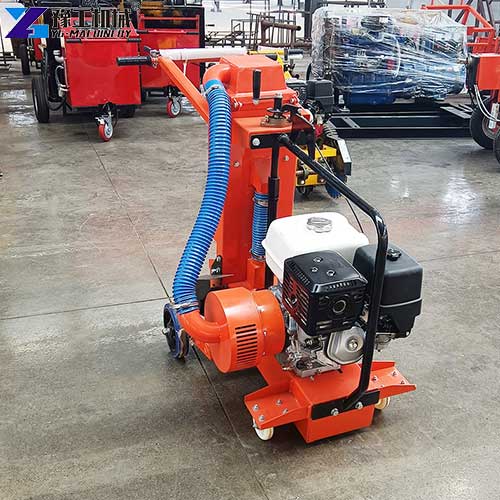
A: Suitable for sealing cracks in asphalt and cement pavements, as well as complex and irregular pavements, on highways, municipal roads, airports, squares, and industrial parks. (Generally used in conjunction with grooving machines and blowers.)
A: Small crack sealing machines use a liquefied gas heating system and circulating heat transfer oil to quickly melt the asphalt or crack sealant. The pressure from the asphalt pump is used to discharge the sealant from the outlet, achieving the crack sealing effect.
A: First, the road needs to be sealed, grouted, cleaned, and then the cracks sealed. This generally requires 4 to 5 people.
A: Czech Republic, Canada, Qatar, Australia, Belarus, Saudi Arabia, Mexico, South Africa, etc.
A: Yes, spare parts are frequently reordered.