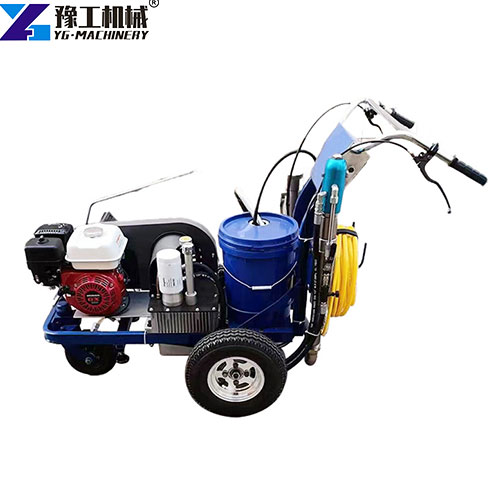
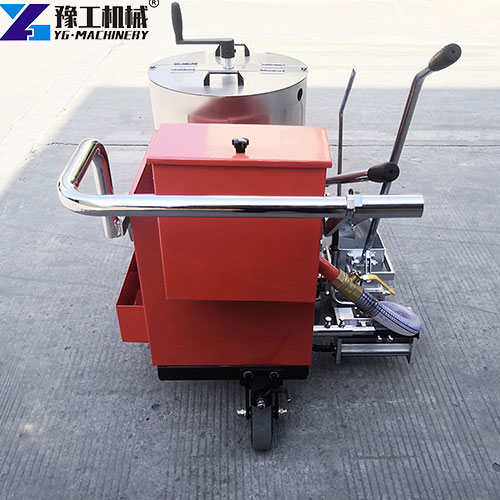
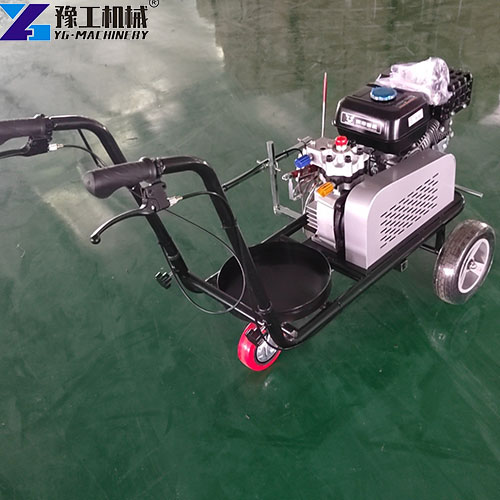
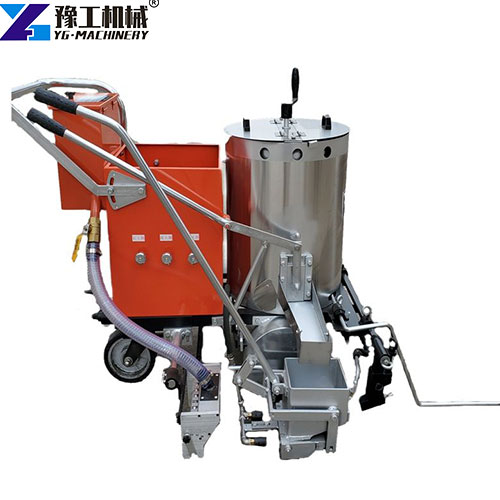
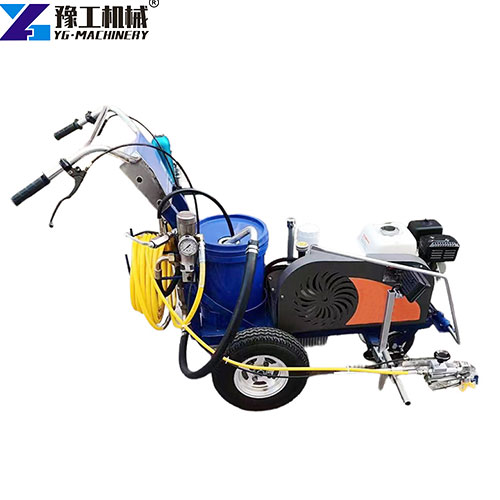
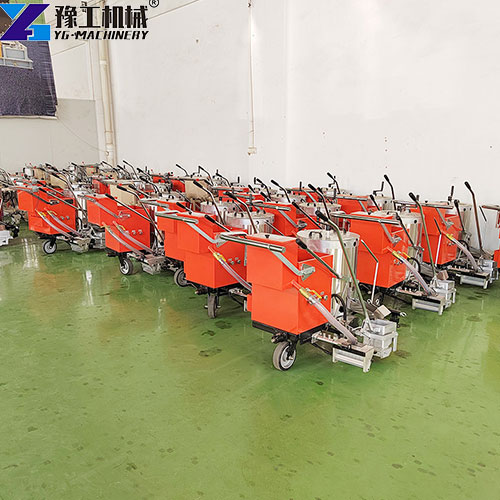
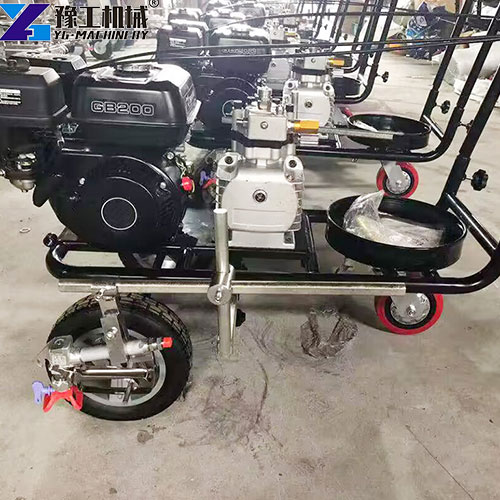
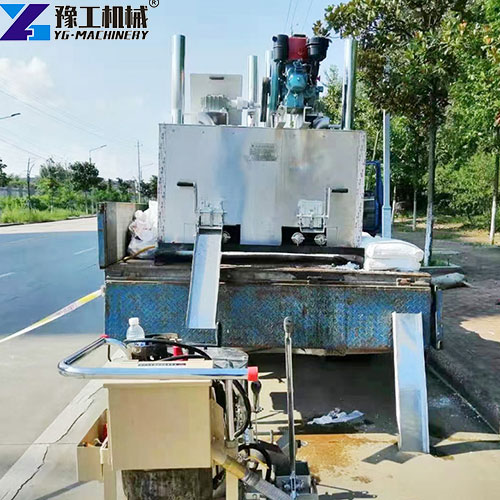
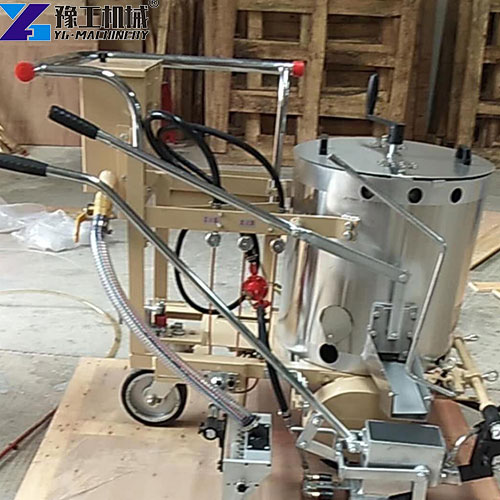
The road line marking machine is the ultimate solution for line marking on roads, parking lots, and sports fields, enabling single-operator, highly efficient construction. Acting like a “surface printer,” a road line marking machine is a pavement construction device widely used on roads, highways, parking lots, plazas, and runways to apply various regulatory, guiding, and warning markings on flat surfaces. Operated by just one person, it achieves efficiency surpassing manual crews and delivers absolute, consistent precision, while simultaneously generating a digital construction file containing coordinates, material usage, and timestamps. YG offers products for hot melt marking, ambient temperature cold paint marking, colored anti-skid marking, vibrating anti-skid reflective marking, and pre-formed marking tapes. If you need it, contact YG for details.
YG Road Marking Machine Technical Parameters
| Model | YG-CK360S | YG-CK380S |
| Thermoplastic Tank | Synchronous clutch spreading, equipped with a speed-adjustable gear-shifting device; single/double spreading can be selected according to needs, 50- 200 mm | Synchronous clutch spreading, equipped with a speed-adjustable gear-shifting device; single/double spreading can be selected according to needs, 50- 200 mm |
| Glass Bead Container | 10kg/box | 10kg/box |
| Adjustable glass bead spreader | Ensure the machine is moving in a straight line or turning freely on a curved road | Ensure the machine is moving in a straight line or turning freely on a curved road |
| Rear Wheel Directional Device | 100kg, double stainless steel heating insulation barrels, plug-in manual mixer devices, and removable devices | Ensure the machine moves in a straight line or turns freely on a curved road |
| Brake | Using a drum brake, you can adjust the brake tension | Using a drum brake, you can adjust the brake tension |
| Marking width | Standard 150mm marking bucket 100mm、150mm、200mm、250mm、300mm、400mm、450mm (at customers’ option) | Standard 150mm marking bucket 100mm、150mm、200mm、250mm、300mm、400mm、450mm (at customers’ option) |
| Battery Capacity | 15AH | 15AH |
| Battery Voltage | 48V lithium battery | 48V lithium battery |
| Driver Speed | 1-8km/hour | 1-8km/hour |
| Working Duration | Ensure the machine is moving in a straight line or turning freely on a curved road | Ensure the machine is moving in a straight line or turning freely on a curved road |
| Dimensions | 1210X970X1070mm | 1200X970X1100mm |
| Net weight | 130kg | 100kg, double stainless steel heating insulation barrels, plug-in manual mixer devices, and removable devices |
5 Steps Working Principle of YG Road Line Marking Machines
- Plan Input: The operator imports CAD drawings, GPS coordinate data, or preset pattern templates into the machine’s control system, serving as the “digital blueprint” for the job.
- Precise Navigation: Using a laser locator, GPS-RTK signal, or mechanical guide wheel, the device pinpoints its exact ground position and path in real-time, ensuring perfect alignment with the “digital blueprint.”
- Material Control: Paint (cold paint, hot melt material, etc.) is pumped under pressure from the hopper or melting kettle to the spray gun. A flow control valve precisely regulates output based on preset line width and travel speed, ensuring uniform coating.
- Simultaneous Application: Directed by the navigation system, the spray gun (or screed) automatically starts/stops while moving, spraying, or extruding material onto the ground according to the set pattern. Movement, positioning, and material discharge are perfectly synchronized, transforming data into physical lines.
- Data Logging: Throughout the process, the device automatically records the application path, material consumption, time, and other data, generating a traceable electronic work report.
5 Core Advantages of Road Line Painting Machines
- Millimeter-Accurate Reproduction: Using laser guidance, GPS-RTK positioning, or high-precision mechanical stencils, it “prints” CAD designs or preset plans onto the ground with flawless accuracy. Error is no longer measured in centimeters, ensuring parking spaces, courts, and traffic markings fully comply with national standards and design specs.
- One Person, One Crew: Integrated self-propulsion, automatic dispensing, and intelligent controls allow a single operator to easily handle layout, marking, and cleanup. This eliminates reliance on multi-person crews and complex coordination, simplifying the job to “drive-and-apply,” drastically cutting labor costs. Discover the efficiency of a road marking machine for sale.
- Autonomous Consumable Management: Built-in flow meters and positioning systems accurately calculate and record paint use per meter. Combined with the work area, it auto-calculates material costs, eliminating estimation errors and waste, making project profits transparent.
- All-Weather Adaptability: Equipped with temperature-controlled material systems and quick-dry technology, it operates reliably in low temps and high humidity, ensuring line adhesion and immediate visibility. This breaks seasonal/weather constraints on schedules, enabling efficient year-round operation.
- Data as Report: The entire job automatically generates a log with line coordinates, paint type, quantity, time, and environmental data. This “digital twin report” is not just proof of work, but a core data asset for future maintenance, liability determination, and asset management.
5 Reasons Road Line Marking Machines Won’t Become Obsolete
- Physical World Anchor: The endpoint of digital planning (BIM, CAD) is physical construction. The road line painting machine is the only reliable execution terminal for anchoring virtual coordinates and designs onto the physical ground with high precision and efficiency. As long as we live in the physical world, this need remains.
- Source of Data Assets: The coordinate, material, and time data it generates are the initial data assets for the digital twins of roads and sites. This traceable, verifiable data underpins smart traffic, asset management, and compliance audits—its value far exceeds the marking itself.
- Functional Integration Platform: Future markings will integrate sensing, illumination, or energy harvesting. As a mature, precise application platform, the marking machine simply needs upgraded materials and controls to “print” these smart lines, evolving rather than being replaced.
- Compliance Necessity: Regulations in traffic, fire safety, and sports are tightening. The objective consistency and data traceability of machine work are the best solutions for meeting strict regulations and avoiding legal risk. Manual work cannot provide the same level of compliance assurance.
- Cornerstone of Automation: In a fully automated construction/maintenance ecosystem (e.g., with collaborative robots), the intelligent road line marking machine is a key automated node. It isn’t replaced; it evolves into a smart terminal that receives commands and provides data, becoming an indispensable part of a larger automated system.
7 Applications of Road Marking Removal Machines
- Transportation Networks: Lane lines, turn arrows, crosswalks, and speed reduction markings on city roads; rumble strips and channelizers on highways; parking stalls, directional arrows, and no-parking grids in lots. The foundational scenario for public traffic safety and efficiency.
- Logistics & Warehousing: Marking aisles, loading zones, forklift routes, safety boundaries, and storage zones in modern warehouses. Enhances operational efficiency and safety.
- Sports Arenas: Line marking for professional basketball, tennis, volleyball, badminton courts, and athletic tracks. Precision directly affects game fairness and venue certification.
- Commercial & Residential Complexes: Parking zone division, traffic guides, fire lane markings, and accessible parking stalls in malls, office parks, and residential areas. Directly impacts customer flow and property management professionalism.
- Industrial Plants: Equipment-designated areas, safety aisles, material staging zones, and hazard warnings on factory floors. A key tool for 5S management and safety visualization.
- Smart Infrastructure: As a precise application platform for positioning ground-based sensors in Vehicle-to-Everything (V2X) pilot projects or drawing high-precision reference lines for autonomous vehicle test tracks.
- Temporary Layouts: Temporary pathways, queue areas, and functional zones for large exhibitions, events, or festivals. Requires fast, clear markings that are easy to remove later. For site prep, a road marking removal machine might be needed first.
5 FAQs About YG Road Marking Machines
A: In terms of “absolute precision” and “long-term consistency,” yes. The machine doesn’t tire; the 1st meter and the 1000th meter are identical. Manual work, affected by fatigue and sight lines, inevitably varies. For scenarios with strict dimensional codes (national standards, fire safety), machine marking is the only reliably compliant choice.
A: Generally, no. This is a key purchase consideration. Equipment is typically designed for a specific material system (e.g., with a melting kettle for hot melt, a specific spray system for two-component). You must identify your primary need before buying. High-end modular models can adapt by swapping core modules, but at a much higher cost.
A: The striping box primarily determines line width. A standard 150mm box is common, but different sizes are available. The striping box and glass bead dispenser are interchangeable. To mark different widths, fit the corresponding box. Changing the box adjusts the line width.
A: The solution is a “combo setup.” Choose low-noise equipment and pair it with automated cone-setting/retrieval vehicles, arrow boards, and full safety gear. The intelligent road line marking machine boosts marking efficiency, but safe, efficient night work requires a complete “fleet system solution.”
A: Daily care focuses on the timely cleaning of nozzles and hoses. Quality equipment, like YG’s, features designs for “reverse flush” or “quick-disconnect” for easy maintenance.