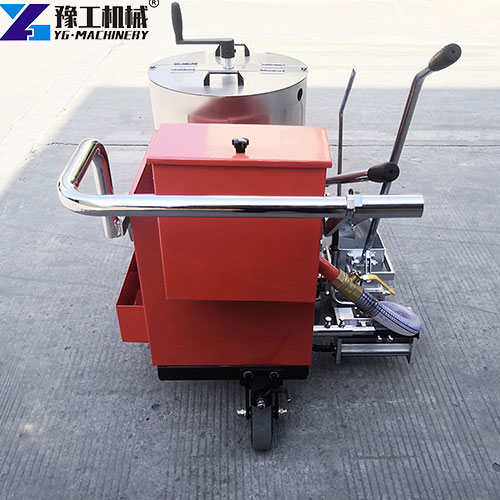
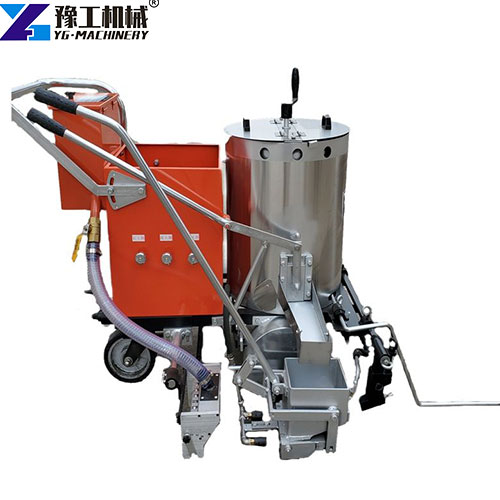
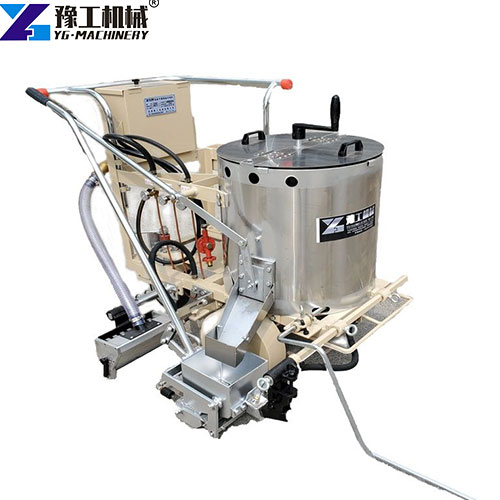
The thermoplastic road marking machine is the core equipment for building high-standard, long-lasting road marking systems. By heating the coating in a melting kettle, it liquefies and is then transported via insulated pipelines to the marking head, where it is applied. At the same time, glass beads are sprinkled onto the surface, and upon contact with the road, the coating rapidly cools and solidifies. The resulting marking has a thickness of 1.5-1.8mm and offers exceptional wear resistance and excellent immediate reflectivity. This equipment is designed for high-value, high-demand projects such as highways, large logistics parks, ports, and airports. It guarantees reliable craftsmanship and a long lifecycle with minimal maintenance, significantly reducing overall lifecycle costs. Choosing a thermoplastic road marking machine means establishing market credibility with professional capabilities and securing long-term, sustainable profits. YG offers a variety of machines, including advanced electric thermoplastic striping machines, thermoplastic melting kettles, and others. Contact us now for more information.
YG Thermoplastic Road Marking Machine
| Model | YG-CK360S | YG-CK380S |
| Thermoplastic Tank | synchronous clutch spreading, equipped with a speed-adjustable gear shifting device, single/double spreading can be selected according to needs, 50-200mm | synchronous clutch spreading, equipped with a speed-adjustable gear shifting device, single/double spreading can be selected according to needs, 50-200mm |
| Glass Bead Container | 10kg/box | 10kg/box |
| Adjustable glass bead spreader | Ensure the machine is moving in a straight line or turning freely on the curved road | Ensure the machine is moving in a straight line or turning freely on a curved road |
| Rear Wheel Directional Device | 100kg, double stainless steel heating insulation barrels, plug-in manual mixer devices, and removable devices | Ensure the machine is moving in a straight line or turning freely on a curved road |
| Brake | Using a drum brake, you can adjust the brake tension | Using a drum brake, you can adjust the brake tension |
| Marking width | Standard 150mm marking bucket 100mm、150mm、200mm、250mm、300mm、400mm、450mm (at customers’ option) | Standard 150mm marking bucket 100mm、150mm、200mm、250mm、300mm、400mm、450mm (at customers’ option) |
| Battery Capacity | 15AH | 15AH |
| Battery Voltage | 48V lithium battery | 48V lithium battery |
| Driver Speed | 1-8km/hour | 1-8km/hour |
| Working Duration | The machine can mark road lines24 hours after charging the battery, 5 hours | Ensure the machine is moving in a straight line or turning freely on a curved road |
| Dimensions | 1210X970X1070mm | 1200X970X1100mm |
| Net weight | 130kg | 100kg, double stainless steel heating insulation barrels, plug-in manual mixer devices, and removable devices |
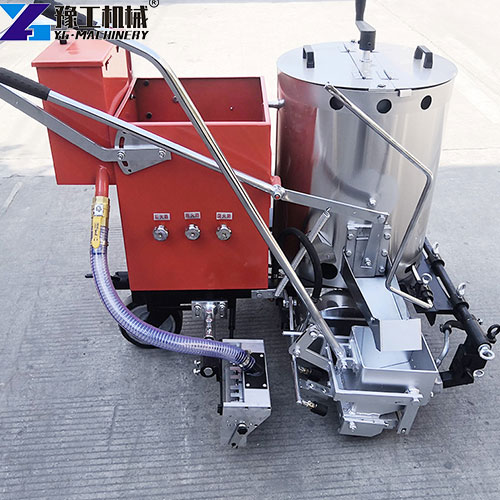
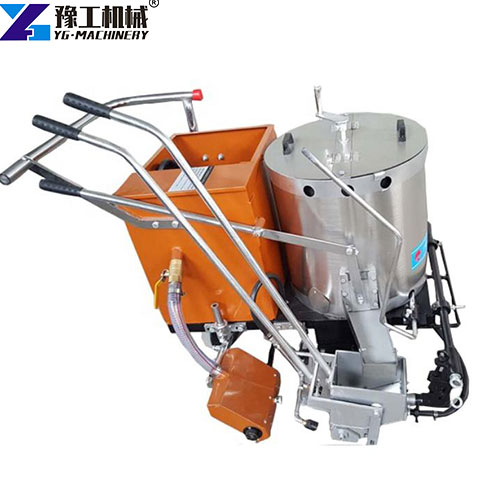
3 Steps Working Process of Thermoplastic Striping Machines
- Melting and Insulation: Solid thermoplastic road marking material (containing synthetic resin, glass beads, and pigments) is loaded into a melting kettle, where it is heated continuously at 180-220°C until it melts into a uniform, viscous liquid. The molten material is then transported through pipelines to the marking bucket while maintaining insulation.
- Application and Synchronized Bead Dispensing: The molten material flows into the marking bucket and is evenly spread into a smooth coating with a thickness of 1.5-1.8 mm as the equipment moves forward at a constant speed. Simultaneously, the built-in glass bead dispenser in the marking bucket precisely and uniformly embeds reflective glass beads (with a refractive index of no less than 1.5) onto the surface of the material.
- Rapid Setting and Traffic Opening: The high-temperature material applied to the road surface cools and solidifies quickly, forming a durable, wear-resistant, and instantly reflective marking. After completion of the application, the material cools and hardens within 3-5 minutes, allowing for rapid traffic opening and minimizing disruption to road operations.
6 Key Features of the Thermoplastic Paint Machines
- Excellent Durability: The modified resin-based thermoplastic paint forms a strong bond with the road surface after high-temperature fusion. The coating thickness is 1.5-1.8mm. Its wear resistance far exceeds that of cold paints, and under standard axle load conditions, the lifespan of the marking is typically 2-4 years, significantly reducing the frequency and cost of long-term road maintenance.
- High Safety: During construction, high refractive index glass beads are embedded, ensuring that the markings provide immediate rain and nighttime reflectivity. This is a crucial feature for enhancing road safety.
- High Construction Efficiency: With an integrated melting kettle, insulation delivery system, and marking head, the thermoplastic paint is continuously melted, maintained at the proper temperature, and applied. The markings solidify within 3-5 minutes after contact with the road surface, minimizing the disruption to traffic. This is particularly suitable for efficient work within short traffic control windows.
- Strong Environmental Adaptability: The construction process is minimally affected by environmental humidity; as long as the surface is dry, the work can proceed. This guarantees a longer effective construction period each year and greater flexibility in scheduling projects.
- Professional Craftsmanship: This equipment represents high-standard road marking craftsmanship, producing stable quality, aesthetically pleasing lines, and uniform thickness. It is essential for projects with strict standards, such as high-grade highways, airports, and ports.
- Wide Range of Applications: From high-traffic highways, national roads, and urban expressways to large logistics parks, port terminals, and civil aviation airports, the thermoplastic road marking machine is the industry-standard solution to meet long-term durability and reflectivity requirements, covering most critical infrastructure fields.
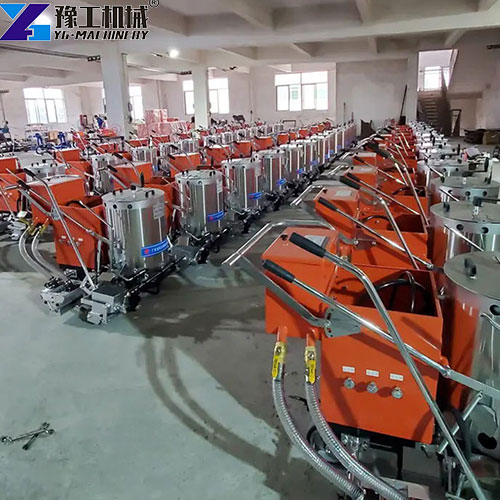
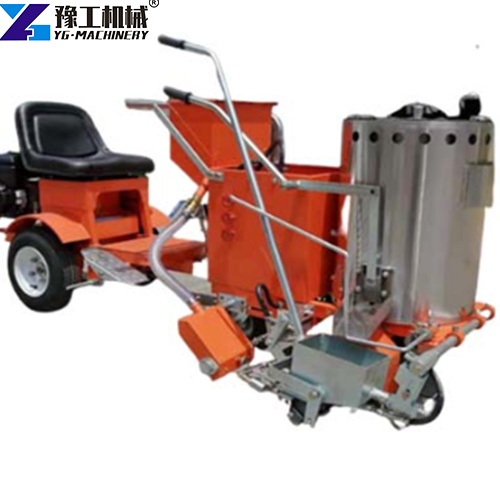
4 Dimensions to Understand YG Thermoplastic Road Marking Machines
- Foundation of Safety: The core process of the thermoplastic road marking machine is the high-temperature application and glass bead embedding, which gives the markings exceptional wear resistance and sustained reflectivity. This process is not only a technique but also the cornerstone for meeting international safety standards like ASTM/DIN. Mastering it means you have the indispensable technology to provide roads with a “permanent safety shield.”
- Long-Term Investment: While the “initial cost” may seem high, its 2-4 years of maintenance-free service life significantly lowers the “average annual cost” compared to frequent resurfacing. You are selling a “long-term road asset,” not a short-term consumable. This shifts your pricing model from “low-price competition” to “value-based pricing,” resulting in more profitable and sustainable returns.
- Eco-Friendly Choice: Compared to cold spray paints, which require continuous production, thermoplastic paints are transported in solid form, reducing packaging and logistics emissions. Its long lifespan significantly reduces resource consumption and construction frequency, aligning with ESG (Environmental, Social, and Governance) investment trends and green building initiatives. This makes your service more attractive to high-end customers.
- Asset Appreciation: For you, it is not just a production tool but a combination of skill capital and tangible assets. As you gain more experience, the value of your skills increases, and the equipment itself maintains high residual value due to its reliability. It allows your business to be resilient to inflation and provides inheritability, marking a critical shift from “labor monetization” to “dual appreciation of assets and skills.”
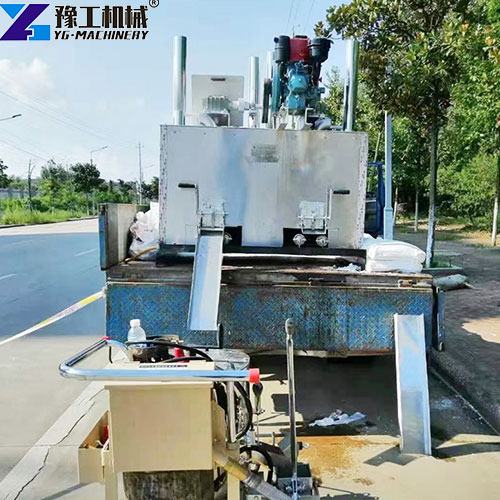
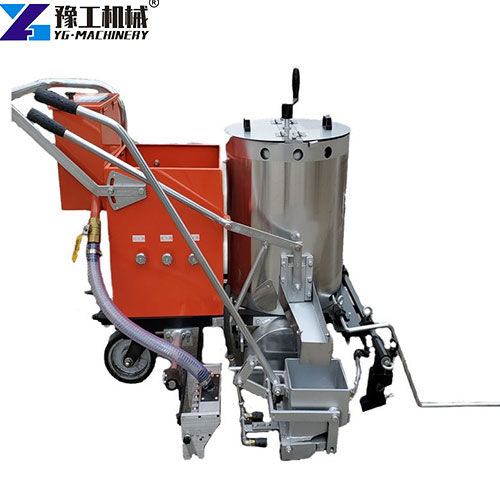
5 Common Applications of Thermoplastic Striping Equipment
- High-Grade Traffic Arteries: Highways, national roads, and urban expressways are the primary application areas for the thermoplastic road marking machine. Its outstanding durability and immediate reflectivity make it the only choice for ensuring road safety and complying with national regulations, playing a vital role as the “lifeline” of road traffic.
- Commercial and Logistics Real Estate: Large shopping malls, logistics parks, and freight ports often experience high traffic volumes and heavy vehicles. Thermoplastic markings can withstand long-term pressure and abrasion, reducing operational downtime and costs caused by frequent resurfacing, making it the foundation of efficient and safe operation for such assets.
- Industrial and Warehouse Management: Modern factories and large warehouses require clear functional zone markings, traffic guidance, and safety warnings to endure frequent traffic from forklifts and other equipment. The mechanical strength and durability of thermoplastic markings ensure they remain clear and effective even in harsh industrial environments, supporting efficient on-site management and safety production.
- Airports and Special Areas: Civil aviation airports require markings on runways, taxiways, and parking areas that meet extreme durability, jet blast resistance, and fuel corrosion resistance. Thermoplastic road marking is the mainstream technology that meets these specialized technical specifications, ensuring safe ground operations at airports.
- Large Sports Venues: Sports stadiums, racetracks, and large exhibition venues’ access roads and parking lots must withstand short bursts of extremely high traffic. Thermoplastic markings ensure clear and reliable markings during critical periods, ensuring smooth operations for major events.
4 FAQs About YG Thermoplastic Paint Machines
A: This depends on the operator’s skill level and road conditions. Typically, it can cover 500-1500 m² per day.
A: Options include hand-push thermoplastic marking machines, advanced electric thermoplastic striping machines, electric vibrating striping machines, and thermoplastic kettle marking machines.
A: It improves work efficiency and saves time during the process.
A: Standard thermoplastic markings are typically 1.5-1.8mm thick. By adjusting the marking head’s hanger, raising it makes the layer thinner, while lowering it increases the thickness.