
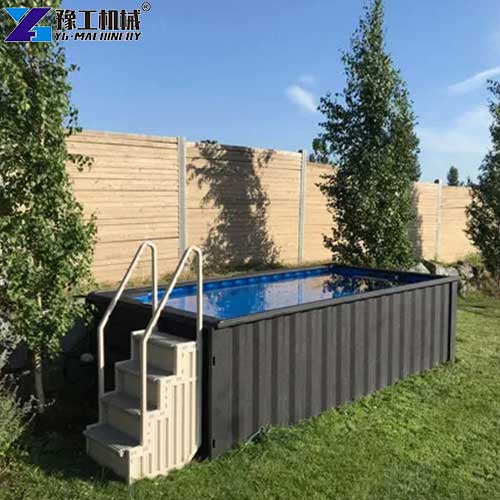
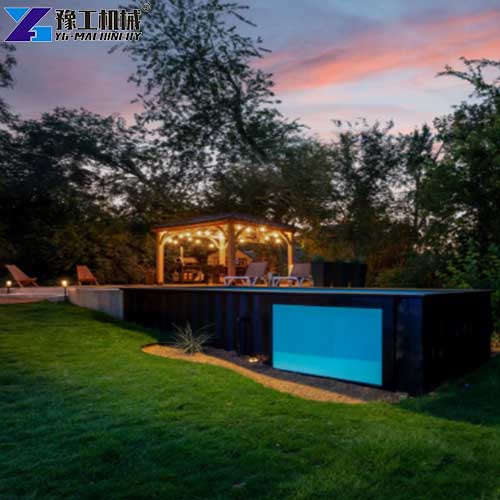
On the journey to owning a private pool, many are deterred by the numerous barriers of traditional construction: months-long timelines, staggering budgets, complex approval processes, and the permanent alteration of the backyard landscape. However, an innovative solution is quietly changing the game—the small container pool. It is not merely a substitute but a complete reimagining of the question, “How do I own a pool?” This article will provide an in-depth comparison between traditional pools and small shipping container pools, revealing how the latter’s unique advantages can make the dream of a sparkling backyard oasis easily attainable.
I. Core Philosophy: Custom-Built Project vs. Modular Product
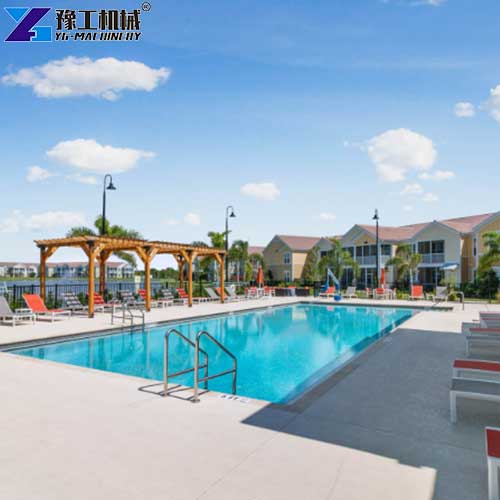
A traditional pool is, at its core, a custom-built construction project. From design blueprints and soil surveys to excavation, reinforced concrete pouring, piping installation, and interior/exterior finishing, each stage resembles building a miniature hydraulic structure. It heavily relies on the skill of the on-site construction team, weather conditions, and the coordination of multiple parties (designers, builders, plumbers/electricians, equipment suppliers), introducing significant uncertainty and variables.
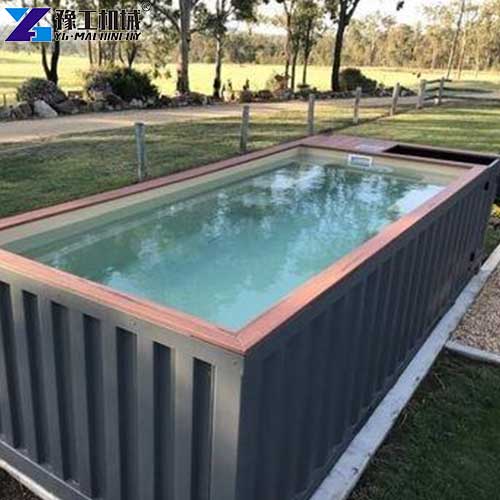
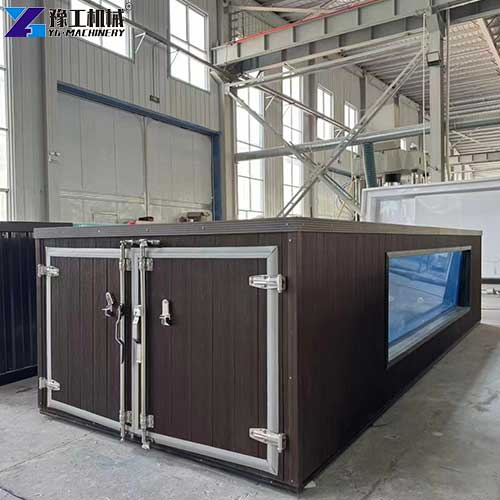
A prefab container pool is a highly integrated, modular product. Its core is a reinforced and modified standard shipping container structure. The entire main structure, waterproof liner, insulation layer, and pre-embedded piping are manufactured and tested in a factory. Upon delivery, it functions more like a large “plug-and-play” appliance, with the main tasks being placement, connection, and commissioning. This shift in philosophy from “construction” to “installation” is the root of all their differences.
II. Timeline: Months of Waiting vs. Weeks of Enjoyment
Time cost is one of the most significant pain points of a traditional pool.
A standard concrete pool typically takes 3 to 6 months or more from contract signing to the first filling. This includes weeks for design and approval, weeks for excavation and structural work (highly susceptible to rain delays), a curing period, and additional weeks for finishing and equipment installation. The long wait tests the owner’s enthusiasm, and delays at any stage can postpone the entire project.
A small shipping container pool compresses this timeline dramatically. Since the main structure is prefabricated, on-site work is significantly simplified. From order placement to taking the first swim, the entire process can be completed within 8 weeks. Most of this time is for factory production and shipping, with on-site installation also being very convenient. This “fast delivery, instant enjoyment” experience perfectly aligns with the modern pursuit of efficiency.
Want to learn more? Please click to learn more about the small container pool.
III. Cost Comparison: Hidden Total Cost vs. Clear Package Price
When comparing costs, one must never look at the initial quote alone. The “total cost” of a traditional pool is often unpredictable.
Traditional Pool: The quoted price usually covers only the main structural shell. Additional items like high-performance filtration systems, heaters, automatic covers, lighting, landscaping, fencing, and long-term water treatment chemicals are all extras. Furthermore, unforeseen site conditions like rock or groundwater, design changes, and increased management costs due to project delays can cause the final bill to far exceed the budget. It’s a classic “low initial quote, high final cost” construction project.
Prefab Container Pool: Its price is typically a clear, packaged cost, covering the pool structure, waterproof liner, standard filtration system, pump, basic lighting, and other core components. While the unit price for the pool itself might seem high initially, the drastically reduced on-site labor, material waste, equipment rental, and unforeseen expenses make the total project lifecycle cost more controllable and competitive. For the user, it’s a clear upfront investment that saves hassle later.
IV. Flexibility & Sustainability: Permanent Fixture vs. Movable Asset
A traditional pool is a “permanent fixture” in the backyard. Once built, it is bound to the land. If you ever want to remodel the yard, sell the property, or change the pool’s purpose, removal or filling it in will be extremely costly and troublesome. It is an asset with very high sunk costs and almost zero flexibility.
A swimming container pool is a “movable yard asset.” Portability is built into its design. If you move or wish to completely change your yard layout, you can hire professionals to lift and relocate the pool to a new site. This characteristic offers multiple benefits:
- Asset Value Retention: It is an industrial product with residual value, not a one-time civil engineering project.
- Land Use Freedom: It preserves the possibility for other yard plans in the future.
- Simplified Approval: Its “non-permanent” nature often simplifies the permit process compared to traditional pools in many regions, avoiding complex building permits.
V. Installation & Landscape Integration: Destructive Construction vs. Minimal Intervention
Traditional pool construction is a “yard storm.” Large excavators roll in, turning the yard into a muddy worksite for months, with inevitable noise, dust, and material piles. The construction can damage existing vegetation and underground utilities, requiring extensive landscaping later to “cover up” the construction traces.
Container pool installation is an “elegant intervention” into the yard, primarily in two modes:
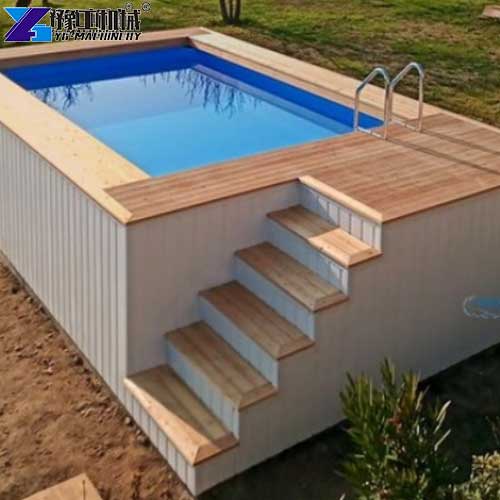
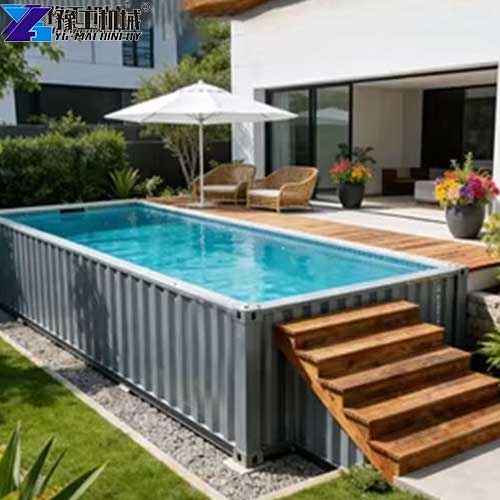
- Above-Ground Installation: Requires only a level, solid foundation (like a concrete slab). The pool is placed on it like a large piece of outdoor furniture. There’s almost no excavation, minimizing damage to the yard’s ecology and structure, and installation is swift.
- In-Ground Installation: Requires excavation, but the earthwork volume is much smaller than for a traditional pool (just a hole matching the pool’s dimensions). The pool’s sturdy structure also lowers the requirements for pit wall support. The construction period is short, and disruption is minimal.
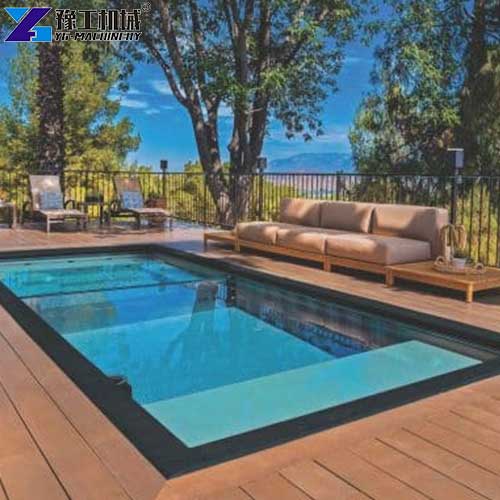
Either way, container pools have modern, clean lines that blend well with contemporary minimalist landscape design. They can be quickly enhanced with wooden decks and strategic planting to boost the yard’s aesthetic appeal.
VI. Performance & Experience: Different Paths to the Same Joy
In terms of core user experience, both ultimately aim for the same goal but take different paths.
- Structural Performance: Traditional reinforced concrete pools have extremely high structural strength and a lifespan of decades. High-quality swimming container pools use an integral steel frame and composite liner (e.g., 10mm thick fiberglass), offering excellent performance in pressure resistance, waterproofing, and insulation. They have a design life of 15-20+ years and can withstand relocation. Their structural reliability far exceeds common perception.
- System Integration: The comfort of a modern pool depends on water circulation, filtration, heating, and cleaning systems. In this regard, there is no fundamental difference. Container pools can also integrate full sets of equipment like sand filters, salt chlorine generators, heat pumps, underwater lights, and automatic cleaners. High-end models even come with prefabricated equipment compartments to neatly house all components.
- Maintenance & Operation: Operating costs depend mainly on water volume, usage frequency, and system efficiency. Because container pools have standard sizes (e.g., 20ft, 40ft), their water volume is relatively fixed, making it easier to calculate and control chemical usage and energy consumption (e.g., for heating). Their smooth liner surface also makes daily cleaning easier.
VII. Expanding Applications: From Residential to Commercial Innovation
Due to their fixed nature and high cost, traditional pools are mostly limited to permanent residences. Prefab container pools, leveraging their flexibility, open up a wider range of application scenarios:
- High-End B&Bs and Boutique Hotels: Quickly create Instagram-worthy pool rooms without lengthy renovation shutdowns.
- Urban Rooftops and Tight Spaces: Utilize their modular nature to create aquatic features in spaces unreachable by traditional pools.
- Seasonal Venues: Such as campsites and festival grounds, where they can be set up temporarily for the peak season and moved afterward.
- Corporate Exhibitions and Pop-Up Stores: Serve as mobile brand experience centers to attract attention.
- Schools and Community Centers: Provide swimming instruction facilities with lower costs and rapid deployment.
YG offers models like 20ft and 40ft. If you’re interested, please contact YG for a consultation.
Small Container Pool-Choose YG Machinery
Choosing between a traditional pool and a container pool is far more than a simple product comparison; it’s a choice between two lifestyles and decision-making logics. If you seek a completely customized, unique, seamlessly integrated ultimate water feature and have ample budget, time, and patience for a complex project, then a traditional pool remains the classic choice.
However, for the vast majority of families and commercial users eager to own a pool, the small container pool represents a smarter, more efficient, and freer solution. It uses industrial precision and modular intelligence to solve the many pain points of the traditional approach: it shortens the wait from months to weeks, turns costs from vague to clear, transforms the asset from fixed to flexible, and changes construction from disruptive to minimally invasive.
In today’s fast-paced world, a container pool allows you to quickly bring a clear, blue aquatic retreat into your life without enduring a lengthy construction ordeal. It’s more than just a pool; it’s a statement about achieving a better life more agilely and wisely. When the dream is no longer bound by complex processes, refreshing your backyard life might only require one decisive step. To learn more, contact YG.