
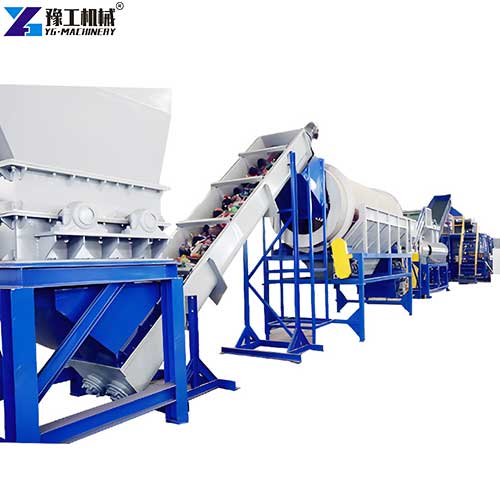
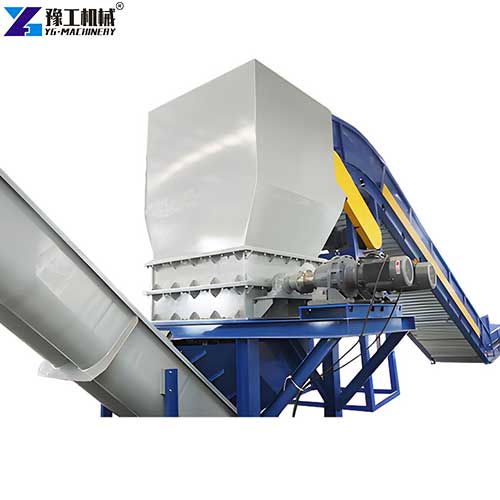
PET bottle washing line, an integrated system specially designed for processing waste rigid plastic daily sundries, PET beverage bottles, plastic buckets, pallets, PP pipes, plastic furniture, and agricultural plastic products. This recycling equipment can be customized, adapting to small workshops and large-scale waste treatment factories. The whole line adopts full stainless steel washing modules and closed circulating water systems to meet global environmental protection standards. The pet bottle recycling line is optimized for post-consumer mineral water bottles, shampoo containers and plastic jars, with special label removal and hot oil washing units to produce food-grade clean PET flakes. All production lines support automatic PLC control, greatly cutting manual operation intensity for global recyclers. If you are interested, please contact YG immediately for more information.
YG PET Bottle Washing Line Parameter
| Capacity | 300KG | 500KG | 1000KG | 2000KG |
| Workshop(L*W*H) | 40 m*7.5 m*6 m | 42 m*10 m*6 m | 70 m*12 m*6 m | 80 m*15 m*6 m |
| Needed worker | 3-4 persons | 5-6persons | 7-8persons | 10-12persons |
| Water supply (recycle use) | 2-3ton/h | 3-5ton/h | 7-10ton/h | 10-15ton/h |
| Final product quality | Moisture: max 1% scraps size: 10-18 mm Metal content: max.20ppm Total impurity: 100-320ppm | |||
7 Working Process of Plastic Recycling Line
Step 1 Pre-Sorting & Metal Removal
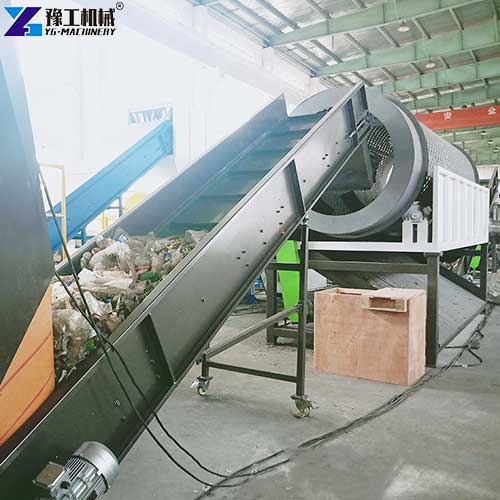
Raw waste plastics are transported to the manual sorting conveyor platform. Workers manually separate foreign materials like wood, rubber, and mixed plastic types to avoid quality defects in later granulation. Meanwhile, magnetic rollers, hanging iron removers, and frame metal detectors are installed on the conveyor. Magnetic equipment absorbs iron scraps, while metal detectors alarm and reverse the belt to take out copper, aluminum, and alloy fragments, preventing blade damage on shredders.
Step 2 Shredding & Crushing
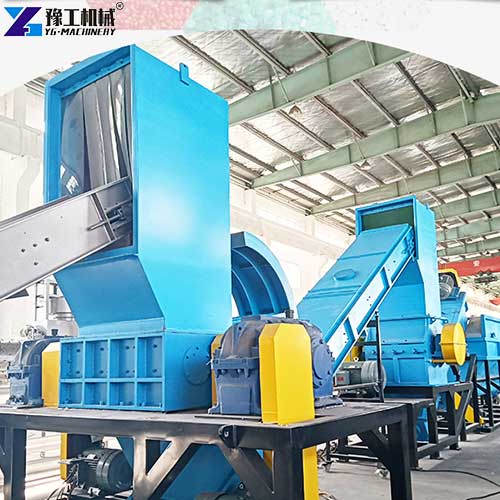
Large-volume materials such as 1000L plastic barrels and road barriers adopt four-axis shear shredders for primary coarse breaking; small daily plastic scraps use double-axis shredders. After coarse shredding, materials enter heavy-duty water-cooled crushers. V-type cutting structure reduces fine powder waste below 5%, and external bearing seats avoid water and dust erosion. Adjustable screen sizes control flake dimensions uniformly for subsequent washing.
Step 3: Conveying & Secondary Iron Separation
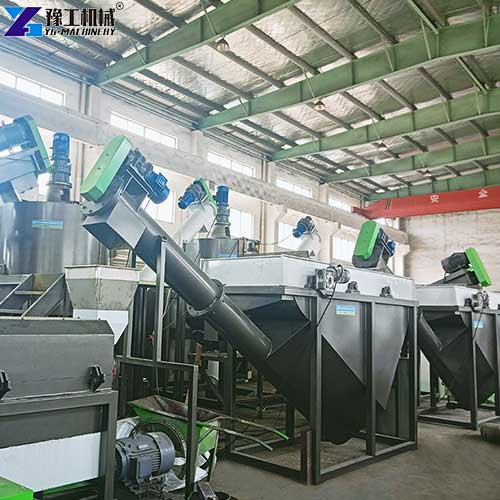
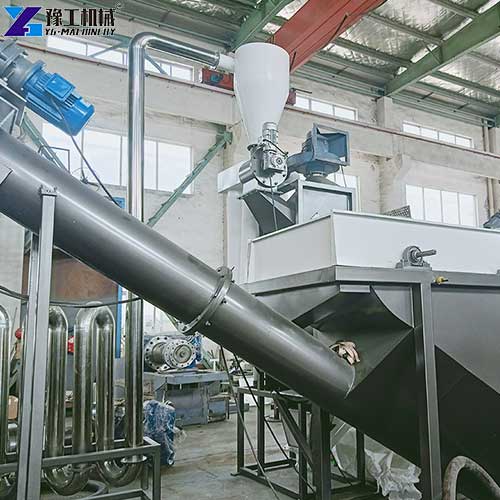
Crushed plastic flakes are lifted by belt or spiral conveyors. Spiral conveyors with bottom water outlets separate residual sewage in advance, lowering the washing system’s burden. A secondary magnetic frame is installed at the conveyor outlet to capture tiny iron fragments missed in the first sorting step, fully protecting follow-up washing equipment.
Step 4 Multi-Stage Washing & Decontamination
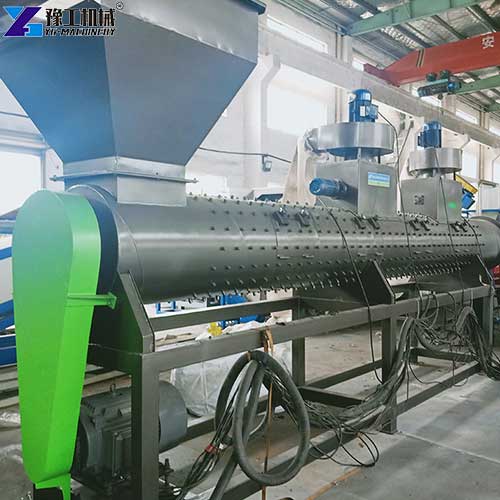
All washing tanks are stainless steel structures, combining 2 friction washing stages and 2 floating rinsing stages. For oily PET bottles and plastic containers, a hot washing tank with automatic alkali addition and temperature control is used to dissolve adhesives, paper labels, and surface grease:
- Low-speed friction washer: Removes surface mud and dust through slow stirring
- High-speed friction washer: Powerful rotation strips residual labels and sticky glue
- Hot washing tank: Chemical hot soak for heavily oil-contaminated plastics
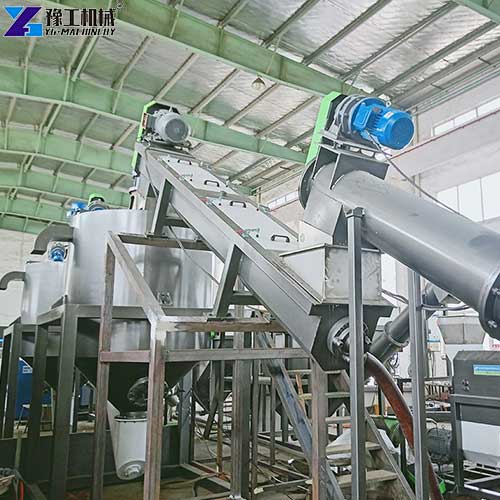
- Floating rinsing tank: Separates PP, PE, and heavy impurities by density difference, sinking sediment is discharged by a spiral without a line shutdown
Step 5 Air Separation & Color Sorting
Clean wet flakes pass through Z-type air separators to blow away light paper fragments and foam residues, raising flake market value. For high-end production demands, an optical color sorter is connected after air separation, automatically separating white, blue, green, red, yellow, and black plastic flakes based on optical differences to realize classified sales of finished materials.
Step 6 Dewatering & Drying
Wet flakes enter horizontal centrifugal dewaterers at high rotating speed, controlling moisture content below 2%. Optional hot-air drying equipment further reduces water content, which is essential for subsequent granulation to avoid foaming inside plastic particles.
Step 7 Granulation & Automatic Packaging
Dry plastic flakes are sent to two-stage granulators. PP materials adopt strip cutting granulation for smooth particles, while PE materials can choose water ring granulation. The double-stage design with double filter screens fully filters tiny impurities. Finally, finished plastic pellets are automatically weighed and sealed by packaging machines for storage and delivery to plastic product factories. The whole line is controlled by a unified PLC system with an automatic alarm for faults.
Real Customer Cases about YG Plastic Recycling Line Work
Case Study 1: American Plastic Recycling Factory – PE Film & PET Bottle Recycling Line
An environmental waste treatment company in the United States purchased a complete set of PET bottle recycling lines, mainly for recycling local waste mineral water bottles and agricultural PE films. Their long-term pain point was outdated equipment with high power consumption, incomplete label removal, and frequent machine jams caused by metal impurities.
Huixing customized a matched line according to local raw material characteristics, equipped with high-sensitivity metal detection systems, large-volume hot washing tanks, and high-yield double-axis shredders. After installation and commissioning, the daily processing capacity reached 16 tons. The integrated circulating water system cut water consumption by 40%, and the flake cleanliness met American recycled plastic raw material standards. The customer feedback: “This pet recycling line completely solved our label residue problem. The automatic sorting system reduces 4 workers, and the stable running rate reaches 99% every day. Local plastic manufacturers offer a 15% higher purchasing price for our clean PET flakes, and we recovered the equipment investment within 9 months.”
Case Study 2: Vietnamese Waste Disposal Enterprise – PP Woven Bag & Rigid Sundry Recycling Line
A large waste recycling enterprise in Ho Chi Minh City, Vietnam, ordered Huixing’s fully automatic plastic recycling line, used to process PP woven bags, plastic buckets and daily hard plastic scraps. Local tropical high temperatures made ordinary washing equipment prone to mold and rust, and the original single friction washer could not remove tropical fruit glue on plastic containers.
We upgraded all washing equipment to thickened 304 stainless steel, added dual high-speed friction washing units, and an automatic alkali-adding hot washing system adapted to high-temperature environments. The crawler feeding design adapts to uneven factory ground in Vietnam. After putting it into production, the finished PP flake yield increased by 22%, and maintenance frequency dropped sharply. The customer commented: “The whole plastic recycling line is easy to operate; our staff finished training in one day without a professional technical background. The after-sales team provides remote video guidance 24/7, and spare parts can be delivered to Vietnam within 10 days. This set of equipment has become our core profit equipment.”
PET Bottle Washing Line Price-Choose YG Machinery
Plastic recycling line forms a complete closed-loop processing system from raw material sorting to finished granule packaging, covering all mainstream waste plastic types on the global market. The standardized 7-step workflow solves common industry pain points, including low cleaning degree, high energy consumption, heavy labor, and easy equipment damage. Whether you run a small recycling workshop with 700kg/h output or a large waste treatment plant requiring 5000kg/h production capacity, we can adjust shredder power, washing configuration, and granulator models to create exclusive recycling solutions.
If you plan to invest in the plastic recycling business and want to learn about detailed quotations and customized flow plans for a plastic recycling line, feel free to contact YG international sales team for free professional technical support.
