
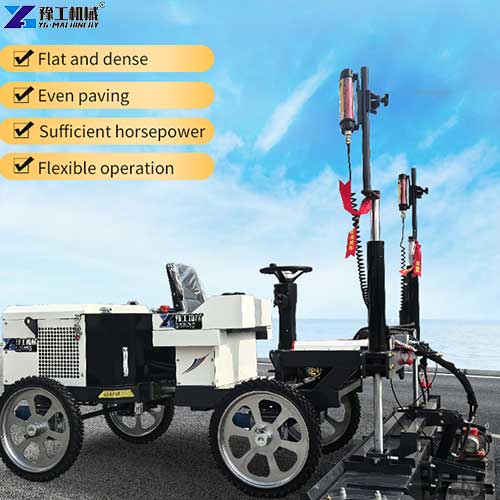
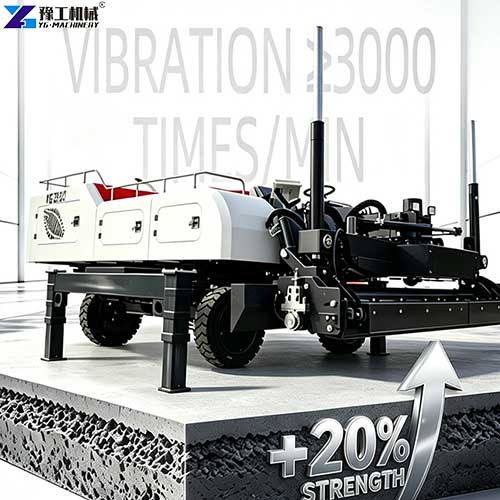
Renovating an old warehouse is not just about pouring concrete. The floor must be flat, dense, and accurate enough for forklifts, storage racks, and modern warehouse operations.
A professional construction contractor in central Poland recently faced this challenge on a 4,200 m² warehouse renovation project. The company had more than 12 years of experience in industrial floor paving and concrete finishing, but its traditional manual leveling method could no longer meet the project’s requirements.
The original plan required at least 14 working days, but the warehouse owner expected completion within 10 days.
After comparing different solutions, the contractor chose the YG concrete laser screed machine.
The result was significant: daily construction output increased from 300–350 m² to 700–750 m², the project was completed in 7 working days, and the construction team was reduced from 8 workers to 3. Want to know more details? Please contact YG now.
Get 12-Month Warranty & 24/7 Technical Support – Learn More
The Customer: A Polish Contractor Specialized in Industrial Floors
The customer is a professional ground construction company based in central Poland.
For more than 12 years, the company has provided:
- Industrial floor paving
- Warehouse renovation
- Factory concrete leveling
- Commercial ground finishing
- Large-area concrete resurfacing
Its customers include local e-commerce and manufacturing businesses that require reliable warehouse and factory floors.
For these projects, three things matter most:
Floor quality + construction efficiency + on-time delivery
The latest project was a 4,200 m² warehouse renovation.
The old concrete floor needed to be re-leveled and resurfaced before the warehouse could be put back into operation.
The contractor quickly realized that the old construction method was not suitable for this project.
Why Was the Old Manual Method No Longer Enough?
The contractor had used manual leveling methods for years.
But on a 4,200 m² warehouse floor, the limitations became obvious.
Construction problems before the upgrade
| Problem | Previous Situation | Project Impact |
|---|---|---|
| Daily output | 300–350 m²/day | Too slow for the project schedule |
| Workers required | 6–8 workers | High labor input |
| Floor accuracy | Depended heavily on operator experience | Uneven areas and height errors |
| Concrete use | Manual paving caused thickness variation | More material waste |
| Rework | Needed when flatness was not acceptable | Increased project time |
| Worker fatigue | Long hours of heavy manual work | Lower construction stability |
| Delivery deadline | 10 days | The traditional method could not meet it |
The biggest problem was the combination of low productivity and unstable floor quality.
For ordinary ground work, small flatness differences may not be critical.
For a modern warehouse, they can become a serious problem.
Uneven floors can affect forklift movement, storage rack installation, and later warehouse operations.
The Deadline Was Only 10 Days — Could Manual Leveling Keep Up?
This was the customer’s most urgent problem.
The warehouse covered 4,200 m², but the traditional method could only complete around 300–350 m² per day.
At that speed, the contractor estimated that the project would need at least 14 working days.
The owner, however, required completion within 10 days.
Old method vs. project requirement
| Item | Traditional Method | Project Requirement |
|---|---|---|
| Warehouse area | 4,200 m² | 4,200 m² |
| Daily output | 300–350 m² | Higher output required |
| Estimated construction period | At least 14 days | 10 days |
| Labor | 6–8 workers | Needed to be reduced |
| Flatness control | Mainly manual | Higher precision required |
The contractor needed a machine that could increase daily output without sacrificing floor quality.
That was when the team began looking seriously at a concrete laser screed machine.
Get 12-Month Warranty & 24/7 Technical Support – Learn More
Before Buying: What Was the Polish Customer Worried About?
The contractor did not choose a machine simply because it had a high output.
He had several practical concerns before making the purchase.
Concern 1: Would the laser system remain accurate?
The contractor had seen low-cost machines with unstable laser systems.
He was concerned about:
- Laser signal deviation
- Slow system response
- Inaccurate leveling after long operation
- Poor floor flatness
For a large warehouse project, these problems could result in expensive rework.
Concern 2: Could the machine handle both large and narrow areas?
Warehouse renovation is not always an open construction site.
The contractor needed equipment that could work efficiently across large floor areas while remaining flexible in more restricted sections.
Concern 3: What about durability and after-sales support?
A machine failure during construction could stop the entire project.
The contractor therefore considered not only the concrete laser screed machine price, but also machine durability, operation support, spare parts, and after-sales service.
What mattered most to the customer?
| Purchasing Factor | Customer Requirement |
|---|---|
| Laser leveling | Stable and accurate |
| Working efficiency | Suitable for large-area paving |
| Operation | Flexible speed control |
| Machine structure | Reliable for continuous work |
| Maintenance | Practical and manageable |
| Service | Technical support and operation guidance |
| Price | Reasonable for long-term use |
Get 12-Month Warranty & 24/7 Technical Support – Learn More
Why Did He Choose the YG Concrete Laser Screed Machine?
After comparing different equipment configurations, the Polish contractor selected the YG concrete laser screed machine.
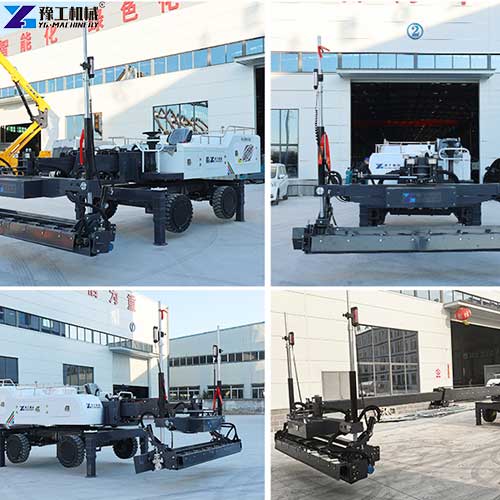
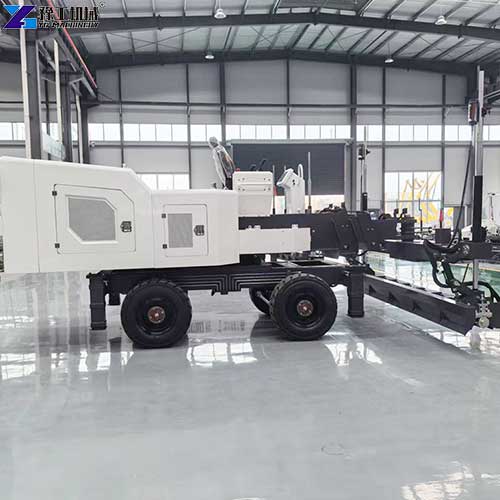
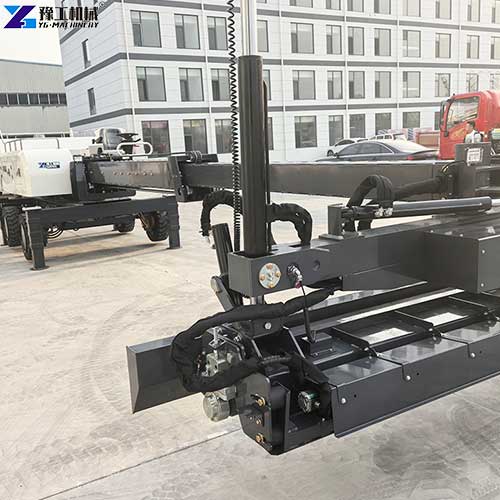
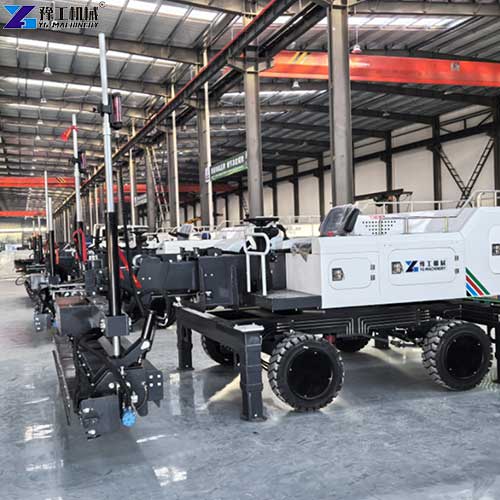
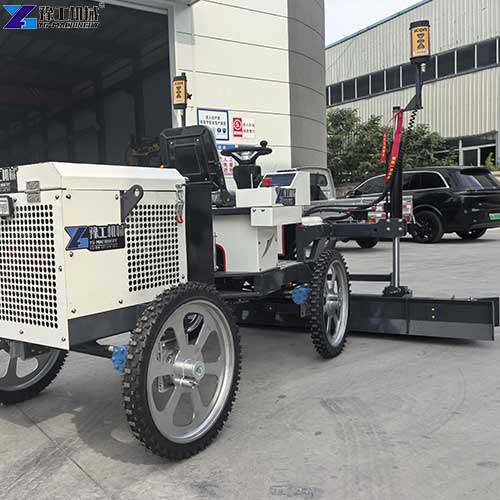
The machine combines laser-controlled leveling with hydraulic walking and a wide screed head, making it suitable for large-area concrete floor work.
YG Concrete Laser Screed Machine specifications
| Model | YGJX31 | YGJX32 | YGJX33 | YGJX34 |
| Engine | ||||
| Model | Generator set | GX390 Electric start | GX390 Electric start | GX390 Electric start |
| Power | 2.0kW | 13hp/3600rpm | 13hp/3600rpm | 13hp/3600rpm |
| Fuel tank (L) | 14.5 | 6.5 | 6.5 | 6.5 |
| Running device | ||||
| Drive | Motor | Hydraulic motor | Hydraulic motor | Hydraulic motor |
| Running mode | Infinitely variable speed | Handle control, stepless speed | Handle control, stepless speed | Handle control, stepless speed |
| Running speed(m/min) | 0-36 | 0-45 | 0-65 | 0-45 |
| Suggest working speed(m/min) | 5 | 5 | 5 | 5 |
| Screed head | ||||
| Type | Self-leveling | Electric control, self-leveling | Self-leveling | Hydraulic control, self-leveling |
| Width | 2500mm | 2500mm | 2500mm | 2500mm |
| Exciting force | 500N | 500N | 500N | 500N |
| Vibration frequency | 50Hz | 50Hz | 50Hz | 50Hz |
| Laser control system | ||||
| Control type | Microcomputer laser scan | Microcomputer laser scan | Microcomputer laser scan | Microcomputer control |
| Operation mode | Walk-behind | Walk-behind | Walk-behind | Walk-behind |
| Forward and reverse | Handgrip control, stepless speed-walking | Hydraulic control | Handgrip control, stepless speed-walking | Hydraulic control |
| Size and weight | ||||
| Working size(mm) | 2758*2622*1980 | 2740×2659×1980 | 2578×2643×1980 | 2780*2622*1980 |
| Weight(kg) | 295 | 365 | 380 | 410 |
The configuration directly addressed the customer’s main concerns.
Get 12-Month Warranty & 24/7 Technical Support – Learn More
From 350 m² to 750 m² a Day: What Changed?
The most obvious improvement was construction efficiency.
Before purchasing the laser screed machine, the contractor could complete approximately 300–350 m² per day.
After using the YGJX32, daily output increased to approximately 700–750 m².
Construction efficiency comparison
| Performance | Before | After YGJX32 |
|---|---|---|
| Daily construction area | 300–350 m² | 700–750 m² |
| Construction method | Manual leveling | Laser screed leveling |
| Workers | 6–8 | 3 |
| Original estimated duration | 14+ days | 7 days |
| Project area | 4,200 m² | 4,200 m² |
| Project result | Deadline pressure | Completed ahead of schedule |
Based on the project figures, daily construction efficiency increased by approximately 110%.
The project was completed in 7 working days, instead of the original 14-day construction estimate.
That gave the contractor a much larger time margin.
Fewer Workers, Less Material Waste, Lower Operating Pressure
Higher output was not the only improvement.
The contractor also reduced labor requirements.
Labor comparison
| Item | Before | After |
|---|---|---|
| Construction workers | 6–8 | 3 |
| Manual heavy work | High | Reduced |
| Worker fatigue | High | Reduced |
| Floor leveling control | Manual | Laser-assisted |
The precise paving process also reduced reported concrete material waste by approximately 18%.
For a large-area warehouse project, even a small reduction in material waste can have a meaningful impact on overall project costs.
The contractor also reported that stable machine operation reduced maintenance-related concerns during the project.
The 4,200 m² Warehouse Was Finished in Just 7 Working Days
The final project results can be summarized clearly.
Project results at a glance
| Key Result | Project Data |
|---|---|
| Warehouse area | 4,200 m² |
| Daily output before | 300–350 m² |
| Daily output after | 700–750 m² |
| Efficiency increase | About 110% |
| Workers before | 6–8 |
| Workers after | 3 |
| Original construction estimate | 14+ working days |
| Actual construction time | 7 working days |
| Deadline | 10 days |
| Floor flatness | Within 2 mm / 3 m |
| One-time forming rate | 100% reported |
| Concrete waste reduction | 18% |
| Egg tray machine | Not applicable |
The last row is intentionally not needed for this case and should not be included on the live page.
Get 12-Month Warranty & 24/7 Technical Support – Learn More
Customer Feedback: “We Completely Changed Our Construction Method”
After completing the warehouse renovation, the Polish project manager shared his experience.
“For many years, we thought manual leveling was the only way for warehouse floor renovation. After using the YGJX32 concrete floor leveling machine, we completely changed our construction mode.
At first, we focused too much on concrete laser screed machine price and worried that cost-effective equipment would sacrifice performance. But this machine proved that balanced price and stable performance is the most valuable choice.
The microcomputer laser scanning system is very accurate, the hydraulic walking is smooth, and the wide screed head makes paving extremely efficient. It solved our low efficiency, poor flatness and frequent rework problems.
For warehouse renovation and large-area concrete paving projects, laser screed machines are no longer optional equipment, but essential tools to guarantee project quality and delivery time.”
The contractor also planned to continue using YG equipment for future renovation projects and recommend the equipment to local peers.
What Can Other Warehouse Contractors Learn From This Project?
This project shows that equipment selection should not be based on concrete laser screed machine price alone.
A better approach is to compare the complete construction result.
What should you compare?
| Factor | Why It Matters |
|---|---|
| Machine output | Determines how much area can be completed each day |
| Laser control | Helps maintain consistent floor height |
| Screed width | Affects coverage per pass |
| Driving system | Determines movement smoothness and flexibility |
| Labor requirement | Directly affects project operating costs |
| Concrete waste | Affects material consumption |
| Maintenance | Influences long-term equipment availability |
| After-sales support | Important when the machine is used on tight deadlines |
| Total project cost | More meaningful than machine purchase cost alone |
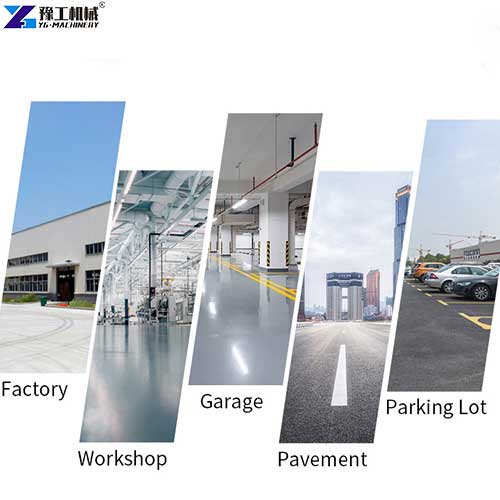
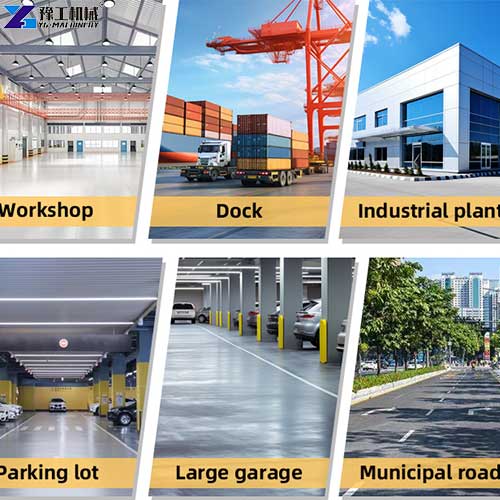
For contractors working on large warehouses, factories, logistics centers, and commercial floors, the right concrete floor leveling machine can become a productivity tool rather than simply another piece of equipment.
Have a Similar Project? Contact YG For Customized Services
The Polish contractor did not buy the YGJX32 simply because he needed a new machine.
He bought it because his traditional construction method could no longer keep up with the demands of a 4,200 m² warehouse renovation project.
The results were clear:
- Daily output increased from 300–350 m² to 700–750 m²
- Construction time was reduced from 14 days to 7 days
- The workforce was reduced from 6–8 people to 3
- Floor flatness was controlled within 2 mm per 3 meters
- Reported concrete waste was reduced by 18%
- The project was completed before the customer’s 10-day deadline
For contractors, this is the real value of a concrete laser screed machine.
It is not simply about buying a machine at the right price.
It is about completing more floor area, maintaining consistent quality, reducing labor pressure, and meeting demanding project deadlines.
If you are planning a warehouse renovation, factory floor project, or large-area concrete paving job, send YG Machinery your project area, required construction time, floor requirements, and working conditions.
We can help you evaluate the suitable concrete laser screed machine and configuration for your project.