If you work in power utilities, telecommunications, or industrial electrical installation, you already know how challenging cable pulling can be. Long‑distance cable runs, heavy‑gauge conductors, and complex underground ducts often slow down projects, raise labor costs, and create safety risks for field crews. A hydraulic cable puller machine changes the whole game by delivering steady, adjustable pulling force without putting excessive physical strain on workers. Want more details? Please contact YG anytime.
Want to Know More Detailed Product Information? Co ntact YG Now!
YG Hydraulic Cable Puller Machine Parameters
| Model | YG-40 | YG-60 | YG-120 | YG-150 | YG-220 | YG-280 | YG-380 | |
| Max intermittent pull | KN | 40 | 60 | 120 | 150 | 220 | 280 | 380 |
| Max continuous pull | KN | 30 | 50 | 100 | 120 | 180 | 250 | 350 |
| Speed at max pull | km/h | 2.5 | 2.5 | 2.5 | 2.5 | 2.5 | 2.5 | 2.5 |
| Max speed | km/h | 5 | 5 | 5 | 5 | 5 | 5 | 5 |
| Pull at max speed | KN | 20 | 25 | 50 | 60 | 90 | 120 | 170 |
| Diesel | kw(hp) | 77(103) | 77(103) | 129(173) | 129(173) | 239(320) | 298(400) | 440(590) |
| Cooling system | Water | Water | Water | Water | Water | Water | Water | |
| Electrical system | V | 24 | 24 | 24 | 24 | 24 | 24 | 24 |
| Bull-wheel diameter | mm | 400 | 450 | 600 | 600 | 760 | 960 | 960 |
| Groove number | 7 | 7 | 10 | 10 | 10 | 11 | 11 | |
| Max rope diameter | mm | 16 | 18 | 24 | 24 | 30 | 38 | 38 |
| Max diameter of rope reel | mm | 1200 | 1400 | 1400 | 1600 | 1600 | 1600 | 1900 |
| Total weight | kg | 3000 | 3500 | 4800 | 5500 | 6800 | 12800 | 13600 |
Want to Know More Detailed Product Information? Co ntact YG Now!
Core Functions of the Hydraulic Cable Puller Machine
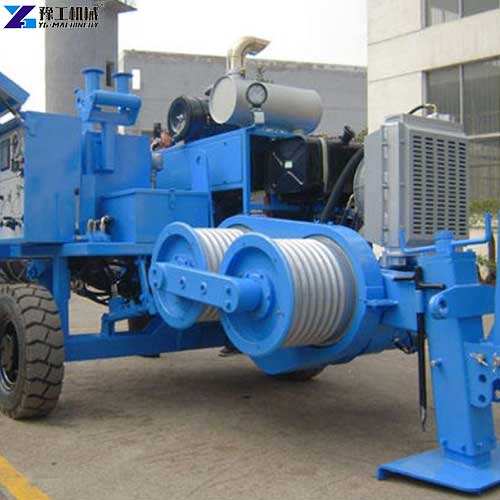
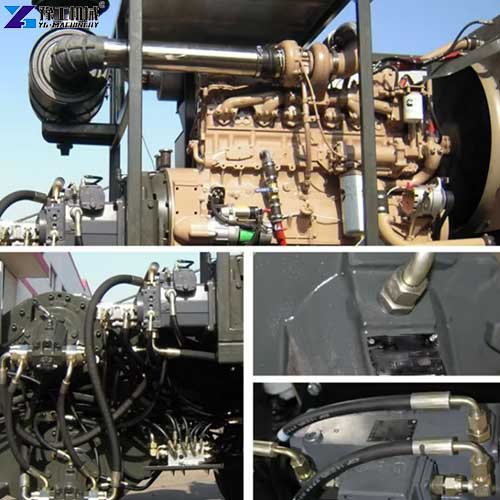
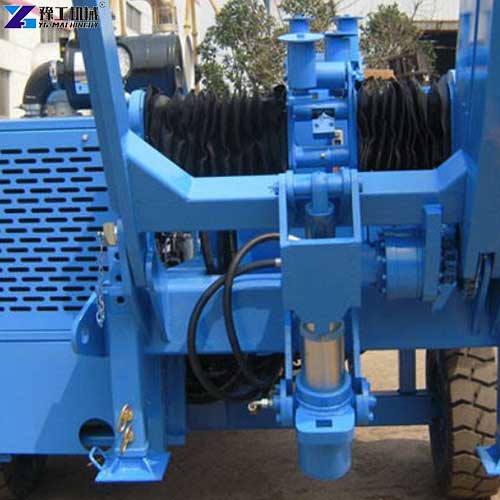
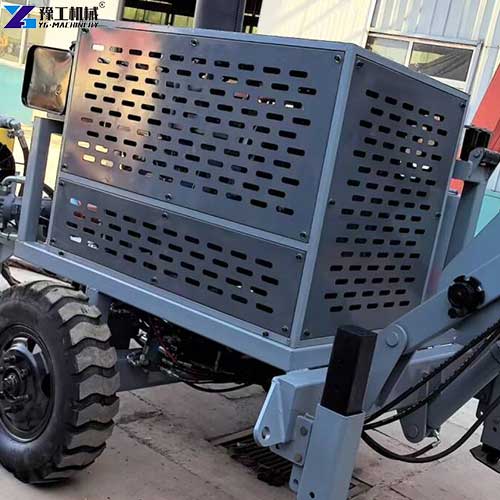
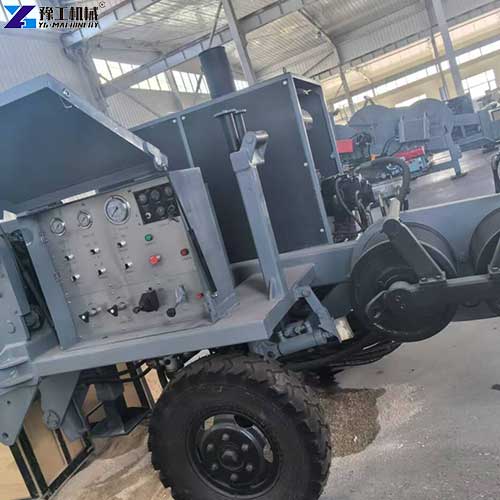
The hydraulic cable puller machine is purpose‑built for cable hauling jobs in power and communication construction. Its hydraulic drive system generates stable pulling tension that operators can adjust on‑site according to cable specifications and terrain conditions.
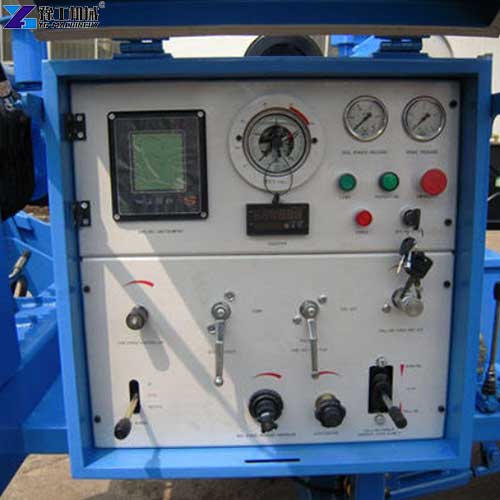
- It provides controllable continuous pulling force. Operators can set pulling speed and tension value, so cables move smoothly without sudden jerks that scratch cable jackets or damage inner conductors. Many models include real‑time tension monitoring; once the pulling load exceeds the preset safe threshold, the machine will automatically limit force to protect expensive cables from tearing.
- It supports multi‑type pulling tasks. It can pull steel pilot ropes, high‑voltage power cables, underground duct cables, overhead conductors, and fiber‑optic cables. Different rope drums and adapter fittings allow quick switching between light‑duty fiber‑optic jobs and heavy‑duty high‑voltage cable installation.
- Reliable safety functions are built‑in. Emergency stop, overload protection, and a brake locking mechanism keep both equipment and field workers secure. Even on sloped job sites, the drum holds tension steadily to prevent rope roll‑back accidents.
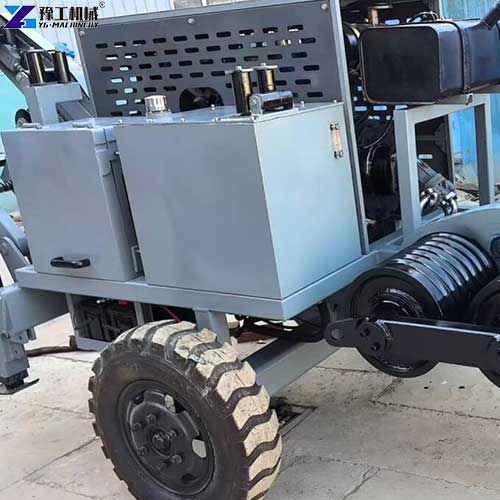
- Good mobility and adaptability. Most cable puller machine units are compact; some come with wheeled frames so crews can move them between trenches, substation zones, or overhead line towers without heavy lifting equipment. It can run stably in high‑temperature outdoor construction sites common across many overseas markets.
What Does a Hydraulic Cable Puller Machine Replace on Construction Sites?
Before mechanized pulling tools became widely available, field teams relied heavily on labor‑intensive approaches that created many hidden troubles. The hydraulic cable puller machine mainly replaces three traditional working modes.
- Full‑manual human pulling with fish tapes and hand winches. For decades, workers used fish tapes and simple hand‑crank winches for cable‑pulling. On short, light‑cable jobs, it might work, but for long conduit runs or heavy power cables, multiple workers must pull together. Physical strength limits pulling power; sharp jerks easily damage cable insulation. Worker fatigue often causes inconsistent pulling speed, increasing failure risk. Manual pulling also creates occupational safety risks: muscle strains, hand injuries from slipping ropes, and even accidents when cables suddenly snap under tension.
- Ordinary small‑capacity electric winches lack hydraulic tension control. Basic electric winches offer mechanical power, yet they lack fine tension adjustment. They deliver full power output once started. When cables get stuck inside bent ducts, the winch keeps applying force, which rips cable outer layers or breaks inner wires. Repairing or replacing large power cables costs a huge amount of money and delays project schedules. Without real‑time load feedback, operators cannot know exactly how much force they are applying to the cable.
- Temporary makeshift pulling setups. Many contractors used to rig up makeshift pulling assemblies with hoists and simple clamps to finish urgent tasks. These homemade combinations have no standardized safety design. They often slip, lose tension, or suffer component failure during pulling, threatening crew safety.
By replacing these outdated solutions, the hydraulic cable puller machine centralizes controlled pulling power. One or two trained operators can finish jobs that previously needed 6‑10 site workers. Labor demand drops, project cycle shortens, and cable‑damage repair costs are greatly reduced.
Want to Know More Detailed Product Information? Co ntact YG Now!
6 Common Real‑World Usage Scenarios for Cable Puller Machine
A quality cable puller machine serves a wide range of infrastructure projects across global markets. Here are its most typical application scenarios.
- Overhead power‑line construction: Pulling pilot ropes and overhead conductors for medium‑voltage and high‑voltage transmission lines. It works in hilly countryside zones, open plains, and mountainous construction locations, helping teams string lines between transmission towers.
- Underground cable installation in urban zones: Pulling heavy power cables and fiber‑optic cables through buried ducts and underground trenches. Urban renovation projects often have long conduit routes with multiple bends, where stable hydraulic tension prevents jamming and cable scratching.
- Substation construction and upgrade: Inside substations, large‑cross‑section power cables need hauling between equipment cabinets. Limited working space requires compact yet powerful pulling equipment.
- Renewable‑energy site building: Wind‑farm and solar‑park projects require large volumes of power‑cable laying across wide sites. Continuous pulling capacity speeds up cable‑laying progress for renewable‑energy infrastructure.
- Telecommunication network expansion: Deploying fiber‑optic cables for broadband network roll‑out in cities, towns, and remote rural regions. It handles both underground duct fiber pulling and overhead fiber‑cable stringing work.
- Post‑disaster power‑network restoration: After storms or flood damage, crews need fast cable‑replacement work. A portable hydraulic cable puller machine allows quick setup to restore power supply in affected communities.
No matter whether you handle utility bidding projects, subcontract electrical installation, or maintain municipal power facilities, sourcing a reliable hydraulic cable puller machine for sale directly improves your overall project performance.
Want to Know More Detailed Product Information? Co ntact YG Now!
Genuine Feedback From YG Machinery Clients
We have shipped our cable puller machine products to dozens of countries. Below are real‑world comments shared by two overseas contractors who bought YG hydraulic cable pulling equipment.
Case 1: Utility contractor from Chile, working on urban power‑grid renovation. “Before buying our YG hydraulic cable puller machine, our team used hand winches and basic electric winches. Pulling heavy underground cables often required 8 workers, and we occasionally scratched cable jackets. Sometimes we spent extra days repairing damaged cables. After we received the machine, two operators can complete the same pulling work. The adjustable hydraulic tension is fantastic. When the cable meets resistance inside the duct, the machine will not over‑pull automatically. Our cable‑damage rate dropped almost to zero. Labor cost per pulling task went down significantly. The machine is tough; we have used it under hot outdoor summer conditions, and it still runs reliably. We would recommend any power‑construction company to look for a hydraulic cable puller machine from professional manufacturers.”
Case 2: Telecommunication subcontractor in South Africa for fiber‑optic network roll‑out “We needed a cable puller machine that can handle both overhead fiber‑optic stringing and underground duct pulling. We compared multiple brands before choosing YG. The machine is compact enough to transport to remote rural work sites. Setup time is short; our technicians learned basic operation within half a day following the supplied operation manual. What impresses us most is consistent pulling speed. When you lay long‑distance fiber cables, uneven pulling force can crack fiber cores. This hydraulic unit keeps steady tension. Our project completion speed increased. After‑sales support response is good; the technical team gave us remote guidance when we had questions about parameter adjustment. For companies expanding communication infrastructure, mechanized pulling equipment is absolutely worth the investment.”
Want To Get The Latest Product Information? Contact YG Now!
If you are browsing for a hydraulic cable puller machine for sale, do not settle for low‑grade equipment with poor hydraulic control. Bad‑quality pulling machines may cause cable damage, safety hazards, and frequent breakdowns on‑site, costing you far more money in the long run.
YG Machinery is an experienced industrial equipment manufacturer. Our hydraulic cable puller machine is built with heavy‑duty hydraulic components, real‑time tension monitoring, and complete safety protection features. We supply multiple models with different pulling capacities to match light‑duty fiber‑optic jobs, medium utility installations, and heavy‑duty high‑voltage power‑cable projects. We also provide operation manuals, remote technical guidance, and spare‑part support for global clients.
Whether you need one unit for your own construction team or you plan bulk procurement for resale, reach out to the YG team today. Tell us your working conditions, cable types, and maximum pulling‑force requirements. Our professional staff will recommend the most suitable cable puller machine solution for your business.