
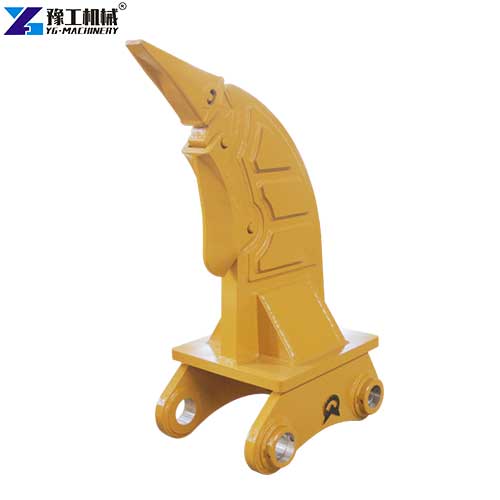
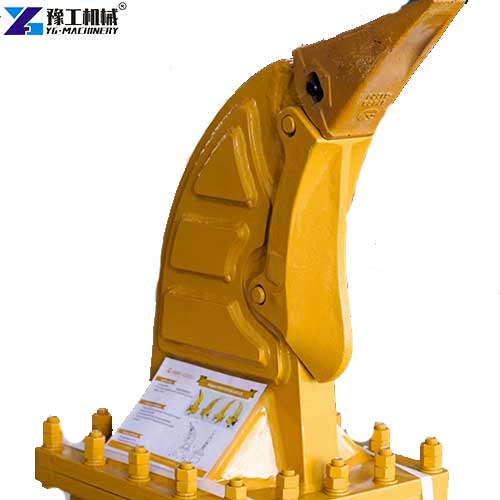
Hard compacted soil, weathered rock stratum, and frozen winter soil have always been the most troublesome working conditions for mini excavator construction. Standard digging buckets often slip, get stuck, or fail to penetrate the ground, resulting in low efficiency, bucket wear, and even project delay. With the rapid upgrade of small engineering machinery, the mini excavator ripper has become the core special tool for complex terrain construction. Also known as a root ripper for mini excavators and a professional ripper tooth excavator, this single-tooth attachment is widely available as an excavator ripper for sale in the global construction machinery market. Different from ordinary digging accessories, the excavator ripper is specially designed for hard strata. This article will comprehensively analyze the working principles, standard operating angles, force control skills, and professional usage strategies in frozen soil, hard soil, and weathered rock conditions, helping operators achieve maximum efficiency and minimal equipment loss in complex construction scenarios. If you are interested, please contact Yugong Machinery immediately for more information.
Mini Excavator Ripper Parameter
| Category | Unit | YG-00 | YG-01 | YG-02 | YG-04 | YG-06 | YG-08 | YG-08S | YG-10 | YG-14 | YG-17 | YG-20 |
| Total Length A | mm | 523 | 523 | 656 | 656 | 885 | 1080 | 1080 | 1290 | 1290 | 1500 | 1550 |
| Width B | mm | 130 | 130 | 180 | 180 | 240 | 345 | 345 | 400 | 400 | 465 | 465 |
| Thickness F | mm | 36 | 36 | 55 | 55 | 80 | 90 | 90 | 90 | 110 | 110 | 110 |
| Carrier | Ton | 1-2 | 3-4 | 4-6 | 6-9 | 12-16 | 20-23 | 23-26 | 26-30 | 30-40 | 40-52 | 50-90 |
| Weight | kg | 30 | 40 | 80 | 85 | 185 | 400 | 410 | 600 | 760 | 1030 | 1200 |
I. Why the Mini Excavator Ripper Is the Best Choice for Complex Hard Strata
1. Unique Single-Tooth Penetration Advantage
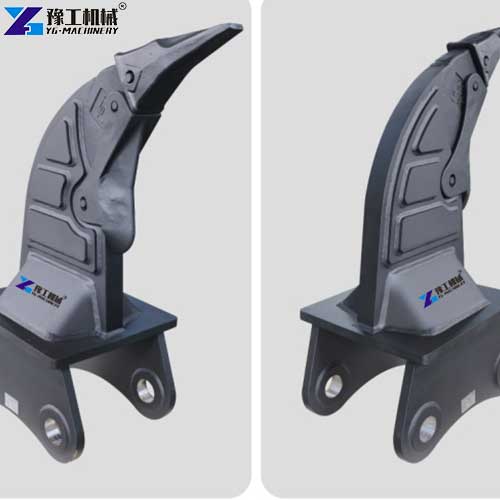
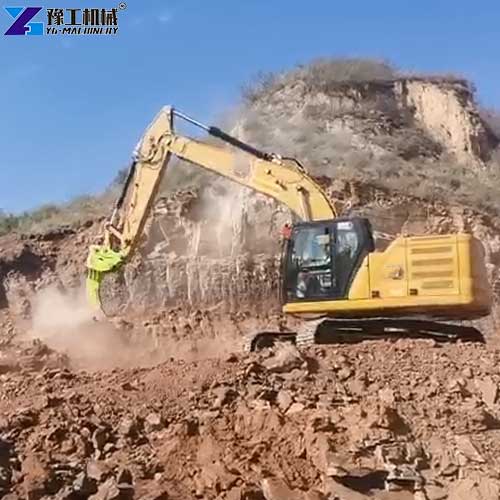
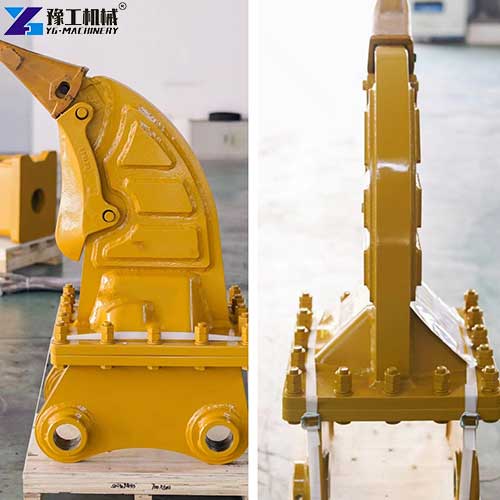
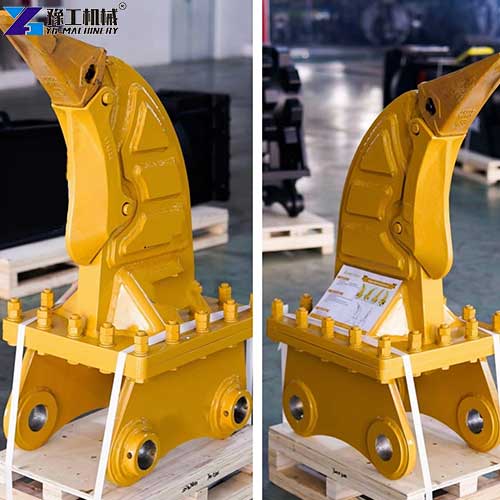
The ripper tooth excavator adopts a sharp single-tooth, streamlined structure. Compared with multi-tooth buckets, it concentrates all the excavator’s hydraulic pressure and down pressure on a single point. This point pressure can easily break through the hard shell of frozen soil, compacted clay, and weathered rock, solving the problem that ordinary buckets cannot penetrate hard ground.
2. Strong Adaptability for Multiple Complex Working Conditions
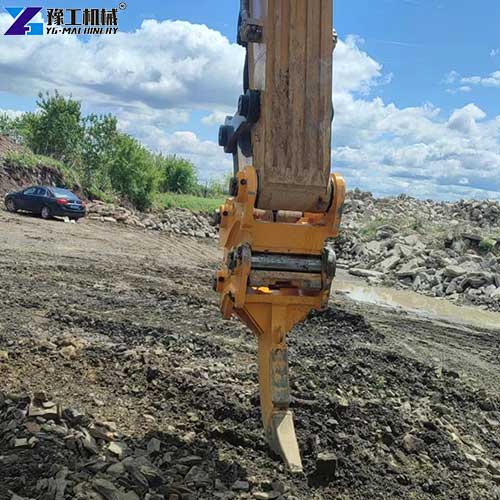
The mini excavator ripper is not only used for root removal and soil loosening, but also perfectly copes with three major difficult working conditions: hard compacted soil in long-term construction sites, fragmented weathered rock on mountain slopes, and hard frozen soil in low-temperature winter environments. It fills the gap between inefficient bucket digging and high-vibration breaker breaking.
3. Low Vibration & No Damage to Excavator
Many contractors worry that breaking hard ground will damage the excavator’s main machine. The root ripper for a mini excavator adopts a gradual prying force instead of a violent impact force. It produces uniform and mild vibration, effectively protecting the excavator arm, hydraulic pump, and bucket cylinder, bringing a longer service life for construction equipment.
4. High Cost-Performance & Wide Applicability
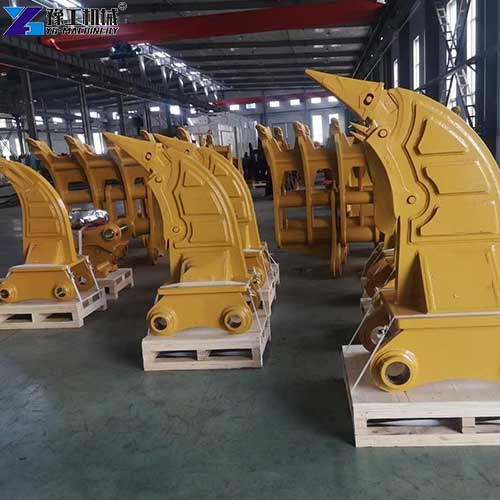
Compared with expensive hydraulic breakers, the excavator ripper for sale features low purchase cost, simple structure, and almost zero daily maintenance. It is the most cost-effective accessory for long-term complex terrain construction.
II. Optimal Operation Angle & Force Skills for Different Hard Working Conditions
1. Operation Guide for Hard Compacted Soil
Hard compacted soil is formed by long-term rolling and extrusion, featuring a hard surface and dense internal texture.
Best cutting angle: 30°–45° between the ripper tooth and the horizontal ground
Optimal force control: Priority to use excavator’s self-weight down pressure, avoid violent boom impact
Operation tips:
Insert the ripper tooth excavator into the hard soil layer at a 35° angle first. After the tooth tip penetrates 10–15cm, slowly retract the bucket cylinder and lift the boom slightly to form a prying force. Do not rush for deep digging at one time. Loosen the hard soil layer in layers to prevent tooth bending or tooth tip wear. After loosening, switch to the bucket quickly for cleaning, which greatly improves overall construction efficiency.
2. Operation Guide for Weathered Rock Stratum
Weathered rock is fragmented, loose but hard overall, easy to collapse, and easy to cause tooth jamming.
Best cutting angle: 45°–60° inclined cutting
Optimal force control: Constant slow hydraulic thrust, no sudden force
Operation tips:
For weathered rock slopes and foundation rock layers, use the mini excavator ripper for segmented inclined ripping. A 50° angle can maximize the contact force of the tooth tip and avoid sliding on the rock surface. Operators should keep a uniform propulsion speed. Sudden heavy force will cause the ripper tooth to jam in rock cracks. Layered splitting can effectively break weathered rock without large-area collapse of the rock stratum.
3. Operation Guide for Frozen Soil in Cold Seasons
Frozen soil has ultra-high hardness, brittle texture, and strong adhesion, which is the hardest working condition for winter construction.
Best cutting angle: 25°–35° low-angle flat penetration
Optimal force control: Combine self-weight pressure + slow walking thrust
Operation tips:
Frozen soil is brittle, so vertical hard impact is easy to cause tooth tip damage. Use low-angle flat penetration to let the root ripper for mini excavator wedge into the frozen soil layer. After forming a crack, pull the bucket arm backward to pry open the whole frozen soil block. Do not continuously impact the same point. Interval prying can protect the ripper tooth and effectively improve frozen soil breaking efficiency.
III. Standard Efficient Construction Steps for Complex Terrain
1. Pre-adjust the ripper angle before operation
According to the ground hardness, adjust the ripper tooth angle in advance to ensure the tooth tip is in the best penetration state, avoiding empty sliding and wear.
2. Light penetration first, deep prying later
No matter for frozen soil, hard soil, or weathered rock, follow the principle of “light first, heavy later”. Use a small pressure to open cracks first, then increase the prying force for layered loosening.
3. Alternate working with bucket
Do not use the excavator ripper for sale for full-time digging. After loosening 1–2 layers of hard material, clean up the floating soil and rock with the bucket in time to reduce resistance for the next ripping operation.
4. Regularly adjust walking track
Avoid long-term unilateral stress on the ripper tooth. Change the working direction frequently to ensure uniform wear of the tooth tip and extend the service life of the ripper tooth excavator.
IV. Common Misoperations to Avoid (Key Maintenance Tips)
1. Forbid vertical violent impact
The mini excavator ripper is designed for prying, not impact. Vertical heavy impact will cause tooth deformation, welding cracks, and even arm damage.
2. Forbid forced twisting when stuck
When the ripper tooth is stuck in weathered rock or frozen soil, do not twist the machine violently. Retract the tooth slightly to release pressure first, then pry it out slowly.
3. Avoid long-term single-point wear
Long-term fixed-angle operation will cause unilateral wear of the ripper tooth, reducing penetration ability and affecting construction efficiency.
Mini Excavator Ripper Price-Choose YG Machinery
Frozen soil, hard compacted soil, and weathered rock are no longer difficult construction problems. With correct angle control, standard force skills, and scientific operation steps, the ripper tooth excavator can maximize construction efficiency while protecting your excavator equipment. For engineering teams pursuing low cost, high efficiency, and wide terrain adaptability, the cost-effective root ripper for mini excavator and hot-selling excavator ripper for sale are the best upgrade equipment for complex working condition construction. If you are interested, please contact YG for a discount.