
This case features Matt, owner of a 600-head dairy farm in Victoria, Australia. His two effluent ponds suffered from thick, rock-hard manure crust and heavy sludge buildup. His old dredger frequently clogged and could not fully clean the ponds. Facing nutrient runoff, odour complaints, and costly new pond construction, Matt found YG’s crawler dredging robot. After an on-site demonstration, he purchased the unit. It broke through thick crust and pumped slurry steadily at 100 m³/h without damaging the HDPE liner. The dredged manure was separated and recycled as organic fertiliser, fully restoring pond storage capacity. Do you have a similar situation? Contact YG at +8613937183205.
In-Stock Models Ready to Ship – See What’s Available
Before July, 2026
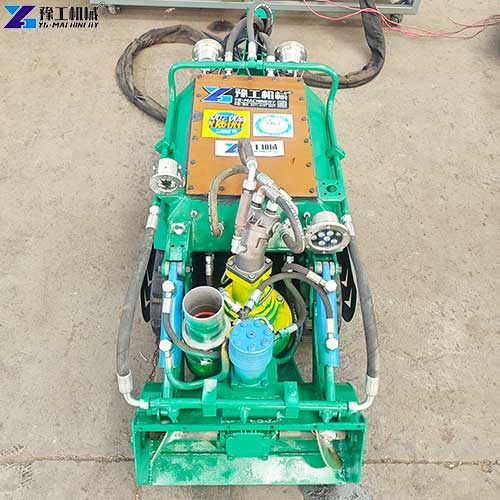
The Effluent Ponds Became a Serious Problem
Matt runs a 600-head dairy farm near Shepparton, Victoria. Behind the milking shed were two effluent ponds, holding about 40,000 cubic metres of dairy manure slurry in total. Each pond was four metres deep. After years of use, the surface had developed a rock-hard crust, while thick, low-moisture sludge had built up underneath. Matt had already tried another dredger, but it could only reach part of the pond. The suction system clogged frequently, causing long periods of cleaning and downtime. At the same time, Matt was under pressure to manage nutrient runoff and reduce odour complaints. The loss of storage capacity was becoming another major concern. If the ponds could not be cleaned, he would need to build new ones, which would take months and require a large investment.
July
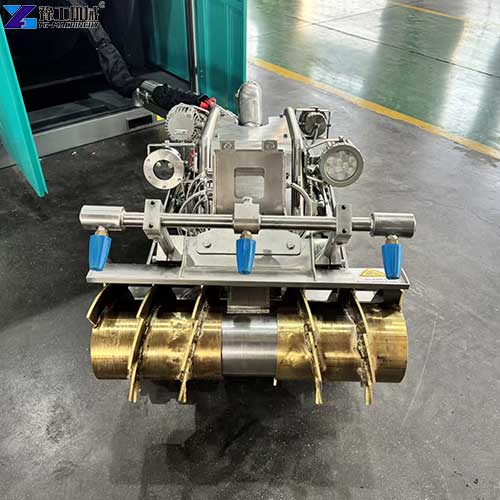
Searching for Small Dredging Equipment for Sale
Matt began searching for small dredging equipment for sale that could handle hardened dairy manure. He compared standard slurry pumps, floating dredges, and long-reach excavators. However, many machines were designed mainly for water or easier slurry. Some were too large for his farm, while others required cranes for installation. Matt needed more than simple suction. He needed equipment that could break through the hard crust and move thick, fibrous sludge. During his search, a farmer in a local farming forum recommended YG’s dredging robot. Matt was initially skeptical because he had never used a crawler cleaning robot for an effluent pond. After checking the specifications and discussing his pond conditions with YG, he decided that a field demonstration was the best way to judge the machine.
August 11
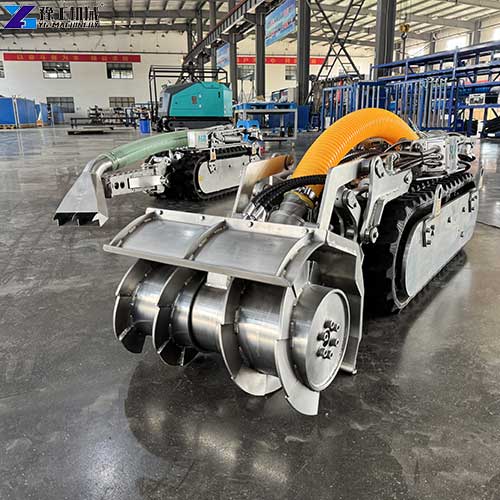
The YG Dredging Robot Demonstration
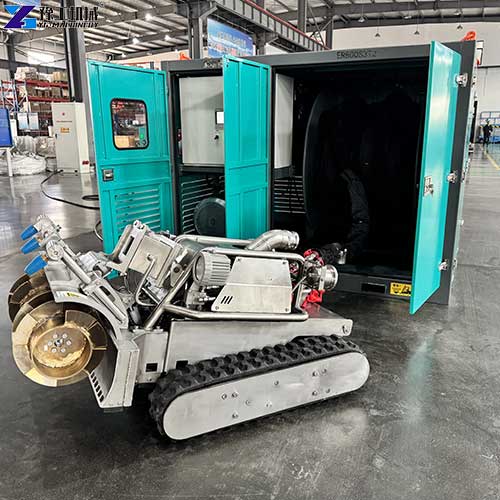
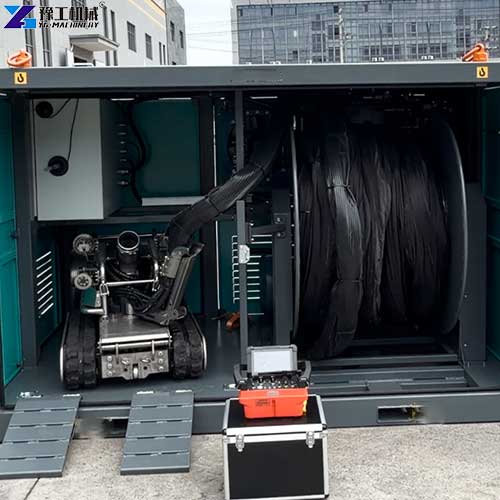
In late July, Matt contacted YG and requested a demonstration. On August 11, Matt visited the YG dredging robot factory, where operators demonstrated the machine on-site. The YG dredging robot used its front crushing auger to break the hardened manure crust into smaller pieces. The material was then mixed into pumpable slurry and discharged continuously. The team also adjusted the robot’s working speed and water pressure during the test. The remote-control system allowed the operator to control the machine while working around the pond. Matt was impressed that the machine continued working without the repeated clogging problems he had experienced with his previous dredger. On 16 August, he ordered the same model, together with the high-pressure water kit and remote-control system.
Early September
Full-Scale Pond Cleaning
The YG equipment arrived at Matt’s farm in early September. With support from the YG technicians, his team launched the machine and had it working within about an hour. The front auger broke through crusts around 30 centimetres thick and converted hard manure into pumpable slurry. The machine maintained a working capacity of about 100 cubic metres per hour, compared with around 20 cubic metres per hour from Matt’s previous system. The remote-control system also allowed the operator to reach different areas of the ponds without leaving large sections untouched. Matt was particularly concerned about the HDPE liner, but after two weeks of operation, he inspected it and found no cuts, tears, or scuffs. The discharged material was sent directly to a centrifuge, where solids and liquid were separated. The solids were composted into organic fertiliser, while the liquid was reused.
After the Cleaning
Restored Capacity and Better Waste Management
After the dredging work, Matt’s existing ponds regained their storage capacity without the need to construct new ponds. The hard crust that had previously blocked pumps was broken into manageable slurry, and the robot could work across the pond areas. The continuous operation also reduced clogging and downtime. More importantly, the manure slurry could now be processed through the farm’s centrifuge system. Solid material was reused as organic fertiliser, while the separated liquid was returned for reuse. Matt also reported that the pond liner remained undamaged after the cleaning work. The project helped him address the problems of storage capacity, odour, and nutrient management while making better use of farm waste.
In-Stock Models Ready to Ship – See What’s Available
YG Small Dredging Equipment Parameters
| Model | YG-500 | YG-600 | YG-700 | YG-800 | YG-900 | YG-1200 | |
| Robot dimensions | 1500*500*650mm | 1500*600*650mm | 1600*700*650mm | 1600*850*700mm | 1650*960*750mm | 1900*1200*750mm | |
| Dredging width | 500mm | 600mm | 700mm | 800mm | 900mm | 1200mm | |
| Track travel speed | 3-15m/s | 3-15m/s | 3-15m/s | 3-15m/s | 3-15m/s | 3-15m/s | |
| Robot weight | 320kg | 350kg | 380kg | 400kg | 420kg | 500kg | |
| Pump output diameter | 3inch | 3inch | 4inch | 4inch | 4inch | 4inch | |
| Pump flow rate(cubic meters/ hour) | 100 m³ | 100m³ | 200m³ | 200m³ | 200m³ | 200m³ | |
| Pump head | 0-30m | 0-30m | 0-30m | 0-30m | 0-30m | 0-25m | |
| Hydraulic station dimensions(mm) | 2200*1200*1700 | 2200*1200*1700 | 2200*1200*1700 | 2200*1200*1700 | 2200*1200*1700 | 2120*1240*1200 | |
| Main motor power | 22kw | 22kw | 30kw | 30kw | 30kw | 45kw | |
| Hydraulic system pressure | 0-16Mpa | 0-16Mpa | |||||
| Particle size | 15mm | 15mm | 38mm | 38mm | 38mm | 60mm | |
| Reeling system speed | 0-10r/min | 0-10r/min | |||||
| Hydraulic hoses | 50m (Standard configuration) | 50m (Standard configuration) | |||||
| Control system | Wireless remote control | Wireless remote control | |||||
| Lighting system | Underwater LED lights *2 | Underwater LED lights *2 | |||||
In-Stock Models Ready to Ship – See What’s Available
What Matt Tells Other Farmers
Matt is now a vocal advocate for YG. He’s spoken at two local dairy meetings. He’s shown videos of the robot working. He’s even invited neighbouring farmers to see it in action.
“If you are looking for small dredging equipment, don’t just buy a pump,” he says. “Ask about crushing. Ask about explosion-proof design. Ask about remote control. Ask about the liner. If the supplier can’t answer those questions, walk away.”
He now tells other farmers looking for small dredging equipment to request a demo. “YG sent a demo unit to my farm before I bought anything. That’s how confident they are. They didn’t pressure me. They just showed me it worked.”
He also appreciates the support. “The technicians stayed until we were comfortable. They showed my workers how to run it. They gave us a maintenance schedule. We’ve had zero problems.”
Choose YG. Choose the YG dredging robot. And turn your crusted nightmare into clean, compliant, productive water.