
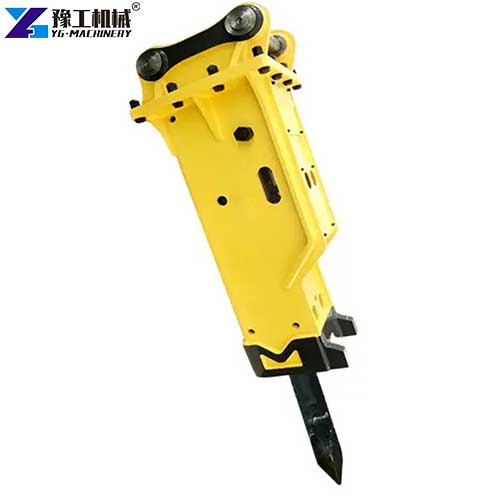
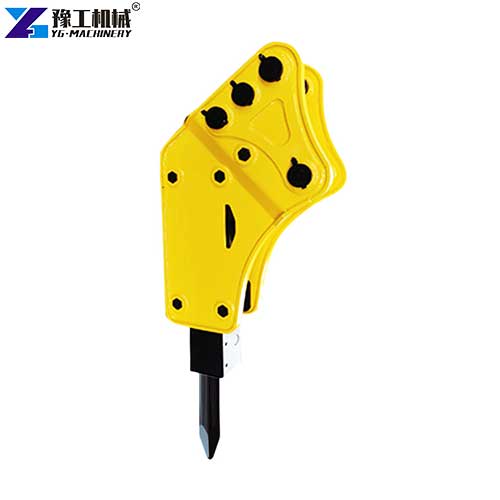
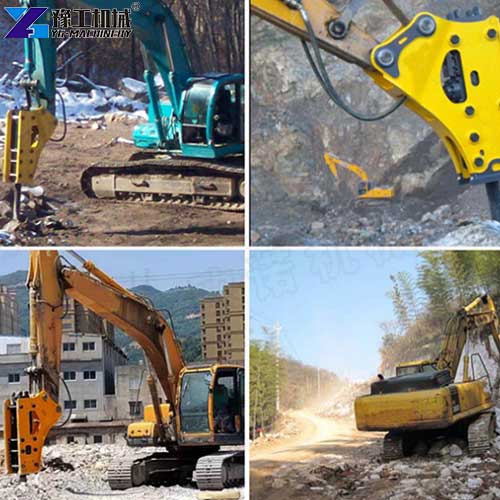
In modern mining and quarrying operations, a reliable rock hammer excavator is no longer an optional attachment but a core piece of equipment. From secondary rock breaking after blasting to clearing oversized boulders and reshaping mine tunnels, the excavator breaker hammer handles the toughest working conditions every single day. Unlike ordinary construction sites, mining environments feature hard rock, heavy loads, long continuous working hours, heavy dust and severe wear and tear. This makes equipment selection far more rigorous than choosing a regular concrete breaker for a mini excavator used in urban renovation.
For fleet managers, mine operators and equipment purchasers, picking a matched and durable hydraulic hammer directly impacts production efficiency, maintenance costs and operational safety. Many buyers tend to focus only on price while ignoring parameter matching, carrier compatibility and structural durability, which often leads to insufficient breaking power, frequent failures and shortened service life. Today, we launch this professional selection guide specially for hydraulic hammer for excavator for sale, targeting 20 to 80-ton medium and large excavators widely used in mining. We will elaborate on core selection standards, parameter matching rules, model classification, practical application tips and common mistakes, helping you find the most suitable excavator breaker hammer for long-term mining work.
Excavator Hydraulic Breaker Attachment Parameter
| Model | ChiselDiameter | SuitableCarrierWeight | Main bodyWeight | OperatingPressure | HydraulicOil Flow | Blow Frequency | HoseDiameter |
| mm | Ton | kg | Kg/cm 2 | I/min | bpm | inch | |
| YG350 | 35 | 0.5-1 | 40 | 90-120 | 15-25 | 800-1300 | 1/2 |
| YG400 | 40 | 1-3 | 53 | 90-120 | 15-25 | 800-1300 | 1/2 |
| YG450 | 45 | 1.2-3.0 | 67 | 90-120 | 20-30 | 700-1200 | 1/2 |
| YG530 | 53 | 2.5-4.5 | 85 | 90-120 | 25-50 | 600-1100 | 1/2 |
| YG600 | 60 | 2-5 | 140 | 90-120 | 25-50 | 600-1100 | 1/2 |
| YG680 | 68 | 4-7 | 152 | 110-140 | 40-70 | 500-900 | 1/2 |
| YG750 | 75 | 6-9 | 210 | 120-150 | 50-90 | 400-800 | 1/2 |
| YG850 | 85 | 7-14 | 278 | 130-160 | 60-100 | 400-800 | 3/4 |
| YG100 | 100 | 10-15 | 475 | 150-170 | 80-110 | 350-700 | 3/4 |
| YG1250 | 125 | 15-18 | 616 | 150-170 | 80-110 | 350-700 | 3/4 |
| YG1350 | 135 | 16-26 | 846 | 160-180 | 130-150 | 400-800 | 1 |
| YG1400 | 140 | 18-26 | 916 | 160-180 | 120-180 | 350-500 | 1 |
| YG1400A | 140 | 18-26 | 952 | 160-180 | 120-180 | 350-500 | 1 |
| YG1500 | 150 | 27-35 | 1088 | 160-180 | 150-190 | 350-700 | 1 |
| YG1550 | 155 | 28-36 | 1309 | 180-200 | 200-260 | 250-400 | 1-1/4 |
| YG1650 | 165 | 30-40 | 1438 | 180-200 | 200-260 | 250-400 | 1-1/4 |
| YG1650P | 165 | 30-40 | 1586 | 180-200 | 200-260 | 250-380 | 1-1/4 |
| YG1750 | 175 | 35-40 | 1929 | 180-200 | 210-290 | 200-350 | 1-1/4 |
| YG1850 | 185 | 35-45 | 2411 | 190-220 | 220-270 | 200-250 | 1-1/4 |
| YG1990 | 190 | 40-55 | 2626 | 190-220 | 220-290 | 180-200 | 1-1/4 |
| YG2100 | 210 | 60-80 | 3396 | 200-240 | 290-350 | 150-200 | 1-1/4 |
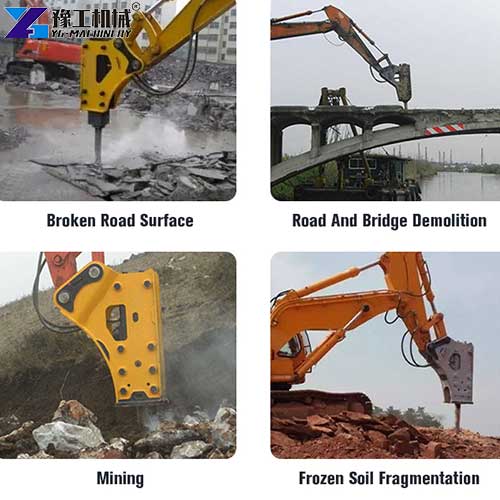
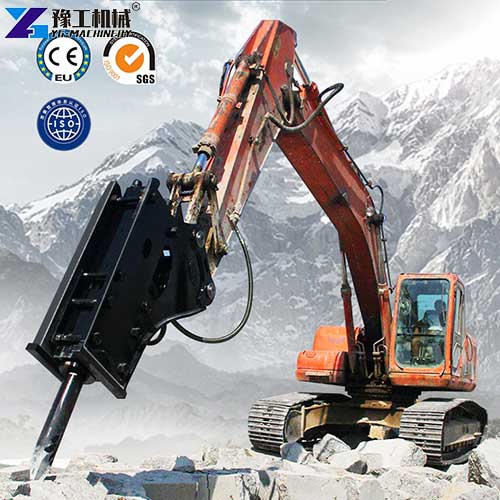
I: Why Mining Needs a Professional Heavy-Duty Rock Hammer Excavator
Mining working conditions are fundamentally different from municipal demolition, road repair or indoor renovation, so ordinary light-duty breakers cannot meet operational demands. First of all, the breaking objects are mostly hard rock such as granite, basalt and quartzite. These materials have high density and strong compression resistance, requiring extremely high single impact energy instead of just high blow frequency. Secondly, mining equipment usually runs 8 to 16 hours continuously every day, belonging to a heavy-duty cycle operation. Internal parts of the breaker must resist fatigue and long-time friction. In addition, mine sites are full of dust, mud and gravel, which puts forward strict requirements on the sealing performance and wear resistance of the whole machine.
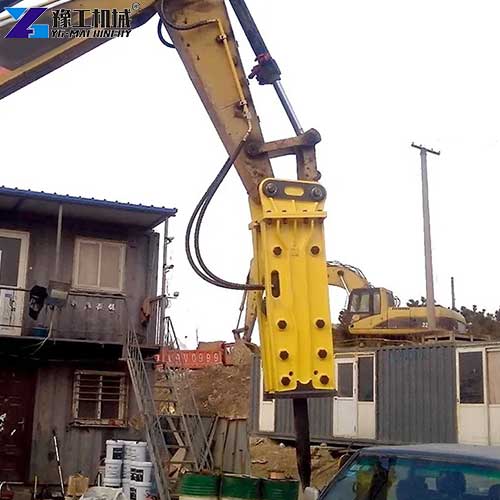
A standard concrete breaker for mini excavator is designed for soft concrete, asphalt and loose soil. Its hydraulic pressure, structural strength and impact energy are limited. Once applied to hard rock mining, it will suffer weak breaking force, sharp drop in working efficiency, oil leakage and rapid wear of vulnerable parts. Therefore, all excavators from 20 tons to 80 tons used in mines must be equipped with professional heavy-duty excavator breaker hammer customized for mining scenarios. When you browse hydraulic hammer for excavator for sale products, you should first distinguish application scenarios rather than simply comparing appearance and price.
II: Core Selection Criteria Based on 20–80 Ton Excavator Tonnage
Excavator operating weight is the primary basis for selecting a rock hammer excavator. There is a clear industry matching rule: the total weight of the breaker should account for 15% to 20% of the carrier excavator’s weight. Too heavy a breaker will increase the load of the boom, arm and hydraulic system, causing structural deformation and pump damage; an overly light breaker cannot give full play to the excavator’s power, resulting in low breaking efficiency. We divide 20–80 ton excavators into three categories and explain the corresponding selection standards, respectively.
1. 20–30 Ton Medium Excavators
This tonnage of excavators is widely used in small and medium-sized quarries, surface mines and tunnel auxiliary operations, mainly responsible for secondary rock breaking and boulder sorting. When selecting an excavator breaker hammer, the chisel diameter is recommended from 100mm to 140mm, with a main body weight between 475kg and 916kg. The matched working pressure should be controlled at 150–180 kg/cm², and hydraulic oil flow ranges from 80L/min to 180L/min. The blow frequency is set to 350–800 bpm. Since it mainly deals with medium-hard rock, it requires balanced impact force and operating speed. Meanwhile, pay attention to the hose diameter to ensure a smooth oil supply and avoid pressure loss during continuous operation.
2. 30–50 Ton Large Excavators
As the mainstream model for large-scale mining production, 30–50 ton excavators undertake primary rock breaking and large-area rock excavation. The matched rock hammer excavator needs stronger impact energy and anti-wear performance. The recommended chisel diameter is 140mm to 185mm, main body weight from 952kg to 2411kg, working pressure 160–220 kg/cm² and hydraulic flow 120–270L/min. The blow frequency is adjusted to 200–500 bpm. In this range, we prioritize low frequency and high impact design. A single powerful strike can crack hard rock effectively, which is more efficient than high-frequency light hits. The overall structure adopts a thickened cylinder body and enhanced sealing system to adapt to long-hour heavy-load operation.
3. 50–80 Ton Super Large Excavators
Such excavators are used in large open-pit mines and large stone yards, facing extra-hard rock and massive rock piles. They need a top-grade heavy-duty excavator breaker hammer. The chisel diameter starts from 185mm up to 210mm, main body weight ranges from 2411kg to 3396kg. The working pressure is as high as 190–240 kg/cm², and the hydraulic flow is 220–350L/min. The blow frequency is controlled at 150–250 bpm. Every component is made of high-strength alloy materials, with an optimised nitrogen-boosting structure to maximise impact energy. The thickened pipeline and large-diameter hose ensure stable hydraulic transmission under ultra-high pressure, completely adapting to the most harsh mining working conditions.
III: 3 Key Hydraulic Parameter Matchings
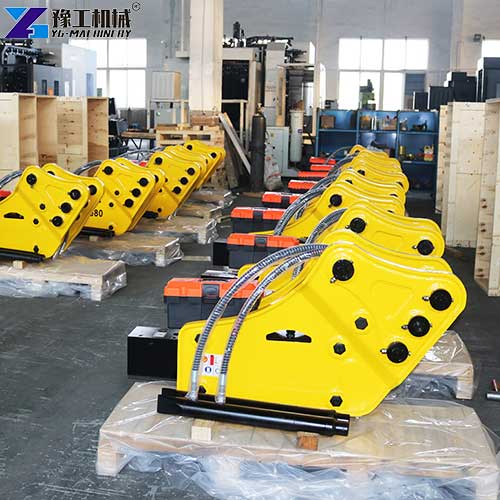
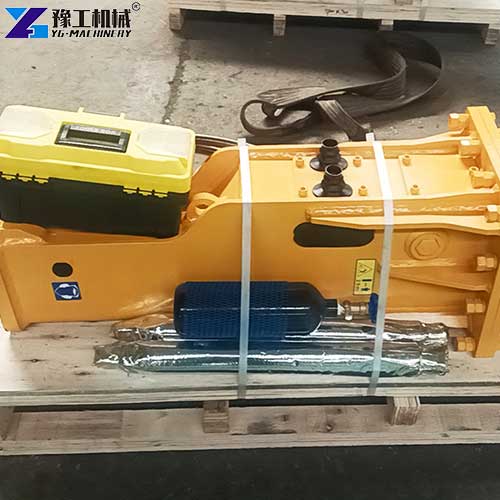
Parameter mismatch is the top cause of breaker failure and efficiency decline, which is also the key point that many buyers ignore when choosing a hydraulic hammer for excavator for sale. Three core indicators must be strictly matched: operating pressure, hydraulic oil flow and blow frequency.
1. Operating Pressure
The breaker’s rated working pressure must match the output pressure of the excavator’s auxiliary hydraulic system. Excessively high required pressure leads to weak impact force; too low pressure causes oil overflow, overheating and quick seal wear. For 20–80 ton mining excavators, the applicable pressure ranges from 150 kg/cm² to 240 kg/cm² as carrier weight increases.
2. Hydraulic Oil Flow
Oil flow decides the blow frequency. Insufficient flow slows down striking speed and reduces productivity. Excessive flow results in overspeeding, severe component wear and shorter service life. A ±10% flow deviation is acceptable per industry standards. Avoid choosing units with big flow gaps just for lower prices.
3. Blow Frequency & Impact Energy
For mining use, hard rock requires low frequency with high impact energy, while medium-hard rock needs balanced performance. Do not blindly chase high blow frequency. High-frequency breakers for mini excavator concrete breaking are not fit for mining, as frequent light strikes fail to crack hard rock and cause extra fuel consumption and part abrasion.
IV: 3 Common Selection Mistakes to Avoid
Many mine operators make repeated mistakes when purchasing excavator breaker hammer.
- The first mistake is selecting by appearance and price only: Cheap low-end breakers use inferior materials and unqualified hydraulic parts. Although the upfront cost is low, the failure rate is high, and the cumulative maintenance cost in one year far exceeds the price difference of equipment.
- The second mistake is overloading or under-sizing: Installing an ultra-heavy breaker on a 20-ton excavator will damage the body and hydraulic system; using a small light breaker on a 50-ton excavator cannot exert production capacity at all. Always take excavator tonnage as the first matching standard.
- The third mistake is mixing working scenarios: Using a concrete breaker for mini excavator for hard rock mining, or applying mining heavy breakers for simple concrete demolition, will both cause performance waste and accelerated equipment loss. Clarify the main working objects before purchasing.
Excavator Breaker Hammer Price-Choose YG Machinery
Selecting a qualified rock hammer excavator for 20–80 ton mining excavators is a systematic work combining tonnage matching, hydraulic parameter verification, structural performance inspection and scenario adaptation. As you browse various hydraulic hammer for excavator for sale products on the market, do not be misled by low prices or exaggerated publicity. Start from your excavator model, rock hardness and daily working hours, and select targeted excavator breaker hammer according to the matching standards above. A well-matched mining breaker can not only double the working efficiency, but also reduce maintenance frequency and extend the service life of the whole machine, creating stable economic benefits for mining enterprises. Whether you run a small quarry or a large open-pit mine, following scientific selection rules is the key to keeping the equipment running efficiently for a long time. If you are interested, please contact YG for a discount.