
This case describes a horizontal directional drilling project for a water pipeline river crossing in Tlaxiaco, Oaxaca, Mexico. The local government planned to replace an ageing asbestos-cement pipeline supplying 35,000 residents, requiring a 400 mm HDPE pipeline to cross Río Verde. Loose riverbed gravel, sand and seasonal flood risks made traditional open-cut excavation impractical due to high costs and complex environmental permits. The team selected the YG-320 HDD rig after equipment assessment. The machine completed the 182-metre pilot bore under the river, followed by multi-stage reaming and one-time continuous pipe pullback. Finished in around 25 working days, the HDD method avoided riverbed excavation and kept the river undisturbed. The new pipeline increased water delivery capacity by roughly 60% and stabilized water pressure. Want to know more detailed product information? Contact YG at +86 139 3718 3205.
Want More Case Studies? Contact YG For More Details
Before 2026
The Challenge: A River Blocking the Water Pipeline
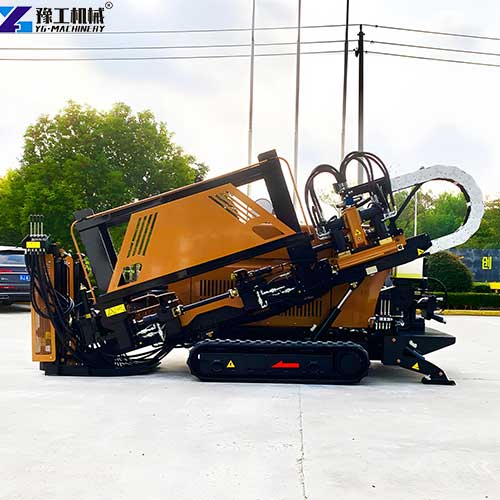
The municipality of Tlaxiaco, Oaxaca, needed to replace a 40-year-old asbestos-cement pipeline serving around 35,000 residents. The new project required a 400 mm HDPE water pipeline to cross the Río Verde. However, the river had loose gravel, sand, and a floodplain that became much wider during the rainy season. Traditional open-cut excavation would have required cofferdams, dewatering, extensive excavation, and environmental permits. The project team therefore needed a method that could install the pipeline underground without disturbing the river. Engineer Roberto Méndez proposed horizontal directional drilling, with the new pipeline planned 6–8 meters below the riverbed.
Early 2026
The Solution: Choosing the YG-320 HDD Rig
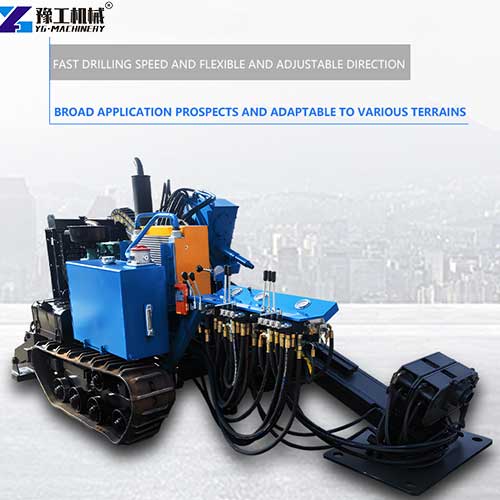
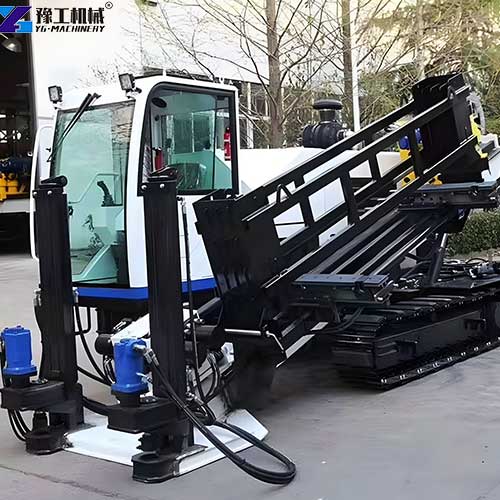
After evaluating different HDD machines, the project team selected the YG-320. The YG horizontal directional drilling equipment offered a maximum drag/feed force of 320 kN and maximum torque of 12,000 N·m. Its 140–160 kW engine configuration provided enough power for demanding drilling and pullback operations. The machine could reach a maximum reaming diameter of 800 mm, while its mud pump delivered up to 320 L/min at 80 bar. For the 180-meter river crossing, these specifications provided the required combination of pulling force, torque, drilling stability, and borehole control.
Project Start
The Pilot Bore: 182 Meters Under the River
The HDD operation began with a pilot bore from the upstream riverbank. The YG-320 was anchored to a concrete thrust pad, while a steerable drill bit and locating system allowed the operator to monitor the underground path. The first section passed through loose gravel before entering compacted clay and weathered basalt. The most difficult section was the 80-meter stretch directly beneath the Río Verde, where the bore had to remain approximately 7–8 meters below the riverbed. Real-time sonde readings showed that the bore stayed within about 100 mm of the planned path. The 182-meter pilot bore was completed in 11 working days.
Following 8 Days
The Final Push: Reaming and Pipe Pullback
After completing the pilot bore, the team progressively enlarged the hole from 300 mm to 450 mm and finally 600 mm. During the final reaming pass, the YG-320 operated with strong torque and a mud flow of 320 L/min to maintain bore stability and remove cuttings. The final stage was pulling the 400 mm HDPE pipe through the completed bore. Pullback force reached approximately 240 kN at its peak, while the machine had a rated capacity of 320 kN. The entire 200-meter pipe was pulled through in one continuous 14-hour operation, with no pipe damage or bore collapse.
Final Result
A River Crossing Without Digging a Trench
The complete HDD river crossing was finished in approximately 25 working days. The Río Verde continued flowing normally throughout construction, with no cofferdams, dewatering, or major surface excavation required. The new 400 mm HDPE pipeline was installed 7–8 meters below the riverbed, providing protection against flood scour and surface activity. According to the case study, the new pipeline increased water flow capacity by approximately 60% and helped stabilize water pressure for the town. By avoiding open-cut river construction, the project also reduced construction work and environmental disruption.
Want More Case Studies? Contact YG For More Details
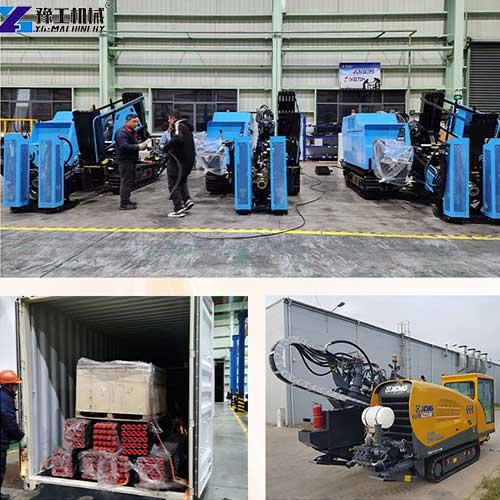
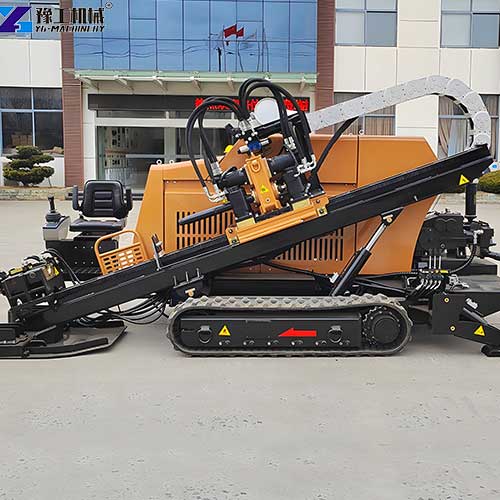
YG HDD Drilling Machine Specific Parameters
| Model | YG-160A | YG-180 | YG-280 | YG-320 | YG-320A |
| Engine rated power | 100KW | 97KW | 160KW | 140KW/160KW | 160KW |
| Push and pull | Cylinder | Motor | Motor | Cylinder | Motor |
| Maximum drag/feed force | 160/100KN | 180/180KN | 280/280KN | 320/320KN | 320/320KN |
| The maximum torque of the powerhead | 5000N.n | 6000N.n | 10000N.n | 12000N.n | 12000N.n |
| Powerhead speed | 0-180r/min | 0-140r/min | 0-120r/min | 0-140r/min | 0-140r/min |
| Moving speed of powerhead | 30m/min | 20m/min | 20m/min | 20m/min | 20m/min |
| Maximum reaming hole diameter | Φ600mm | Φ600mm | Φ750mm | Φ800mm | Φ800mm |
| Drill rod length (single) | 3m | 3m | 3m | 3m | 3m |
| Drill pipe diameter | Φ60mm | Φ60mm | Φ73mm | Φ73mm | Φ73mm |
| Drill pipe diameter | 10-23° | 10-22° | 10-23° | 10-20° | 10-20° |
| Maximum mudflow | 160L/min | 250L/min | 320L/min | 320L/min | 320L/min |
| Maximum mud pressure | 100bar | 80bar | 80bar | 80bar | 80bar |
| Overall quality | 6700kg | 8500kg | 12500kg | 11500kg | 11200kg |
| Dimension(length*width*height) | 5700*1820*2400mm | 6400*2270*2340mm | 7100*2260*2450mm | 7100*2250*2450mm | 7100*2250*2550mm |
Want More Case Studies? Contact YG For More Details
Have a Similar Project? Contact YG For Customized Services
This successful river-crossing pipeline project stands as a testament to the superior performance and high reliability of the YG-320 HDD rig in complex underground construction scenarios. Overcoming tough geological conditions including loose riverbed gravel, soft soil, and layered rock formations, the equipment delivered precise drilling, stable power output, and safe one-time pipe pullback, finishing the entire rigorous construction process efficiently. Compared with traditional open-cut methods, this trenchless drilling solution greatly shortens project cycles, cuts construction costs, and eliminates severe environmental damage to river ecosystems. It also guarantees long-term pipeline safety against flood erosion and ground disturbances.
If you are facing complex pipeline construction challenges, choose professional YG HDD equipment. Want to get customized services? Contact whatsapp/phone:+86 139 3718 3205.