
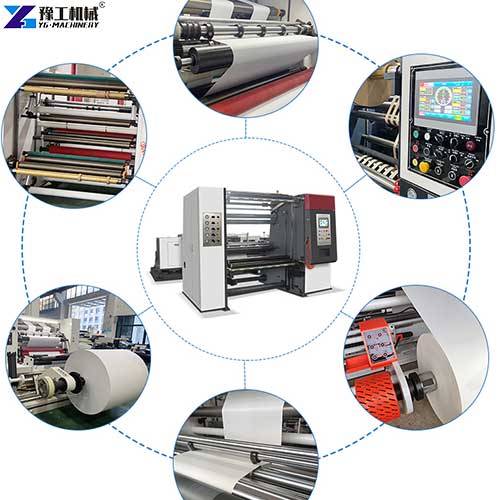
There are many types of slitting machines on the market. Some are designed for paper, some for film, some for adhesive materials, and some for ultra-narrow widths. If you’re not sure which one to choose, you’re not alone — this is the most common question YG receives from new buyers.
A YG paper slitting and rewinding machine takes a wide master roll and cuts it into multiple narrower rolls. The process is simple: unwind → slit → rewind. But behind that simple process, different machine types handle very different materials, widths, speeds, and end products.
This page explains each type, shows the key parameters, and helps you decide which one matches your specific operation. Want more information? Please contact YG at +86 139 3718 3205.
In-Stock Models Ready to Ship – See What’s Available
In-Stock Models Ready to Ship – See What’s Available
3 Working Principle of YG Slitting Machine
Every YG paper slitting and rewinding machine follows the same basic process:
1. Unwinding: The wide master roll is loaded onto the unwinding station. The machine feeds the material forward under controlled tension. YG machines use shaftless unwinding as standard, supporting rolls up to 1,600 mm in diameter and approximately 2 tons.
2. Slitting: The material passes through the cutting zone. Blade type depends on the material — round blades for film and adhesive, straight blades for paper. An auto slitting machine includes automatic blade positioning for faster width changes.
3. Rewinding: The slit strips are rewound onto individual cores under controlled tension. Consistent tension across all strips is critical — it prevents telescoping, wrinkles, and uneven edges in the finished rolls.
In-Stock Models Ready to Ship – See What’s Available
5 Types of Slitting Machines — Which One Fits Your Material?
The most important decision in choosing a YG paper slitting and rewinding machine is matching the machine type to your material. Each type is engineered for a specific range of materials and production requirements.
A-Type Slitting Machine — For Paper Materials
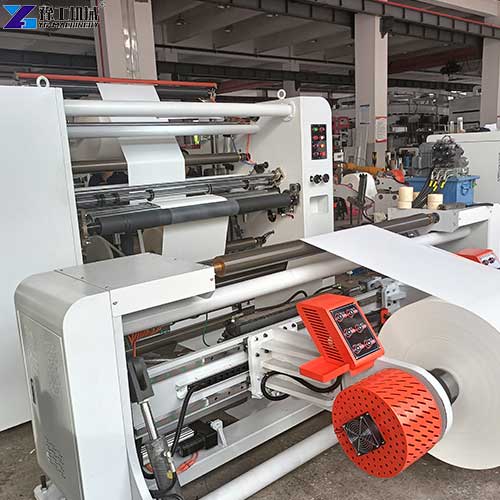
The A-Type is YG’s most widely used model for paper converting. It handles kraft paper, coated paper, white cardboard, and similar paper-grade materials.
Key features:
- Standard models: 1300mm / 1600mm max width
- Unwinding diameter up to 1,600mm
- Rewinding diameter up to 1,200mm (larger than film machines)
- Speed: 10–450 m/min
- Minimum slitting width: 30mm
- Suitable for: paper converters, printing material suppliers, paper trading companies
The A-Type’s larger rewinding diameter is designed for paper rolls, which are typically wound to larger diameters than film rolls. The tension control system is optimized for paper’s stiffness and weight characteristics.
In-Stock Models Ready to Ship – See What’s Available
C-Type Slitting Machine — For Film & Packaging
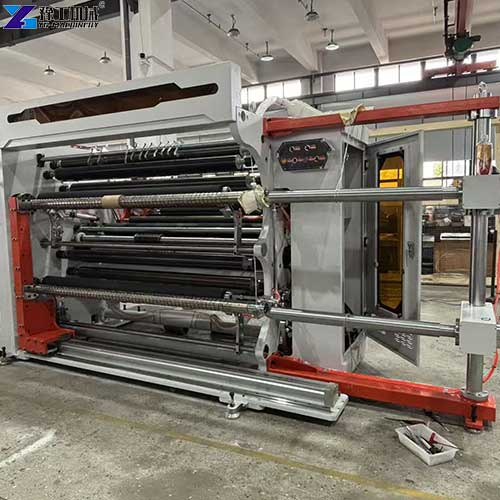
The C-Type is a dual-material machine — it can cut both paper and film — but it’s primarily designed for plastic film processing in the packaging industry.
Key features:
- Standard models: 1300mm / 1600mm max width
- Unwinding diameter: 800mm (integrated) / 1,600mm (split-type)
- Rewinding diameter: 600mm / 800mm
- Speed: 10–600 m/min (highest among all types)
- Minimum slitting width: 30mm
- Suitable for: BOPP, OPP, PET, PE, CPP films; flexible packaging manufacturers
The C-Type’s standout feature is speed — up to 600 m/min. For packaging film producers running high volumes, this speed difference directly translates into higher daily output. This auto slitting machine type handles both paper and film, giving flexibility if your material mix changes.
In-Stock Models Ready to Ship – See What’s Available
Bridge-Type Slitting Machine — For Adhesive & Label Materials
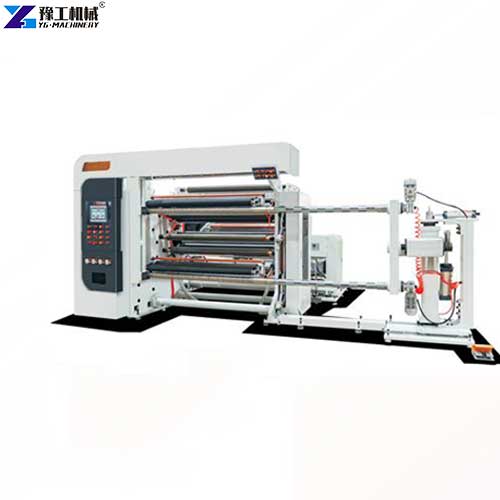
The Bridge-Type is a specialized machine designed for self-adhesive materials, label stock, and sticky films.
Key features:
- Base specifications similar to C-Type
- Equipped with a round knife and adhesive removal system
- Optional unloading arm for easier roll removal
- Suitable for: label manufacturers, self-adhesive tape producers, sticker converters
When you slit adhesive-coated materials, sticky residue builds up on the blades and rollers. A standard paper roll slitting rewinding machine would accumulate adhesive, causing edge defects and frequent cleaning downtime. The Bridge-Type includes a built-in adhesive removal system that keeps the blade clean during continuous operation.
In-Stock Models Ready to Ship – See What’s Available
Back-to-Back (Close-Coupled) Slitting Machine — For Ultra-Narrow Widths
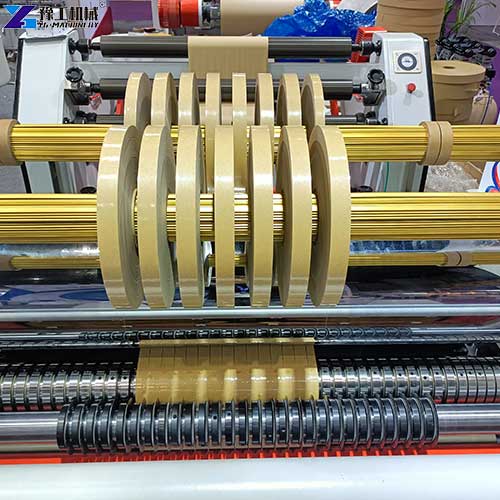
The Back-to-Back type is designed for applications that require very narrow slit widths — as small as 5mm.
Key features:
- Standard models: 1100mm / 1300mm / 1600mm max width
- Unwinding diameter up to 1,400mm
- Rewinding diameter: 600mm
- Speed: 10–500 m/min
- Minimum slitting width: 5mm (vs. 30mm for other types)
- Suitable for: narrow tape producers, specialty film converters, industrial tape manufacturers
If your customers require narrow strips — below 30mm — the Back-to-Back design is essential. Its blade configuration allows precise positioning at very narrow spacing. This is a YG paper slitting and rewinding machine type that standard machines simply cannot replace.
In-Stock Models Ready to Ship – See What’s Available
Gantry (Frame-Type) Slitting Machine — For Large-Format & Heavy Materials
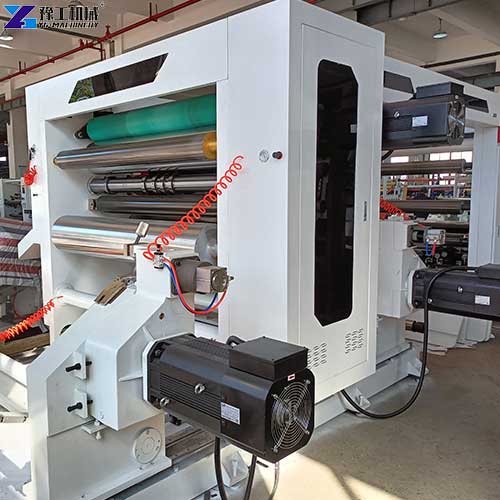
The Gantry type provides the structural rigidity needed for wide, heavy, and thick master rolls.
Key features:
- Standard models: 1600mm / 1800mm / 2000mm max width
- Customizable up to 3,000mm
- Unwinding diameter up to 1,600mm
- Rewinding diameter up to 1,500mm (largest among all types)
- Minimum slitting width: 50mm
- Suitable for: large commercial printing houses, thick paper/board converters, industrial material processors
The Gantry design handles higher forces involved in slitting thick materials at wide widths. When working with slitting and rewinding machine manufacturers, ask about their largest model — if you need more than 2,000mm width, custom configurations are available.
In-Stock Models Ready to Ship – See What’s Available
YG Slitting Machine Parameters Comparison
| Parameter | A-Type | C-Type | Bridge-Type | Back-to-Back | Gantry-Type |
|---|---|---|---|---|---|
| Max Width | 1300/1600mm | 1300/1600mm | 1300/1600mm | 1100/1300/1600mm | 1600/1800/2000mm |
| Unwinding Dia. | 1,600mm | 800/1,600mm | 800/1,600mm | 1,400mm | 1,600mm |
| Rewinding Dia. | 1,000/1,200mm | 600/800mm | 600/800mm | 600mm | 1,500mm |
| Speed | 10–450 m/min | 10–600 m/min | ~600 m/min | 10–500 m/min | Varies |
| Min Slitting Width | 30mm | 30mm | 30mm | 5mm | 50mm |
| Best Material | Paper | Film (+paper) | Adhesive/Labels | Narrow strips | Thick/board |
The actual machine choice should be based on your material type, master roll width, required slit width, and production volume.
In-Stock Models Ready to Ship – See What’s Available
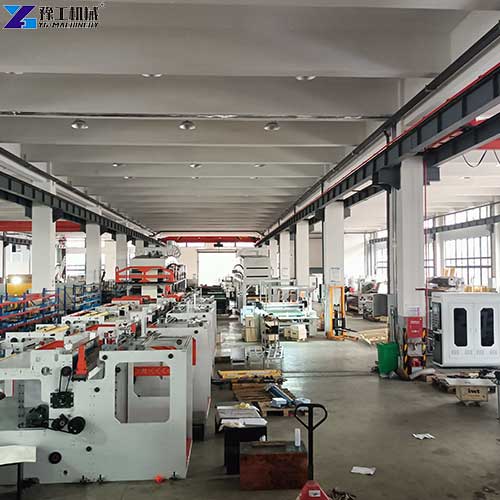
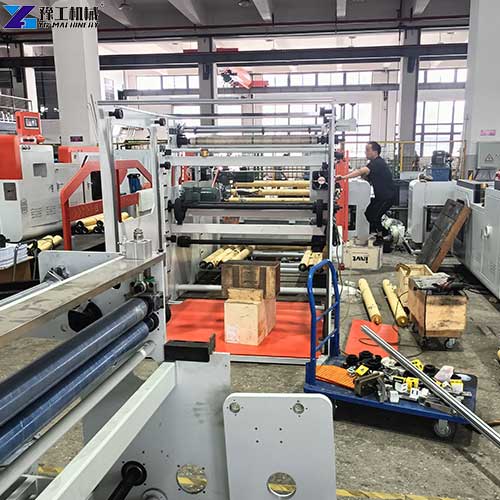
4 Key Industries That Use Slitting Machines
1. Paper Converting & Trading
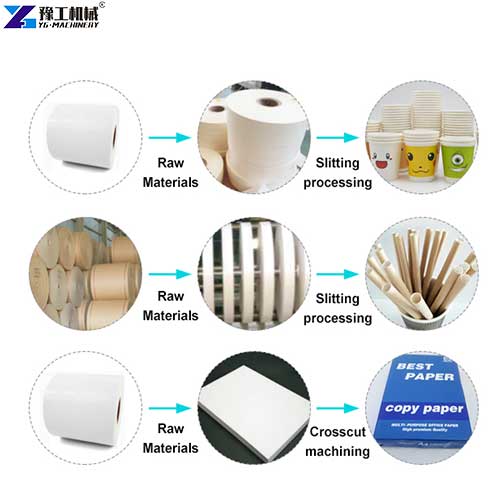
Paper converters buy large master rolls and slit them into smaller widths for printing houses, packaging companies, and retail distributors. An A-Type YG paper slitting and rewinding machine is the standard choice for this industry.
2. Flexible Packaging
Food packaging, shrink wrap, and plastic film manufacturers need precise film rolls for their production lines. The C-Type auto slitting machine, with its 600 m/min speed capability, is designed for this high-volume environment.
3. Labels & Adhesive Products
Label manufacturers and self-adhesive tape producers work with sticky materials that require specialized blade systems. The Bridge-Type paper roll slitting rewinding machine handles these materials without adhesive buildup.
4. Industrial Material Processing
Aluminum foil, copper foil, non-woven fabric, and composite material processors need machines that handle specific industrial requirements. Depending on the width and thickness, both Gantry-Type and Back-to-Back configurations are used.
How to Choose Between Paper and Film Slitting Machines?
Here’s the simplest way to think about it:
| If You Process… | Start With… |
|---|---|
| Paper (kraft, coated, card) | A-Type |
| Film (BOPP, PET, PE, CPP) | C-Type |
| Adhesive/labels | Bridge-Type |
| Ultra-narrow strips (<30mm) | Back-to-Back |
| Large, thick, heavy rolls | Gantry-Type |
Once you’ve identified the right type, the specific model (1300, 1600, 1800, etc.) is determined by your maximum master roll width.
In-Stock Models Ready to Ship – See What’s Available
2 Customer Feedback About YG Paper Slitting and Rewinding Machine
A Packaging Film Manufacturer in Southeast Asia
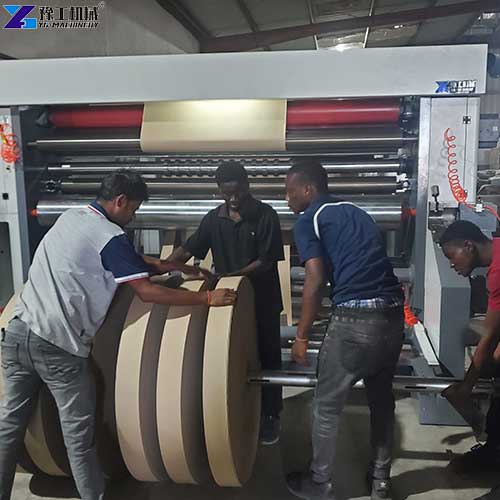
A film packaging manufacturer was producing BOPP and PET film rolls. Their old machine had inconsistent tension on the rewind side, causing wrinkles and rejected rolls. After switching to a C-Type YG paper slitting and rewinding machine with shaftless unwinding, the customer reported a significant reduction in rejected rolls and an increase in daily output due to the higher speed capability.
A Paper Trading Company in Eastern Europe
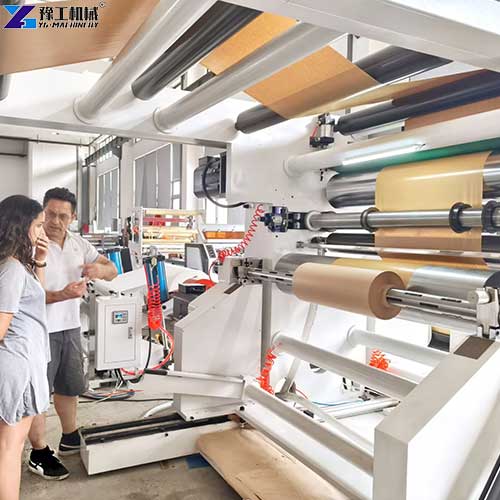
A paper trading company purchased master rolls and resold them in smaller widths to local printing houses. They needed a reliable machine that could handle different paper types and switch between widths quickly. After choosing an A-Type auto slitting machine with automatic blade positioning, the customer reduced changeover time and expanded their width range offerings.
7 FAQ About YG Paper Slitting and Rewinding Machine
A: Paper (kraft, coated, white card, carbonless), plastic films (BOPP, OPP, PET, PE, CPP), adhesive materials, aluminum foil, non-woven fabric, and composite materials. Different machine types are optimized for different materials.
A: The first step is identifying your material. Paper → A-Type. Film → C-Type. Adhesive → Bridge-Type. Ultra-narrow → Back-to-Back. Large/thick → Gantry-Type. Then select the model (1300, 1600, 1800) based on your master roll width.
A: Shaft unwinding requires mounting the roll on a metal shaft. Shaftless unwinding loads the roll directly using tile-type chucks. Shaftless is faster, handles heavier rolls, and is the modern standard.
A: For most types (A, C, Bridge), the minimum is 30mm. For the Back-to-Back type, it’s 5mm. For the Gantry type, it’s 50mm.
A: Speed ranges from 10 to 600 m/min depending on the type. The C-Type is the fastest at 600 m/min, suitable for high-volume film packaging operations.
A: Yes, the C-Type is designed as a dual-material machine. It can process both paper and film. However, if you only work with paper, the A-Type is more cost-effective for that application.
A: Yes, YG provides a standard 1-year warranty. We also supply a complete spare parts kit with the initial order.
Choose YG as Your Reliable Slitting Machine Supplier
Choosing the right type of YG paper slitting and rewinding machine is the first step toward stable production and consistent roll quality. YG has delivered slitting machines to customers in Poland, Argentina, Tanzania, Thailand, and many other countries — with proven performance in paper converting, film packaging, and label production applications.
Whether you need a small A-Type for a paper trading operation or a high-speed C-Type for a packaging factory, YG can help you select the right type, model, and configuration based on your material, width requirements, and production volume.
Contact YG today with your answers to the 7 questions above, and we’ll recommend the exact slitting machine solution for your business.
