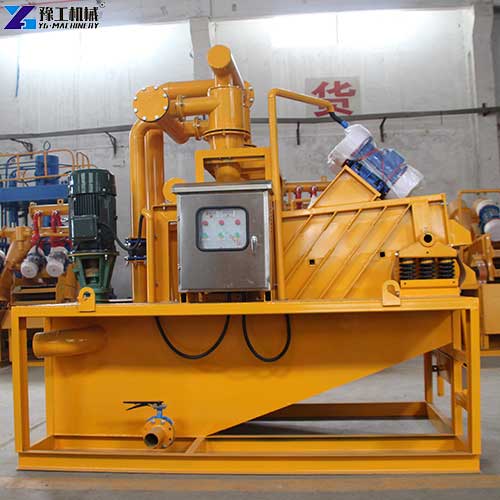
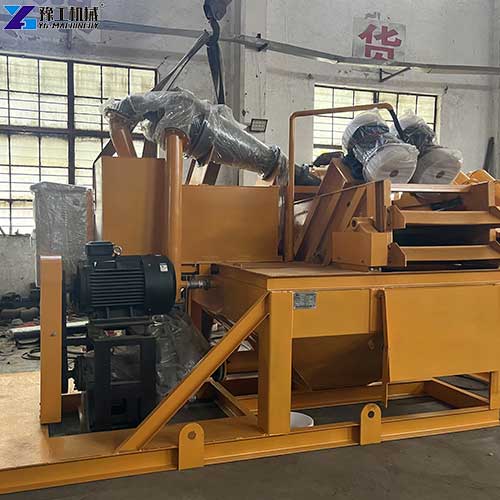
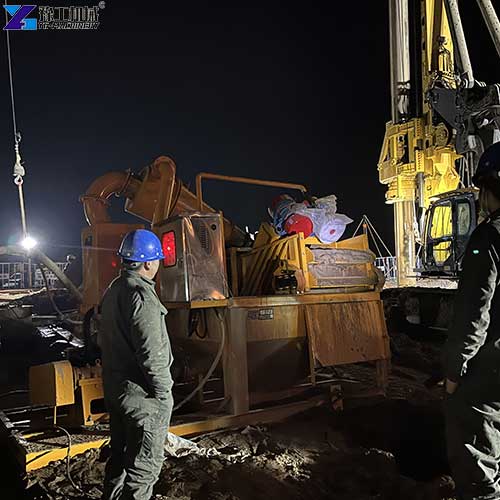
Mud treatment equipment plays an important role in construction projects that use drilling mud or slurry. During piling, horizontal directional drilling (HDD), tunneling, and water well drilling, the slurry often contains sand, gravel, stone fragments, and other solid particles. If these materials are not removed, the mud may become too abrasive or unsuitable for continued use.
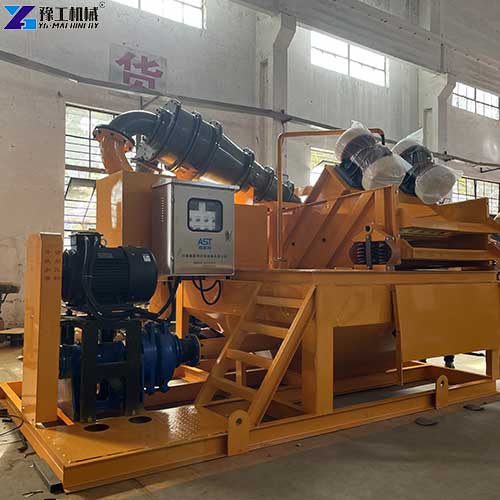
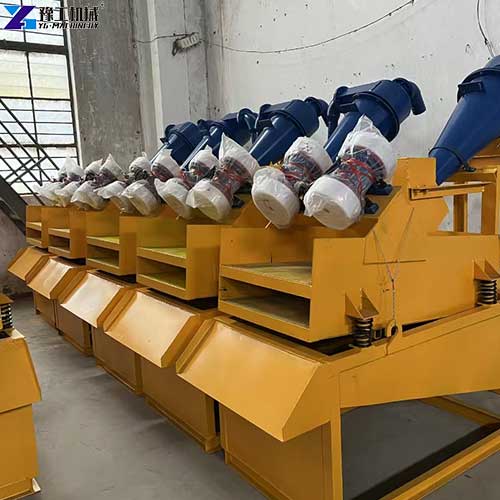
YG mud treatment equipment is designed to separate sand, stones, and other solid particles from pumpable slurry. By reducing the solid particle content, the equipment helps maintain suitable slurry conditions for foundation construction and other drilling operations.
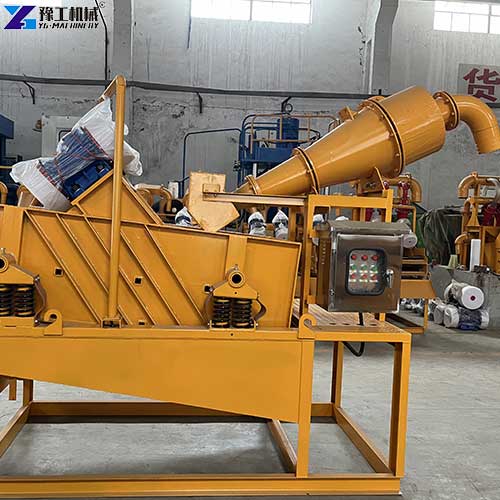
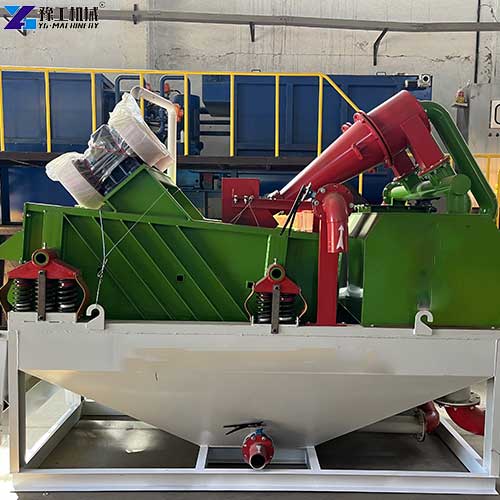
YG offers three main configurations: A-type single-cycle, B-type vertical internal circulation, and C-type horizontal internal circulation. Each design serves different processing requirements, from simple sand separation to more demanding projects involving mixed soil and gravel or high slurry throughput.
If you are looking for a sand mud separator, contact YG for more details.
Mud Treatment Equipment Details
Mud Treatment Equipment Details
How Does a Mud Sand Separator Work? 4 Steps
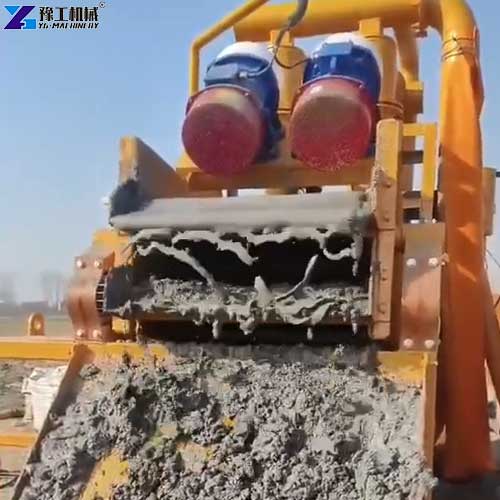
The working process depends on the selected model, but the main objective is to separate solid particles from slurry through screening and, where applicable, internal circulation and hydrocyclone separation.
- Feed the Slurry into the Equipment: A feed pump delivers pumpable drilling mud or slurry into the separation system. The slurry may contain sand, gravel, stone fragments, and finer suspended particles. The feed material must remain fluid enough to be pumped. Dry, hardened material cannot be processed directly and may need to be mixed with water to form a pumpable slurry.
- Screen Out Larger Particles: For the B-type internal circulation model, the slurry first passes through a coarse screen designed to remove larger particles. The training information specifies a 2 mm coarse screening stage. This step reduces the amount of oversized material entering the subsequent separation process and helps protect downstream components.
- Separate Sand and Fine Solids: The slurry then enters the separation stage. In internal circulation models, finer slurry can return to the mud tank for repeated processing. The hydrocyclone helps separate sand and other suitable solid particles from the liquid phase. The separated sand is discharged through the sand outlet, while the processed slurry follows the system’s designed flow path.
- Reuse or Further Treat the Slurry: After separation, the treated slurry may be reused if its properties meet the requirements of the construction process. When additional dewatering is required, the separator can be used as a pretreatment unit before a filter press.
Important: A mud sand separator is not a substitute for a filter press when the goal is to turn fine, nearly particle-free mud into solid mud cakes and clarified water. Ultra-fine particles may also pass through the normal separation system or cause screen blockage, depending on their size and the selected configuration.
Heavy-Duty Construction
- 8 mm boiler plate screening bucket: Designed for greater toughness compared with the thinner, ordinary carbon steel plate commonly used in basic equipment.
- All-steel welded connecting pipes: Help reduce the wear and rupture risks associated with slurry flowing through softer hoses.
- Buffered slurry inlet elbow: A three-way buffer water-film design helps reduce erosion at the slurry inlet.
- High-chromium alloy internal circulation pump: The pump uses a mechanical seal, with the pump casing and impeller listed for a one-year warranty.
- Copper-winding motor: Designed for stable operation.
- Heavy-duty screen plate fasteners: Intended to withstand repeated vibration during operation.
- Stainless steel slotted screen: Supplied as standard, with a higher open area and better water passage than polyurethane screening material according to the product training information.
Get 12-Month Warranty & 24/7 Technical Support – Learn More
Parameters of YG Mud Treatment Equipment
| Model | YG100A | YG250A | YG160B | YG200B | YG250B | YG250C | YG300C |
| Slurry Processing Capacity (m³/h) | 100 | 250 | 160 | 200 | 250 | 250 | 300 |
| Vibrating Motor (kw) | 0.25×2 | 1.5×2 | 1.1×2 | 1.1×2 | 1.5×2 | 1.5×2 | 2.2×2 |
| Undersize Material Moisture Content | 30% | 30% | 30% | 30% | 30% | 30% | 30% |
| Separation Particle Size d50 (μm) | 180 | 180 | 180 | 180 | 180 | 180 | 180 |
| Slag Screening Capacity (t/h) | 10-25 | 25-62.5 | 16-40 | 20-50 | 25-62.5 | 25-62.5 | 30-75 |
| Compatible Feed Pump (Customer Supplied) | 7.5kw | 15-22kw | 11-15kw | 15-22kw | 22kw | 22kw、37kw、45kw | 37kw、45kw、55kw |
| Total Internal Power (kW) | 0.5 | 3 | 17.2 | 24.2 | 25 | 48 | 59.4 |
| Total Machine Weight (kg) | 550 | 1350 | 1950 | 2050 | 2300 | 4000 | 5500 |
| Purified Slurry Sand Content | <2% | <2% | <2% | <2% | <2% | <2% | <2% |
| External Dimensions (L*W*H) | 2.5*0.83*2.1m | 3.7*1.2*2.4m | 2.7*1.9*2.6m | 2.7*1.9*2.6m | 3.3*2.0*2.3m | 4.0*2.3*2.7m | 4.3*3*3.1m |
| Internal Pump | no | no | 15kW motor + pole pump | 22kW motor + pole pump | 22kW motor + horizontal pump | 45kW motor + horizontal pump | 55kW motor + horizontal pump |
| Inlet/Outlet Dimensions | Imported 3-inch (76mm); Top outlet 4-inch (102mm); Bottom outlet 6-inch (152mm) | Imported 4-inch (76mm); Top outlet 6-inch (152mm); Bottom outlet 6-inch (152mm) | Imported 4-inch (102mm); Top outlet 6-inch (152mm); Bottom outlet 6-inch (152mm) | Imported 6-inch (152mm); Top outlet 6-inch (152mm); Bottom outlet 8-inch (195mm) | |||
Differences Between Three Types of Sand Mud Separators
| Type | Main Structure | Recommended Material | Key Advantages | Best For |
|---|---|---|---|---|
| A-Type Single-Cycle | No internal circulation pump; slurry is screened once | Medium and coarse sand without large stones | Simple structure, lower cost, low maintenance complexity | Projects with relatively simple slurry conditions |
| B-Type Vertical Internal Circulation | Vertical internal circulation pump and 2 mm coarse screen | Mixed sand, gravel, and stone particles | Higher separation capability; suitable for varied ground conditions | General-purpose construction and drilling projects |
| C-Type Horizontal Internal Circulation | Horizontal internal circulation pump | Projects requiring large-volume slurry treatment | Stable operation and convenient maintenance | High-throughput slurry treatment projects |
Get 12-Month Warranty & 24/7 Technical Support – Learn More
10 Applications of YG Mud Treatment Equipment
| Application Scenario | Recommended Model | Reason |
|---|---|---|
| Foundation piling | B-Type | Suitable for changing ground conditions and mixed sand and gravel |
| Bridge foundation construction | B-Type | Helps remove sand and solid particles from returning drilling slurry |
| Horizontal directional drilling (HDD) | B-Type | Suitable for slurry containing different types of solid particles |
| Tunneling projects | B-Type or C-Type | B-Type for varied slurry conditions; C-Type when higher throughput is required |
| Water well drilling | B-Type | A practical option when slurry composition may vary |
| High-volume construction projects | C-Type | Designed for large-volume slurry treatment |
| Slurry containing only medium and coarse sand, without large stones | A-Type | Simple structure and lower equipment cost |
| Calcium carbonate slurry sand and impurity removal | B-Type or C-Type | Choose according to particle characteristics and required throughput |
| Pretreatment before a filter press | B-Type or C-Type | Removes suitable larger particles before downstream dewatering |
| Simple material | A-Type | Economical option when the material meets its operating requirements |
Get 12-Month Warranty & 24/7 Technical Support – Learn More
2 Customer Feedback about YG Mud Treatment Equipment
Case 1: Foundation Piling Project in Vietnam
A foundation contractor in Vietnam is working on a building project that uses bored piles. The returning slurry contains sand and small stone fragments, and the team needs to reduce the solid content before the mud is reused.
The contractor bought a YG B-type internal circulation mud sand separator because the ground conditions may vary across the site. The coarse screening stage helps remove larger particles, while internal circulation allows finer slurry to undergo repeated separation.
Customer feedback:
“For piling work, slurry quality is an important part of daily site management. YG sand mud separator that can handle changes in the sand and gravel content, rather than a machine designed only for clean, coarse sand. We were satisfied with this machine.”
Customer 2: Drilling Project in Indonesia
A drilling contractor in Indonesia needs to process slurry containing sand and solid particles during a water well or foundation drilling operation. The team wants to reduce the amount of solids in the returning mud and improve the management of drilling fluid. After detailed discussions with YG, we purchased a Type B mud separator.
Customer feedback:
“The most important step is to match the separator to our feed pump and the actual slurry. We also need to know what the machine can separate and when further treatment is necessary. YG addressed our concerns perfectly and met our needs. It was a great shopping experience, and I plan to buy another one next year.”
First Time Buying Mud Treatment Equipment? Contact YG For a Transparent Quote
Choosing the right mud treatment equipment can help construction teams manage drilling slurry, remove unwanted sand and solid particles, and support more consistent operations. YG offers single-cycle and internal circulation configurations for different material conditions and processing requirements.
Whether you are working on a piling project, an infrastructure site, or a drilling project, the right configuration begins with understanding your slurry, pump, and processing requirements.
Looking for a reliable sand mud separator for sale? Contact YG for a transparent quote.