
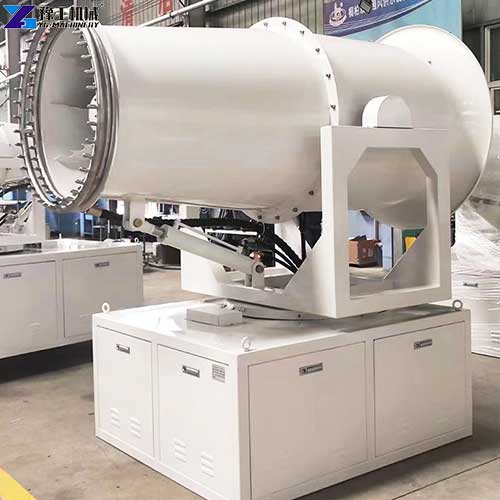
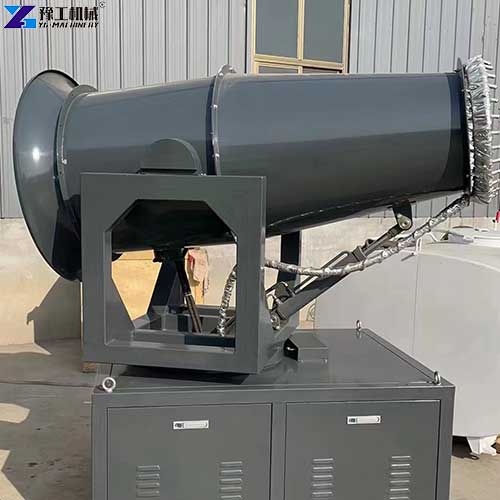
Dust is a common challenge on construction sites, especially when excavators move soil, trucks transport materials, and workers handle dry aggregates. When the weather is dry, vehicle movement can create clouds of dust that affect visibility, nearby properties, and the working environment.
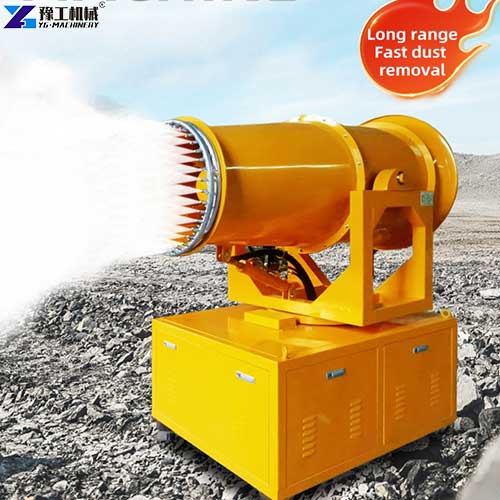
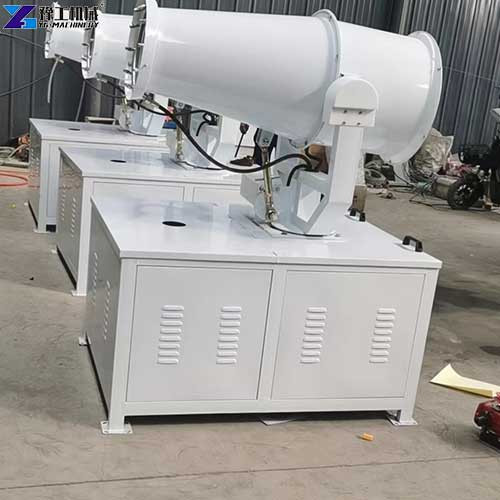
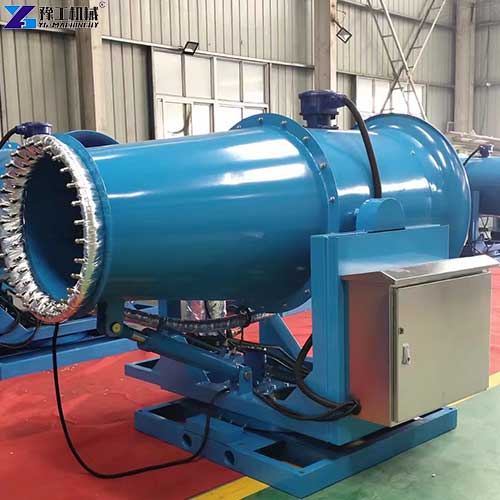
This case study follows an illustrative New Zealand construction project that selected a 30m fog cannon from YG Machinery to help manage airborne dust. The project team needed equipment that could spray mist toward specific work areas, cover a practical distance, and operate with a suitable electrical and water supply.
The customer found YG online while researching dust suppression equipment. Before ordering, the team had questions about spraying distance, water consumption, operating requirements, and whether the machine would suit the site’s conditions. The YG fog cannon achieved excellent results. Do you have a similar situation? Contact YG at +8613937183205.
Who Was the Customer, and What Did the Company Need?
The customer was a medium-sized construction contractor operating in New Zealand. The company worked on commercial building projects, site preparation, earthmoving, and related construction activities. Its projects involved excavators, wheel loaders, dump trucks, and workers handling soil and construction materials. Depending on the project stage, the team also needed to move aggregates and clear areas for new construction work. The company operated in a market where maintaining a tidy site and managing dust were important parts of project management. Its main business goal was to complete construction work efficiently while keeping the working environment under control.
What Dust Problems Was the Customer Facing?
Before contacting YG, the contractor had been dealing with several recurring problems.
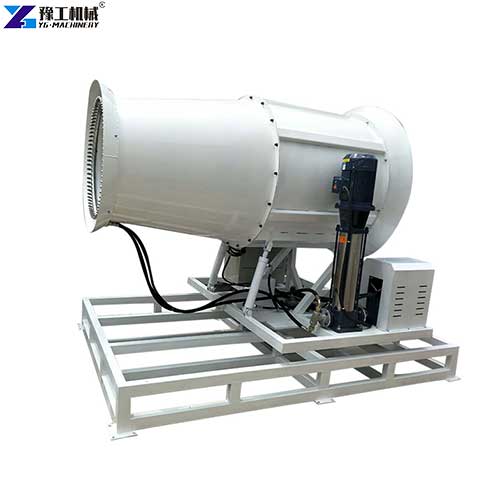
Why Did the Customer Choose the YG-30 Fog Cannon?
While searching for industrial dust-control equipment, the customer came across the YG Machinery website.
The customer wanted to compare different models and understand which machine would be suitable for a construction site. It was particularly interested in equipment with a clearly stated spraying distance and practical operating specifications.
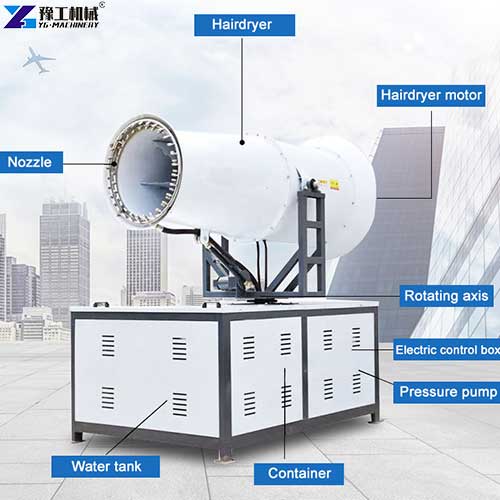
YG Fog Cannon Machine Parameters
| Model | YG-20 | YG-30 | YG-40 | YG-60 |
| Spraying distance | 20m | 30m | 40m | 60m |
| Engine | electric | electric | electric | electric |
| Electric | 380V/50HZ,3 phase | 380V/50HZ,3 phase | 380V/50HZ,3 phase | 380V/50HZ,3 phase |
| Fan motor | 3kw | 3kw | 4kw | 11kw |
| Steering motor | 2*1.5kw | 2*1.5kw | 2*1.5kw | 2*1.5kw |
| Pump motor | 1.5kw | 1.5kw | 2.5kw | 7.5kw |
| Horizontal angle | 360° | 360° | 360° | 360° |
| Vertical angle | Minus10°-55° | Minus10°-55° | Minus10°-55° | Minus10°-55° |
| The nozzle | 8 | 10 | 16 | 22 |
| Cylinder material | Q235 Carbon steel | Q235 Carbon steel | Q235 Carbon steel | Q235 Carbon steel |
| Bucket | 460L | 480L | 800L | |
| Water consumption | 1000L/h | 1500L/h | 3000L/h | 7500L/h |
| Recycled water pipe | 1400mm | 1400mm | 1400mm | 1400mm |
| The machine size | 1170*940*1700mm | 1170*940*1800mm | 1650*1200*2200mm | 1700*1200*2200mm |
| Weight | 200kg | 250kg | 300kg | 350kg |
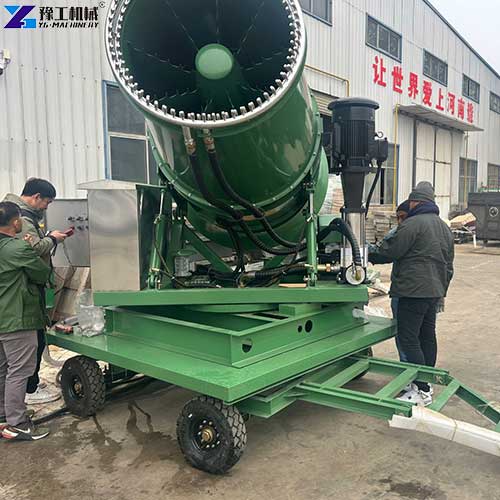
The YG-30 fog cannon was selected for evaluation because its specifications aligned with the customer’s initial requirements.
What Concerns Did the Customer Have Before Buying?
Even after finding a potentially suitable model, the customer still needed answers to several important questions.
Concern 1: Would the 30m fog cannon reach the dusty area?
A listed spraying distance does not automatically mean that the machine will control dust equally well in every direction or weather condition.
How YG could address this concern: Review the distance between the machine and the main dust sources, discuss the proposed installation position, and explain the operating factors that can affect mist coverage.
The customer could then identify a suitable location for the machine and assess whether one unit would meet the initial coverage requirement.
Concern 2: Was the water consumption manageable?
The YG-30’s listed water consumption is 1,500 L/h. That is an important figure for a contractor working with a limited water supply.
For example, the theoretical water requirement at the listed consumption rate would be:
| Operating time | Theoretical water consumption |
|---|---|
| 30 minutes | 750 L |
| 1 hour | 1,500 L |
| 2 hours | 3,000 L |
| 4 hours | 6,000 L |
These figures are calculated from the supplied 1,500 L/h specification. Actual consumption may vary with operating conditions and settings.
The listed 460 L tank capacity is not enough for one full hour of continuous operation at 1,500 L/h. If the customer intended to operate continuously, the water supply and refill arrangement would need to be planned accordingly.
How YG could address this concern: Clarify the difference between tank capacity and water consumption, then help the customer consider the required water source, refill method, and expected operating hours.
Concern 3: Could the machine operate with the site’s electricity supply?
The customer needed to check whether a suitable 380V/50Hz three-phase supply was available.
How YG could address this concern: Provide the electrical specifications and ask the customer to confirm the local supply and installation requirements with a qualified electrician before operation.
This check helps prevent problems caused by incompatible electrical connections.
Concern 4: Would the machine be easy to position?
The YG-30 measures 1,170 × 940 × 1,800 mm and weighs 250 kg.
The customer needed to make sure there was enough space for installation and that the floor or supporting surface was suitable.
How YG could address this concern: Share the machine dimensions and weight so the customer could plan the installation location, access, and handling arrangements before delivery.
How Could the Customer Use the YG-30 After Installation?
Once the installation requirements have been checked, the contractor could organize the equipment around the site’s main dust sources.
A practical operating plan for this type of project could include the following steps.
- Identify the dust source. Locate the areas where truck movement, excavation, or material handling produces the most airborne dust.
- Position the machine appropriately. Choose a suitable location within the intended spraying range and ensure that the installation area is stable and accessible.
- Confirm the water supply. Check that the available supply can meet the required flow for the planned operating period.
- Check the electrical connection. Have the supply and connection verified by qualified personnel.
- Adjust the spraying direction. Use the horizontal and vertical adjustment to direct the mist toward the target area.
- Observe the results. Monitor wind direction, dust conditions, water use, and whether the mist is reaching the intended zone.
- Maintain the machine. Inspect the nozzles and other components according to the manufacturer’s maintenance instructions.
This approach helps the operator use the fog cannon machine as part of a planned dust-control process instead of running it without a clear target.
What Unexpected Benefits Could the Customer Notice?
For this illustrative project, the potential benefits were not limited to spraying water over a dusty area.
Benefit 1: Dust-control work became easier to organize
A dedicated machine gave the site team another way to direct mist toward selected areas. This could reduce dependence on manual hose spraying for some tasks, depending on the layout and operating conditions.
Benefit 2: The team could plan coverage more clearly
The listed spraying distance, adjustable angles, and machine dimensions gave the contractor practical information for planning the installation location.
Instead of guessing where to place the equipment, the team could assess the target distance and expected spray direction in advance.
Benefit 3: Water requirements became easier to estimate
The published consumption rate helped the customer estimate how much water would be needed for different operating periods.
This did not mean that water use was automatically lower. Rather, the information allowed the team to plan supply and operating time more carefully.
Benefit 4: Dust control became part of the daily work routine
The contractor could include machine checks, water-supply checks, and operating schedules in its site-management procedures.
The equipment could then support other measures such as road cleaning, appropriate material handling, and reducing dust generation at the source.
These are expected operational benefits, not measured results from a verified installation. Actual performance would need to be assessed on site.
What the Customer Says About the YG-30 Fog Cannon?
The following is an example of customer feedback for this scenario, not a direct quotation from a verified customer.
“We needed a practical way to manage dust from trucks and earthmoving activities. The YG-30’s 30-meter listed spraying distance and adjustable direction made it a model worth considering for our site.
“Before purchasing, we paid close attention to water consumption and the electrical supply. Understanding these requirements helped us plan the installation more carefully.
“The biggest lesson was that choosing the right machine is only part of the job. Positioning, water availability, wind conditions, and regular maintenance are also important. We would recommend that other contractors check these details before selecting their dust suppression equipment.”
The main takeaway is that a suitable 30m fog cannon should be chosen according to the site’s needs, not simply because it has a particular range.
Need a 30m Fog Cannon for Your Project? Contact YG
The New Zealand construction scenario shows why choosing dust-control equipment requires more than comparing spraying distances. The contractor needed to consider dust sources, water consumption, electrical compatibility, machine dimensions, and the intended operating area before selecting a model.
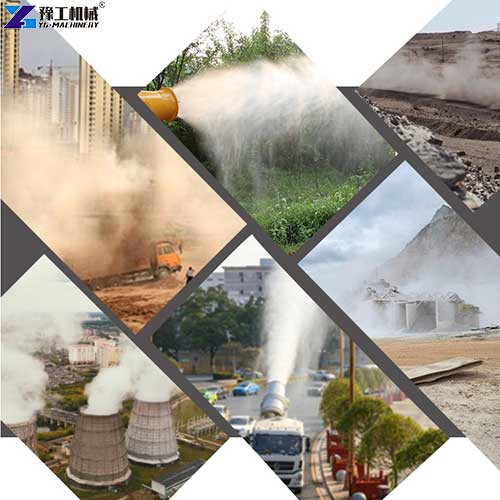
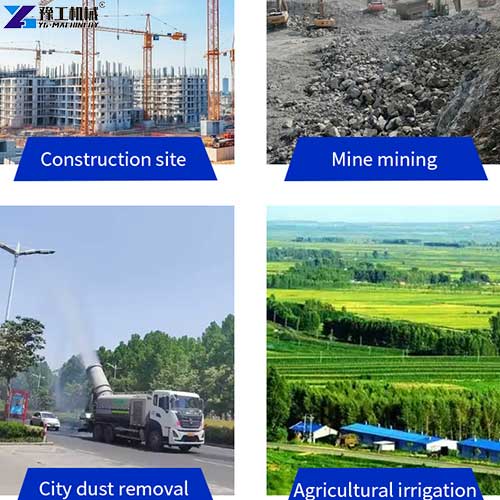
If you are looking for a 30m fog cannon, comparing fog cannon machine prices, or planning a dust suppression fog cannon solution for construction, mining, demolition, or material handling, YG Machinery can help you review the available options.
Have a similar project? Contact YG Machinery today.