
Breaking hard rock is a common challenge in construction, quarrying, foundation excavation, and road projects. Blasting may be restricted in some locations, while traditional breakers can create impact noise and vibration. A rock splitter machine offers a practical option. It uses hydraulic force to create cracks in pre-drilled holes, helping separate hard rock or concrete without relying on explosives.
But what exactly does a rock splitter machine do? What value can it bring to a construction project? And should you choose a standalone hydraulic stone splitter or an integrated rock drill and splitter? YG will tell you the answer. Don’t hesitate to get in touch with YG anytime.
Get 12-Month Warranty & 24/7 Technical Support – Learn More
I: What Is a Rock Splitter Machine?
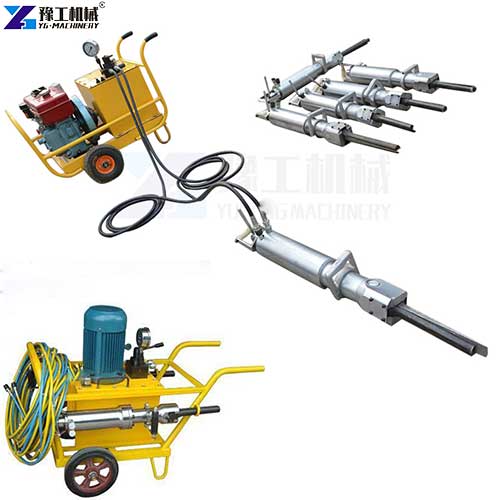
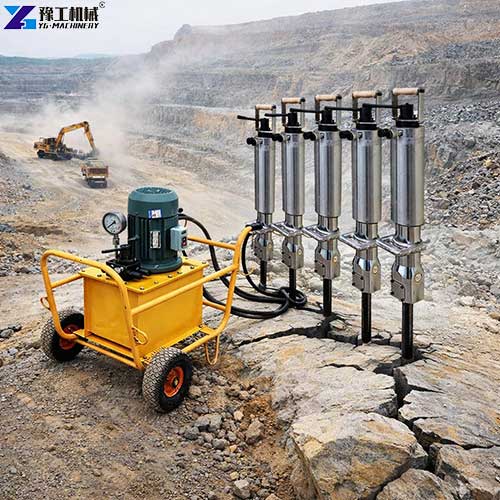
A rock splitter machine breaks rock or concrete by applying strong hydraulic pressure through a wedge inserted into a pre-drilled hole.
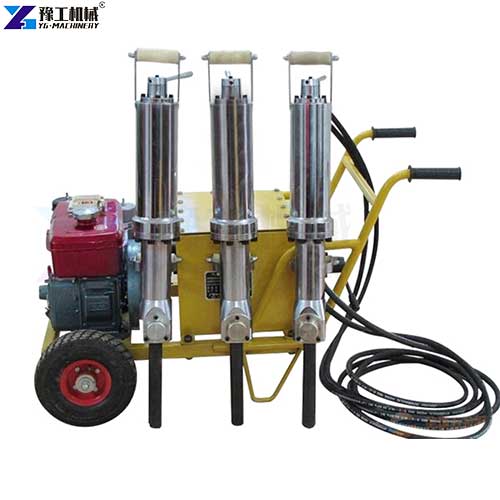
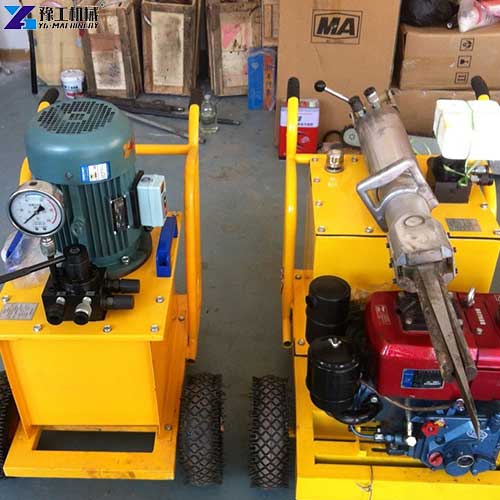
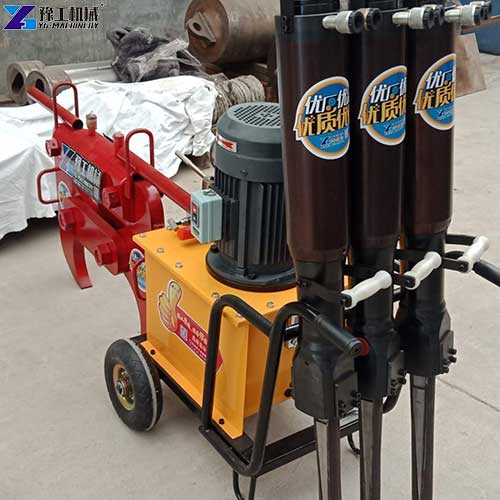
A typical hydraulic stone splitter system includes three main components:
- Hydraulic power station: Supplies the pressure needed to operate the splitter.
- High-pressure hydraulic hoses: Transfer hydraulic power to the splitting gun.
- Splitting gun and wedge: Enter the drilled hole and apply outward force to crack the material.
Unlike a hydraulic breaker, which uses repeated impacts, a hydraulic stone splitter relies on static splitting force. This makes it worth considering for projects where blasting restrictions, vibration concerns, or controlled material removal are important.
II: Hydraulic Splitter for Rock Parameters
| Model | YG-250 | YG-350 | YG-450 |
| Wedge Length(mm) | 250mm | 350mm | 450mm |
| Piston Stroke(mm) | 90/220mm | 90/220mm | 90/220mm |
| Drilling Depth(mm) | >500mm | >700mm | >900mm |
| Punching Diameter(mm) | 42mm | 46mm | 46mm |
| Crack Width(mm) | 10-20mm | 10-20mm | 10-20mm |
| Cleavage Time(s) | 10-15/s | 10-15/s | 10-15/s |
| Splitting Force(T) | 500t | 800t | 800t |
| Weight(kg) | 240kg | 250kg | 260kg |
Get 12-Month Warranty & 24/7 Technical Support – Learn More
III: What Can a Hydraulic Stone Splitter Do?
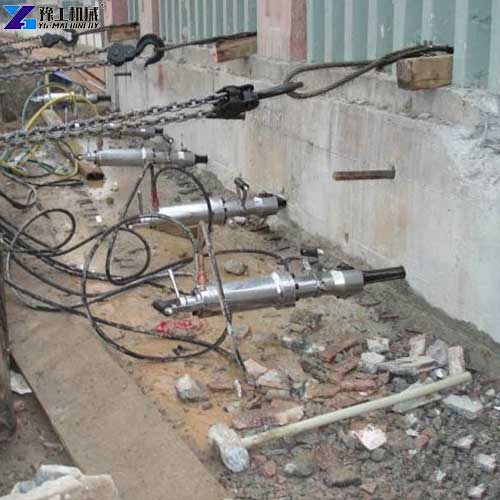
A hydraulic stone splitter can support several types of rock-breaking and demolition work.
- Rock Quarrying and Stone Extraction: In quarries, operators may need to separate large rock sections into manageable blocks. A rock splitter machine can create controlled fractures in suitable formations, helping operators separate material for further processing.
- Foundation Excavation: Hard rock can slow down excavation when an excavator cannot easily remove the material. A hydraulic splitter can help break selected sections into smaller pieces so they can be removed. This can be useful near existing foundations, underground utilities, and other areas where contractors need to manage the breaking process carefully.
- Tunnel and Underground Construction: A rock splitter machine may be used for selected underground excavation, tunnel expansion, and local rock removal where conventional blasting is unsuitable.
- Concrete Demolition and Renovation: Hydraulic splitting equipment can also break suitable concrete structures, such as foundations and concrete blocks.
- Road Construction and Slope Work: During road widening, slope trimming, and infrastructure construction, a hydraulic stone splitter can help remove hard rock in controlled sections.
IV: What Value Can a Rock Splitter Machine Bring? 6 Values
- Better Control Over Rock Breaking: Because the operator places the splitter in prepared holes, the breaking process can be planned around specific sections of rock. This can help contractors manage where cracks develop.
- Less Impact-Related Vibration: Static hydraulic splitting does not rely on repeated hammer impacts. It may therefore be suitable for locations where vibration from conventional breaking methods is a concern.
- More Options in Restricted Areas: Where blasting is not permitted or is difficult to arrange, a hydraulic stone splitter can provide another method for removing suitable rock. The compact splitting gun may also reach locations where larger breaking equipment is difficult to position.
- A More Flexible Equipment Setup:
- A standalone splitter can be paired with suitable drilling equipment already available on site. This allows contractors to select drilling and splitting tools separately according to their workflow.
- Better Project Planning: Before buying a hydraulic stone splitter, contractors can estimate the complete work cycle: drilling holes, moving the splitter, splitting rock, and removing the broken material. This gives them a more realistic basis for evaluating productivity and operating costs than comparing splitting force alone.
Get 12-Month Warranty & 24/7 Technical Support – Learn More
V: Rock Splitter Machine vs. Integrated Rock Drill and Splitter
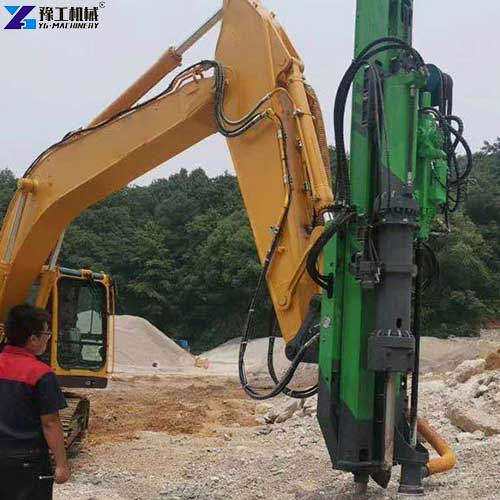
A standalone hydraulic stone splitter and an integrated rock drill and splitter perform related jobs, but they organize the work differently.
| Comparison | Rock Splitter Machine | Integrated Rock Drill and Splitter |
|---|---|---|
| Main function | Splits rock after holes are drilled | Drills holes and splits rock |
| Drilling equipment | Separate drilling equipment is required | Drilling function is integrated |
| Workflow | Drilling and splitting are separate stages | Drilling and splitting are combined in one attachment |
| Equipment arrangement | Flexible choice of drilling and splitting tools | Combined attachment mounted on a compatible excavator |
| Existing equipment | Useful when suitable drilling equipment is already available | Useful when an integrated workflow is preferred |
| Setup considerations | Requires coordination between drilling and splitting tools | Requires checking excavator compatibility and hydraulic requirements |
| Suitable projects | Intermittent splitting or projects with separate drilling resources | Repeated rock excavation where integrated operation is valuable |
| Key buying factor | Splitter specifications and drilling arrangement | Excavator size, hydraulic flow and pressure, reach, and attachment configuration |
Which one should you choose?
Choose a rock splitter machine if you already have drilling equipment or want to select your drilling and splitting tools independently.
Consider an integrated rock drill and splitter if your project involves frequent rock excavation and you want to combine drilling and splitting in one attachment. Before purchasing, confirm the excavator’s compatibility and hydraulic requirements.
Get 12-Month Warranty & 24/7 Technical Support – Learn More
VI: Vietnam Customer Feedback about YG Rock Splitter Machine
Project Requirements
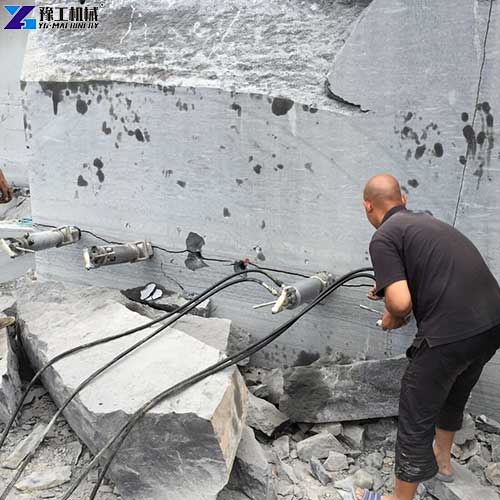
A construction contractor in Vietnam was evaluating a hydraulic stone splitter for a rock-breaking project. The team wanted to assess whether a standalone splitter could meet its requirements and fit the drilling equipment available on site.
The contractor needed to consider three main factors: the rock conditions, the required hole dimensions, and the practical workflow for splitting and removing the broken material.
After reviewing the equipment options, the contractor selected the YG-350 hydraulic stone splitter.
Sample Customer Feedback for Editorial Planning
The following quotation is a placeholder, not a verified customer statement:
“We selected the YG-350 after considering the rock conditions, drilling requirements, and the working process on site. We wanted equipment that suited our project rather than choosing a model based on splitting force alone. YG’s equipment perfectly met our needs, and their attitude was very friendly. We are happy to work with them.”
Find the Right Rock Splitter Machine for Your Site-Choose YG
A rock splitter machine can help contractors break suitable rock and concrete through controlled hydraulic force. Its value lies in its potential to manage breaking more precisely, work in selected restricted areas, and fit projects where blasting or impact breaking is not the preferred option.
Need help choosing a hydraulic stone splitter? Contact YG Machinery, and our team can help you compare suitable options and provide a transparent quotation for your project.
