
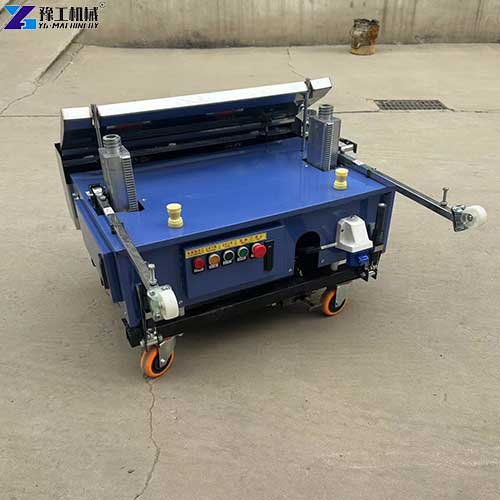
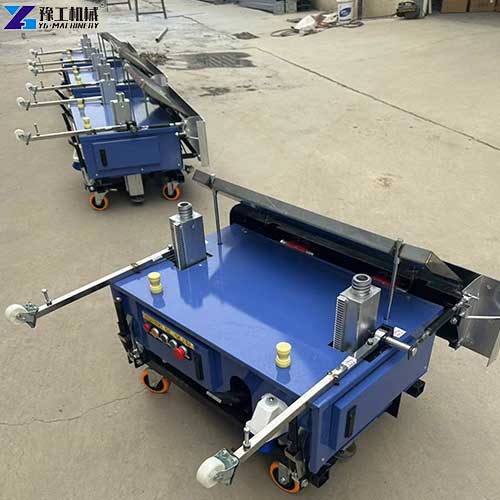
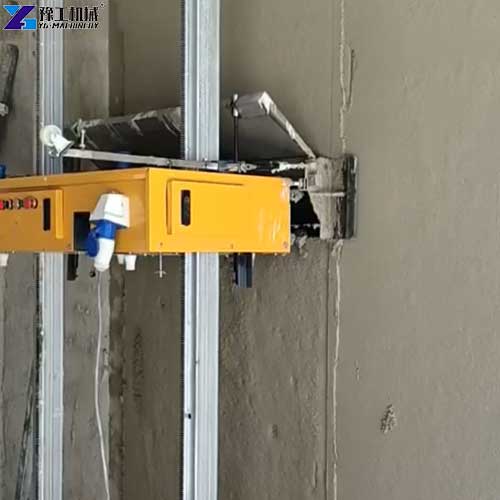
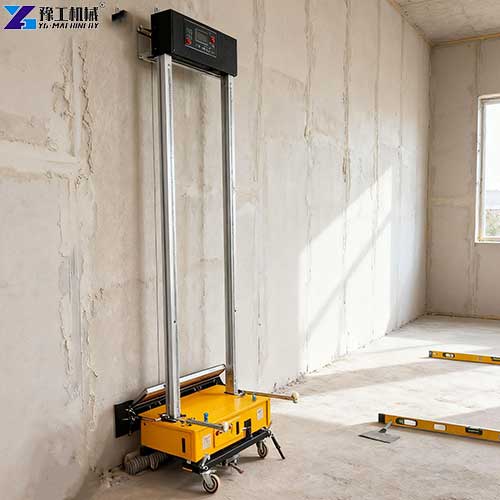
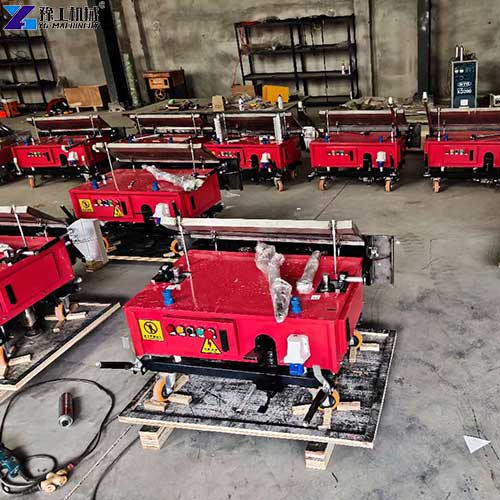
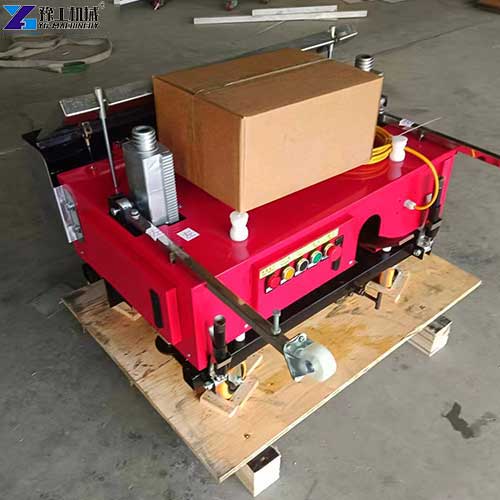
An automatic wall plastering machine is a construction machine that applies and levels plaster on wall surfaces with less manual effort. Depending on the model, it can use a mechanical plastering mechanism, a lifting system, and adjustable controls to spread mortar and produce a more uniform surface. Many people can’t distinguish it from a cement mortar spray machine, or know whether it can really replace manual labor. Don’t worry, YG will explain it clearly in this article. For more information, contact YG immediately.
Automatic Wall Plastering Machine Parameters
| Model | YG-800 | YG-1000 |
| Plastering height | Below 4 meters | Below 5 meters |
| Weight | 270 kg | 290 kg |
| Plastering thickness | 2~30 mm | 2~30 mm |
| Power | 1.5 KW | 1.5 KW |
| Plastering efficiency | 500 CBM/8H | 550 CBM/8H |
| Voltage | 220 v/380 v optional | 220 v/380 v optional |
Conditions of Use
- Ambient temperature:-10℃ ~+50℃;
- Relative humidity: 0% ~ 95%, no condensation;
- Environment: no corrosive gas, flammable gas, oil mist, water vapor, dripping water, or salt, etc.
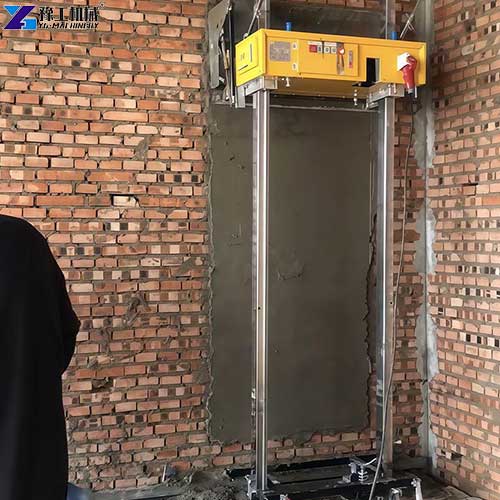
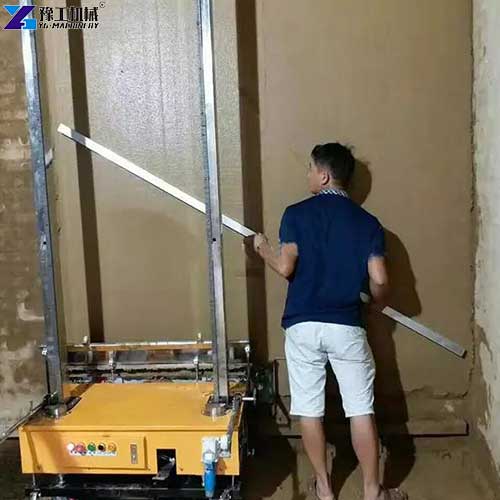
Why Is the Automatic Wall Plastering Machine Becoming Popular?
It Reduces Dependence on Manual Labor
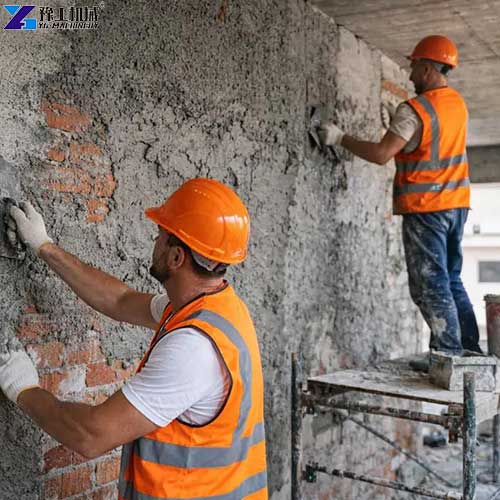
Traditional plastering requires workers to spread mortar and level the surface repeatedly. On large projects, this can be physically demanding and requires consistent workmanship.
An automatic wall plastering machine mechanizes part of the application and leveling process. Operators still need to prepare materials, position the machine, monitor the finish, and complete areas that require manual attention.
Customer value: Contractors can organize labor more efficiently and reduce the amount of repetitive manual plastering work.
2.2 It Helps Improve Wall Surface Consistency
Manual plastering quality can vary with worker experience, fatigue, and working conditions. A properly adjusted automatic wall plaster machine can help maintain more consistent plaster thickness and surface flatness across suitable wall sections.
However, the machine does not automatically guarantee a perfect finish. Wall preparation, mortar consistency, machine adjustment, and final inspection remain important.
Customer value: More consistent plastering can reduce avoidable corrections and help contractors maintain predictable finishing quality.
2.3 It Can Shorten the Plastering Schedule
On projects with large areas of similar walls, mechanized plastering can reduce the time spent applying and leveling material manually.
The benefit is particularly relevant to apartment buildings, residential developments, office buildings, schools, and factories where many wall sections require similar finishing work.
Customer value: Faster wall finishing can help contractors coordinate subsequent work, such as painting and interior installation, more efficiently, provided the plaster has cured sufficiently.
2.4 It Supports Better Labor and Cost Planning
Labor is only one part of the total cost of plastering. Contractors must also account for material consumption, equipment setup, cleaning, maintenance, rework, and downtime.
An auto wall plastering machine may help reduce labor requirements and improve consistency, but its financial benefit depends on how frequently it is used and how much wall area it handles.
Customer value: Contractors can compare actual labor hours, material usage, and rework costs to determine whether mechanized plastering is worthwhile for their projects.
Automatic Wall Plastering Machine vs. Cement Plaster Spray Machine
An automatic wall plastering machine and a cement plaster spray machine both help mechanize wall-finishing work, but they perform different main functions.
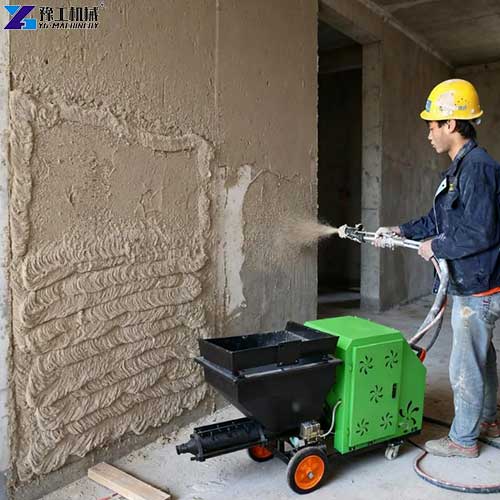
A wall plastering machine is designed to apply and level plaster, depending on its configuration. A mortar spray machine primarily pumps and sprays prepared mortar onto the wall. Sprayed mortar may still need to be leveled or finished separately.
| Comparison | Automatic Wall Plastering Machine | Cement Plaster Spray Machine |
|---|---|---|
| Main function | Mechanized plaster application and leveling | Pumping and spraying mortar |
| Working method | Uses a mechanical plastering or leveling mechanism | Uses a pump and delivery hose or spray gun |
| Main advantage | Helps produce a more uniform plaster layer | Applies mortar quickly over suitable surfaces |
| Surface finishing | Can combine application and leveling, depending on model | Usually requires separate leveling or finishing |
| Best suited for | Projects prioritizing consistent wall finishing | Projects requiring efficient mortar delivery and spraying |
| Labor requirements | Operators plus material preparation and finishing support as needed | Operators plus material preparation and leveling workers as needed |
| Important selection factor | Wall dimensions, required thickness, and finish | Mortar compatibility, pumping capacity, hose setup, and spray requirements |
Can the Two Machines Work Together?
Yes. On suitable projects, a mortar spray machine can apply material to the wall, while an automatic wall plastering machine helps level and finish the plaster.
This combination can be useful when contractors want to separate material delivery from surface finishing. However, the machines must be compatible with the mortar, work sequence, and site conditions.
For more information, see the YG cement plaster spray machine.
Automatic Plastering Efficiency vs. Traditional Manual Work
The main reason contractors consider an automatic wall plastering machine is the potential to finish large wall areas with less repetitive manual work.
| Factor | Traditional Manual Plastering | Automatic Wall Plastering Machine |
|---|---|---|
| Application method | Workers apply and level plaster by hand | Machine mechanizes the plastering process |
| Labor intensity | High repetitive physical effort | Reduced repetitive work, with operators still required |
| Surface consistency | Depends strongly on worker skill | More consistent when properly adjusted |
| Large wall areas | Requires coordinated manual teams | Can support continuous mechanized work |
| Material control | Depends on worker technique and site practices | Machine settings may help control application thickness |
| Setup and preparation | Tools, mortar, and work area must be prepared | Requires machine positioning, adjustment, and material preparation |
| Cleaning | Manual tool cleaning | Machine and plaster-contact parts require thorough cleaning |
| Best project fit | Small, irregular, or low-volume jobs | Repeated wall sections and larger plastering workloads |
South African Customer Feedback: Improving Wall Finishing on a Residential Project
Customer Background
A residential contractor in South Africa was working on a housing project involving multiple rooms and repeated wall-finishing tasks. The team needed to apply plaster to large areas while keeping the project schedule under control. The contractor relied mainly on manual plastering. Although the workers had experience, progress depended on labor availability, individual working speed, and the consistency of the finished surfaces.
The Main Challenge
The contractor faced three practical difficulties.
- Plastering large wall areas required considerable repetitive labor.
- Differences in working technique could result in uneven sections that needed additional correction.
- Delays in wall finishing could affect the schedule for subsequent activities.
The contractor began looking for an automatic wall plastering machine that could mechanize repetitive work without making site operation unnecessarily complicated.
Finding YG Online
While researching wall-finishing equipment, the contractor found YG Machinery’s automatic wall plaster machine page. The contractor reviewed the YG-800 and YG-1000 specifications and compared their plastering heights, machine weights, and adjustable thickness ranges. The next step was to confirm the suitable model based on the building’s wall heights, mortar type, power supply, and working conditions.
Evaluating the Equipment
Before making a purchasing decision, the contractor confirms:
- Whether the machine could handle the project’s wall height
- Whether the required plaster thickness was within the machine’s adjustment range
- Whether the prepared mortar was compatible with the equipment
- How much manual finishing would still be required
Customer Feedback
“We wanted to make wall finishing more consistent and reduce the amount of repetitive manual work on our residential project. An automatic wall plastering machine was a practical option because several rooms required similar plastering work. For us, the value would come from combining consistent finishing with better control over labor and project scheduling. We were satisfied with this machine.”
Factory Direct Automatic Wall Plastering Machine-Choose YG
An automatic wall plastering machine can help contractors mechanize repetitive wall-finishing work, improve surface consistency, and reduce manual effort. It is particularly worth evaluating for residential developments, apartment buildings, commercial projects, schools, and factories with large areas of similar walls.
Compared with a cement plaster spray machine, an automatic wall plastering machine focuses more on application and leveling, while a spray machine primarily delivers mortar to the wall. On suitable projects, the two machines can complement each other.
Contact YG Machinery today to get an automatic wall plastering machine price and solution.
